


The nation’s telecommunications regulator has commenced a sweeping reassessment of the framework governing inter-network call charges, marking the most extensive industry evaluation in almost ten years.
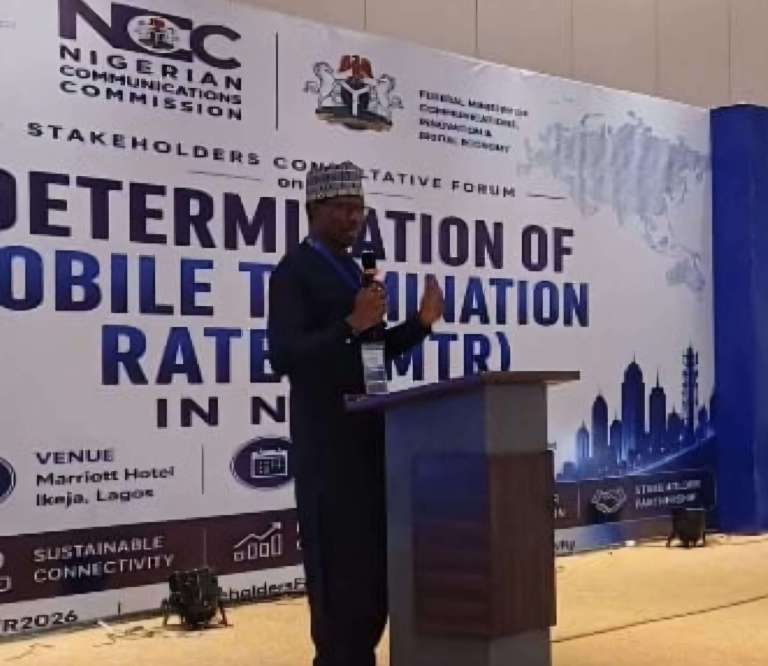
The process, being conducted by the Nigerian Communications Commission (NCC) in collaboration with audit firm KPMG, was formally unveiled at a stakeholders’ meeting in Lagos.

The programme is expected to influence competition, network expansion, and the overall pricing dynamics of the country’s communications sector.
Key to the exercise is the examination of Mobile Termination Rates (MTRs), fees being paid by the operators to each other for completing calls initiated between different networks.
Analysts say such charges play key role in shaping business operations and consumer costs across the industry.
Based on the stand of the commission, the existing coast structures, introduced in 2018 and slightly adjusted in 2022, no longer reflects the realities of a rapidly evolving market.
The sector, it noted, has undergone significant transformation, driven by the rollout of fifth-generation (5G) technology, growing demand for data services, and the emergence of Mobile Virtual Network Operators (MVNOs), whose business models differ from those of traditional network providers.
NCC also pointed to mounting economic pressures affecting telecommunications companies. Rising inflation, foreign exchange volatility, and escalating operating expenses have significantly increased the cost of maintaining network infrastructure, much of which depends on imported equipment and services.
To address these developments, KPMG will undertake an extensive assessment involving industry consultations, financial analysis, and comparisons with international markets.
The aim is to determine whether the current framework is still relevant for the purpose and to identify areas requiring policy adjustments.
As part of the process, operators have been directed to provide detailed information covering revenue performance, operational expenditure, profitability, market positioning, capital spending, and customer usage patterns.
The data will help establish a clearer picture of industry trends and the impact of existing regulations on various market participants.
The meeting in Lagos will elicit discussions with a broad range of stakeholders, including mobile network operators, virtual service providers, international carriers, interconnect exchanges, and clearing houses.
Their commercial, technical, and financial perspectives are expected to contribute to the development of a more balanced regulatory structure.