


*Says such needed to sustain N3.98trn telecom investment
The Association of Licensed Telecommunications Operators of Nigeria (ALTON), has endorsed the Nigerian Communications Commission’s (NCC) review of Mobile Termination Rates, calling it critical to industry sustainability and long-term investment.
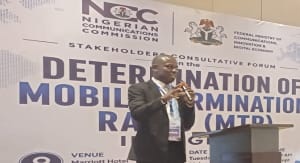
The Chairman of ALTON, Gbenga Adebayo, made the endorsement on Tuesday at NCC’s Stakeholders’ Consultative Forum on MTR determination in Nigeria.
He said ALTON members will cooperate fully with NCC and its consultants through data collection and stakeholder engagement.

“We are aware that the next phase of the exercise will involve data collection and information gathering. On behalf of our members, I assure the Commission that operators will provide all the necessary information to facilitate the work,” he stated.
He stressed that MTR remains fundamental to the telecoms ecosystem because it directly affects industry sustainability, competition, and investment.
The chairman commended NCC for approving a tariff adjustment for operators, saying it provided relief as companies grappled with rising operating costs.

He recalled that in 2024, stakeholders warned the sector’s financial health could trigger service disruptions without urgent intervention.
According to him, the tariff review helped stabilise the industry and unlocked renewed investment.
ALTON disclosed that operators and other industry players invested about N2.18 trillion in capital expenditure in 2025.
Additional N1.8 trillion is projected for 2026.
The funds are targeting network expansion, 5G upgrades, cybersecurity, energy infrastructure, rural connectivity, and other projects to support Nigeria’s digital economy.
“The positive impact of the tariff adjustment is already evident across the sector. From concerns about the health of the industry, we have moved to a position where operators are making substantial investments in network infrastructure and service improvement,” the ALTON boss said.
While welcoming the tariff review, Adebayo argued the sector needs more than periodic adjustments.
He urged NCC to establish a predictable and transparent pricing framework that reflects actual service delivery costs.
“It is essential that the industry periodically reviews these benchmarks to ensure that regulatory decisions remain aligned with current economic conditions and the actual cost of providing services,” he said.
He said the on-going MTR review offers operators opportunity to entrench a cost-oriented regulatory regime aligned with today’s economic realities.
“Regulatory interventions,” he noted, “should be proactive and data-driven, not only when challenges become severe”.
Adebayo expressed confidence the review will strengthen regulatory certainty, promote fair competition, and support long-term sustainability.
He highlighted telecoms’ strategic role: “Today, telecommunications remains one of the most critical sectors of the economy. Financial services, healthcare, transportation, energy, innovation and many other sectors rely on communications networks to function effectively.”
ALTON reaffirmed its commitment to work with NCC and stakeholders to ensure the review succeeds.
NCC commenced the comprehensive MTR study this week to review mobile and international termination rates, assess interconnection arrangements, and develop a cost-reflective framework that reflects market realities, technology shifts like 5G, and macroeconomic conditions.
The current MTR of N3.90/min has been in place since 2018.