

By Lawan Musa Danlami (Baba Lawan) September 14,2026
“How Ibraheem Sulaiman’s 1982 lecture on colonialism, economic exploitation and political power speaks to Nigeria’s crisis today”
There are lectures that belong to the particular moment in which they were delivered, and there are others that continue to interrogate a nation decades after their authors have finished speaking. Ibraheem Sulaiman’s Colonialism, Democracy and Future of Nigeria, delivered at the Institute of Administration, Ahmadu Bello University, Zaria, on March 14, 1982, belongs to the latter category. More than four decades later, the lecture raises questions Nigeria has still not completely answered: Who owns Nigeria? Who benefits from its natural resources? Who controls political power? Why does a country endowed with oil, gas, agricultural land, a huge youthful population and enormous human potential continue to struggle with poverty, insecurity, unemployment and declining purchasing power? And perhaps the most uncomfortable question of all is whether, after political independence from Britain, Nigerians completely dismantled the structures and mentality of extraction inherited from colonial rule—or whether some of those structures have merely been transferred from foreign rulers to indigenous political elites.
The comparison, however, must be made carefully. Contemporary Nigeria is not a British colony. Nigerians govern Nigeria; the country has a constitution, elected governments, political parties, courts, a media, civil society and the formal institutions of democratic government. Yet colonialism was not merely the presence of a foreign flag. It was also an economic and political system built around extraction, unequal power and the organisation of local resources according to priorities that were not necessarily those of the local population. If elements of that system survive through economic dependency, elite capture, weak institutions and unequal distribution of national wealth, then Sulaiman’s warning remains relevant to the Nigeria of today.
*Colonialism was an economic project, not only a political project
To understand Nigeria’s contemporary crisis, it is necessary to understand what colonialism actually did. Colonialism was not simply Britain placing administrators in Lagos, Kaduna or other parts of the country; it reorganised political authority, taxation, production and trade around the requirements of imperial administration. Sulaiman’s extensive use of Lord Frederick Lugard’s writings is important in this regard. Lugard’s The Dual Mandate in British Tropical Africa openly discussed the economic value of tropical territories to Britain, including their supplies of raw materials, food and markets for European manufactured products. Sulaiman therefore challenges the romantic interpretation of colonialism as an entirely humanitarian project designed to modernise Africa. The colonial economy was fundamentally connected to the requirements of the imperial economy.
This historical reality provides the foundation for Walter Rodney’s later argument in How Europe Underdeveloped Africa. Rodney did not merely argue that Europeans took African resources; he argued that colonial economic relationships helped shape African economies in ways that restricted autonomous development. The important question, therefore, is not only what Britain extracted from Nigeria but what kind of economic structure colonialism created. Nigeria inherited an economy heavily connected to the export of primary commodities rather than one designed primarily around autonomous industrial transformation. The country’s continuing dependence on oil and other primary commodities, combined with import dependence and weak manufacturing capacity, demonstrates why the colonial economic legacy remains important to contemporary political analysis. Sulaiman’s first major lesson is therefore clear: political independence without economic transformation can leave important elements of dependency intact.
*The colonial Administrator is gone but has the logic of extraction disappeared?
The British colonial officer is gone, the Nigerian flag flies over government buildings, and Nigerians occupy the offices of political authority. Yet a political system can change its rulers without completely changing its operating logic. This was one of the central concerns of Frantz Fanon in The Wretched of the Earth. Fanon warned that political independence could produce a national elite that inherited the privileges and economic structures of colonialism without fundamentally transforming them. His concern was that the departure of the colonial master would not automatically create a liberated society if the new ruling class simply occupied the political and economic structures left behind.
This perspective provides a useful lens for examining contemporary Nigeria. When access to government contracts, political appointments, licences, land, concessions and other economic opportunities becomes heavily dependent on political connections, the state can become a gateway to private accumulation. Politics then risks moving away from public service and becoming an avenue for controlling economic opportunities. The faces change, the political language changes and the flag changes, but the ordinary citizen may still experience a system in which power is concentrated in the hands of a relatively small group. This does not mean Nigerian politicians are colonial rulers. It means that the political independence of a country does not automatically guarantee economic or social liberation for its people.
*From foreign capture to elite capture
This is where the post-colonial argument becomes particularly uncomfortable. The British colonial government was accountable to an imperial authority; the Nigerian political class is constitutionally accountable to Nigerian citizens. Yet constitutional accountability can be weakened when political institutions are captured by narrow interests. Nigerian political scientist Peter Ekeh’s influential theory of the “two publics” provides an important perspective here. Ekeh argued that colonial history contributed to a complicated relationship between public institutions and communal loyalties, creating conditions in which some citizens could regard the state as something distant from their immediate moral responsibilities.
This helps explain why corruption can become normalised in societies where public resources are not strongly perceived as belonging collectively to the citizens. When government money is regarded as nobody’s money, the public treasury becomes an object of political competition and political office becomes a prize rather than a responsibility. Contracts, appointments and public resources can then become instruments of patronage. The citizen becomes an observer of a system that theoretically belongs to him but practically operates beyond his control. In such circumstances, the formal institutions of democracy may remain intact while the substance of democratic accountability becomes weak.
*Nigeria’s natural wealth and the poverty of its people
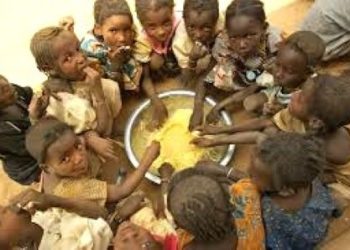
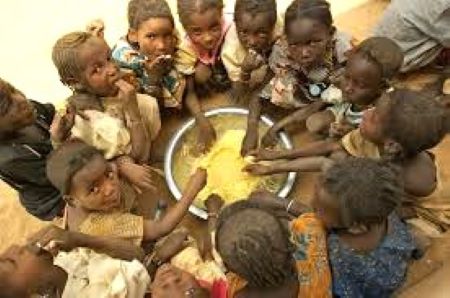
Few contradictions in Nigeria are more painful than the relationship between national wealth and popular poverty. Nigeria possesses enormous oil and gas reserves, fertile agricultural land, a large labour force and a huge consumer market. Yet millions of Nigerians continue to experience poverty, food insecurity, unemployment and declining purchasing power. The World Bank has continued to describe poverty and food insecurity as significant challenges even while recognising recent improvements in Nigeria’s macroeconomic position. This contradiction raises a fundamental question: What is the meaning of national wealth if ordinary citizens cannot experience that wealth through improved living conditions?
Economist Amartya Sen provides an important framework for answering this question. Sen argues that development should not be measured only by national income but by the expansion of people’s capabilities—their ability to live healthy, educated, secure and meaningful lives. Applied to Nigeria, this means that development cannot be measured solely by GDP, government revenue, foreign reserves or investment figures. The real test is whether the Nigerian household can afford food, whether the child can obtain quality education, whether the farmer can safely cultivate his land and whether the young graduate can find productive employment. Economic statistics matter, but human welfare is the ultimate measure of development.
*Oil: From colonial commodity logic to post-colonial resource dependence
Nigeria’s transition from an agricultural-export economy to an oil-dependent economy changed the country’s principal source of wealth without completely eliminating its dependence on primary commodities. Oil became the new national treasure, but it also became a major political and institutional challenge. The problem is not that Nigeria possesses oil; the problem is what happens when enormous resource revenues coexist with weak institutions, poverty and limited productive diversification. The Niger Delta provides one of the clearest examples. Communities from which petroleum resources are extracted have for decades raised concerns about environmental degradation, inadequate development and the distribution of oil wealth.
Economist Joseph Stiglitz’s work on the “resource curse” offers an important perspective. Countries rich in natural resources can sometimes develop political systems in which elites compete for control of resource rents instead of building productive economies. The consequence is that national wealth becomes politically valuable without necessarily becoming socially transformative. Nigeria therefore needs to move beyond the question of how much oil it can produce to the more important question of how resource wealth can be converted into human capital, infrastructure, manufacturing, technology, agriculture and productive employment. The real measure of oil wealth should not be the size of petroleum revenues but the quality of life those revenues create for Nigerians.
*The political class and the ordinary citizen
The distance between the political class and ordinary Nigerians becomes particularly visible during periods of economic hardship. For politicians and government officials, inflation may appear as percentages in economic reports; for the ordinary citizen, inflation appears in the marketplace. It is the increase in the price of rice, transport fares, rent, medicine, school fees and electricity. It is the small business owner whose operating costs continue to rise, the farmer struggling with insecurity and production expenses, and the salaried worker whose income no longer buys what it purchased a few years earlier.
This is why economic policy cannot be judged exclusively from government offices. It must also be judged from the Nigerian household. A government may point to improved revenue, fiscal reforms or macroeconomic stability, but the citizen asks a much simpler question: “Is my life becoming better?” This distinction between macroeconomic indicators and household welfare is critical. Economic reform may improve the finances of the state while citizens experience severe short-term pressure. Unless governments deliberately protect vulnerable households and ensure that the benefits of reform reach ordinary people, public confidence in reform will inevitably weaken.
*Reform: Who pays the price?
No serious country can avoid economic reform forever. Nigeria has faced structural weaknesses for decades, including excessive dependence on imports, inadequate industrial capacity, energy shortages, fiscal pressures and weak job creation. Reform is therefore necessary. But the politics of reform matters just as much as its economics. When subsidies are removed, prices can rise; when exchange-rate policies change, imported goods can become more expensive; when taxes increase, households and businesses can carry additional burdens. Such policies may sometimes be economically necessary, but citizens are entitled to ask who carries the immediate cost and who receives the eventual benefit.
This is where leadership becomes decisive. A government asking citizens to make sacrifices must demonstrate that the sacrifices are fairly distributed. If ordinary workers, traders, farmers and small businesses are expected to endure higher costs while the political class continues to enjoy enormous privileges, public frustration becomes inevitable. Economic reform cannot survive permanently on the language of sacrifice alone. Citizens need to see corresponding improvements in security, infrastructure, employment, public services and social protection. Otherwise, reforms risk being perceived not as a national reconstruction project but as another mechanism through which the burden of the state is transferred to those least able to carry it.
THE POOR CITIZEN:
THE NEW FACE OF POWERLESSNESS
The colonial subject had little political control over the government that ruled him. The democratic citizen theoretically possesses sovereignty, but poverty can weaken that sovereignty in practice. A person who cannot feed his family is less economically independent. A young person without employment can become vulnerable to political manipulation. A community without basic services can become dependent on political patrons. A farmer living under persistent insecurity cannot fully exercise his economic freedom. Political freedom and economic freedom are therefore deeply connected.
Fanon’s analysis of post-colonial societies remains relevant because he understood that political independence without social and economic transformation could leave the masses disappointed. The flag may change while the conditions of the poor remain largely unchanged. This is the danger Nigeria must avoid. Independence should not mean simply replacing foreign administrators with indigenous elites; it should mean creating a society in which ordinary citizens possess genuine opportunities to determine the direction of their own lives.
*Democracy must mean more than elections
Nigeria’s democratic experience since 1999 represents an important political achievement. But democracy cannot be reduced to elections. The right to vote is fundamental, yet citizens also need the practical conditions that allow them to exercise meaningful freedom. Political philosopher Alexis de Tocqueville emphasised the importance of civic participation and institutions in sustaining democratic societies, while Sen connected political freedom to people’s substantive capabilities.
For Nigeria, this means democracy must eventually be judged beyond the polling station. A citizen should not only have the right to choose a governor, legislator or president; he should also have the right to expect security, justice, education, healthcare, infrastructure and economic opportunity. If a citizen can vote but cannot safely farm, cannot afford food, cannot access quality healthcare or cannot find employment, democracy remains politically present but socially incomplete. Democracy must be felt in the lives of citizens, not merely celebrated during elections.
*When poverty becomes a tool of politics
One of the most dangerous consequences of mass poverty is political dependency. A desperately poor citizen may accept a small payment from a politician because immediate survival takes priority over long-term political principles. An unemployed young person may be recruited into political violence because he has few economic alternatives. A community without basic infrastructure may become dependent upon political patrons for roads, water, electricity or other necessities. Poverty can therefore become an instrument through which political loyalty is purchased.
This creates a vicious cycle: poverty produces dependence; dependence produces patronage; patronage protects political power; and protected political power can reproduce poverty. Jean-Jacques Rousseau’s observations on inequality remain useful here: extreme economic dependence can undermine genuine freedom because people become vulnerable to those who possess greater power and resources. Nigeria’s democratic project therefore requires more than periodic elections. It requires reducing the economic vulnerability that makes citizens dependent upon political patrons.
*Achebe and the crisis of leadership
Chinua Achebe’s The Trouble with Nigeria provides perhaps one of the most direct intellectual perspectives on the country’s political condition. Achebe famously placed leadership at the centre of Nigeria’s national difficulties. His argument remains significant because leadership determines how institutions are used and how public resources are distributed. A country may possess enormous natural resources, talented people and a large population, yet still fail to achieve development when those controlling public institutions do not regard leadership as a moral responsibility.
This perspective reinforces Sulaiman’s argument. The central question is not simply whether Nigeria has resources but whether it has leadership capable of converting those resources into national development. Good leadership should turn public resources into functioning schools, hospitals, roads, electricity, industries, jobs and security. When enormous public resources are repeatedly mobilised without producing corresponding improvements in the lives of citizens, the problem is no longer simply a shortage of resources. It becomes a question of governance, priorities and political accountability.
*Nkrumah and the danger of neo-colonialism
Kwame Nkrumah provides perhaps the strongest theoretical connection to Sulaiman’s critique. In Neo-Colonialism: The Last Stage of Imperialism, Nkrumah argued that a state could appear politically independent while remaining economically and politically vulnerable to external influence. His analysis is relevant to Nigeria’s continued dependence on foreign capital, technology, markets and imported goods.
But the concept of neo-colonialism must be used carefully. It should not become an excuse for blaming foreigners for every Nigerian failure. Nigeria’s political class possesses agency. Foreign influence becomes powerful partly where domestic institutions are weak. External economic actors respond to opportunities created by the domestic political and economic environment. Therefore, the challenge is both external and internal: Nigeria must strengthen its institutions, diversify its economy and develop the capacity to determine its own national priorities.
*Ngugi and the struggle for the mind
Ngũgĩ wa Thiong’o adds another important dimension through his argument about the decolonisation of the mind. Colonialism did not only control territory and resources; it also influenced education, language, culture and the way African societies understood themselves. For Nigeria, the question is whether development is always defined through external models or whether Nigerians can develop their own intellectual confidence while learning intelligently from the wider world.
Decolonisation does not mean rejecting everything foreign. It means possessing sufficient intellectual independence to decide what is appropriate for Nigeria. A country that cannot formulate its own development priorities remains dependent even when its political sovereignty is unquestioned. The challenge is therefore to build a Nigerian model of development that learns from successful societies without becoming intellectually or economically subordinate to them.
*Ibn Khaldun and the rise and fall of political power
Ibn Khaldun offers another powerful framework for understanding the relationship between political power, social solidarity and elite privilege. In the Muqaddimah, he examined how ruling groups could rise through social cohesion and eventually decline when they became accustomed to luxury, privilege and excessive dependence upon state resources. His concept of asabiyyah, or social solidarity, provides a warning to political elites who become detached from the conditions of the people they govern.
A government cannot maintain legitimacy indefinitely through power alone. It requires a social bond between rulers and citizens. When political leaders become increasingly separated from the economic realities of ordinary people, that bond weakens. A ruling class living in extraordinary privilege while millions struggle with food, security and employment risks creating precisely the social distance that Ibn Khaldun warned could undermine political authority. Nigeria’s leaders should therefore understand that public trust is itself a national resource, and once it is destroyed it is difficult to rebuild.
*The moral question of leadership
Sulaiman’s Islamic perspective also deserves serious consideration. He argued that Islam could provide a moral and ideological foundation for national transformation. At the heart of Islamic political ethics is the concept of amanah, or trust. Public office is therefore not simply an opportunity for personal advancement; it is a responsibility before society and ultimately before God.
The Qur’anic command to render trusts to whom they are due and to judge with justice provides a powerful ethical foundation for public administration. Applied to contemporary Nigeria, the political leader should continually ask: Have I protected the public trust? Have I treated citizens fairly? Have public resources been used for their intended purpose? Have the poor been protected? This moral framework is particularly important in a society where religion remains deeply influential. The crisis of Nigeria is therefore not merely economic or political; it is also a crisis of public morality and responsibility.
*The citizen should not be the sacrifice
Nigeria’s greatest political danger may be the normalisation of suffering. Citizens are repeatedly told to endure inflation, unemployment, insecurity, poor electricity, inadequate infrastructure and economic hardship. But government must eventually answer a fundamental question: How long should citizens be asked to sacrifice without seeing meaningful improvement in their lives?
The poor cannot continually be the adjustment mechanism of the Nigerian economy. If reform is necessary, the burden must be distributed fairly. If government must raise revenue, it must demonstrate accountability. If citizens must sacrifice, political leaders must demonstrate discipline. If government demands patriotism from citizens, it must demonstrate equal patriotism toward the people. The legitimacy of any economic reform ultimately depends on whether citizens believe that the sacrifices they are making are leading toward a fairer and more prosperous society.
*From colonialism to indigenous responsibility
This is where the comparison between colonial Nigeria and contemporary Nigeria must ultimately lead. The British colonial government had an external master; today’s Nigerian government does not. Therefore, today’s political class cannot blame colonialism indefinitely. Colonial history explains part of Nigeria’s structural problems, but it cannot excuse present-day failure after more than six decades of independence.
The question is no longer simply, “What did colonialism do to Nigeria?” It must also be, “What have Nigerians done with Nigeria since colonialism ended?” That is the harder question because it places responsibility directly on the shoulders of contemporary Nigerians, particularly those who exercise political power. The colonial past must be studied, but it must not become a permanent excuse for the failures of the present.
*The unfinished business of independence
Nigeria’s independence was a historic achievement, but political independence was only the beginning. Genuine independence requires economic capacity, strong institutions, intellectual confidence, food security, industrialisation, technological development, social justice, security and human dignity. A country cannot claim to have fully realised the promise of independence if its citizens remain trapped in cycles of poverty and dependency while political and economic opportunities are concentrated among a narrow elite.
Nigeria therefore needs to transform the relationship between power, resources and citizenship. Political office must be treated as a public trust rather than a personal reward; national resources must be converted into opportunities for the majority; and democracy must become more than the periodic mobilisation of citizens for elections. The ultimate objective should be a state in which citizens are not merely governed but protected, empowered and given genuine opportunities to prosper.
*From darkness to light
Ibraheem Sulaiman’s 1982 lecture should not be remembered simply as an attack on Britain. Its deeper value lies in the questions it forces Nigerians to ask about power, resources, responsibility and the meaning of freedom. Colonialism exploited Nigeria because colonial power was organised around interests outside the Nigerian population. The tragedy of post-colonial Nigeria would be to reproduce the same logic internally, where the Nigerian state becomes an instrument through which a small elite accumulates wealth while the majority remains trapped in poverty.
That would amount to replacing foreign domination with indigenous domination. Nigeria must reject both. The objective should not be to find a new class of rulers who occupy the same extractive structure; it should be to transform the structure itself. The political class must understand that Nigeria is not an inheritance for those who win elections. It is a trust. Natural resources are not private property. The national budget is not political money. Public office is not a reward. Democracy is not merely the freedom to choose who governs; it is the promise that those who govern will use public power to protect the dignity and welfare of the people.
This is why Sulaiman’s warning still matters. Nigeria must not move from colonial exploitation to indigenous exploitation. It must move from dependency to self-reliance, from elite privilege to public accountability, from political patronage to genuine citizenship, and from economic hardship to shared prosperity. The British colonial flag came down in 1960, but the deeper struggle for freedom did not end there. The unfinished task is to ensure that no Nigerian—farmer, trader, worker, student, civil servant or unemployed graduate—lives as a stranger in his own country, watching the wealth of the nation pass above his head while poverty remains at his doorstep.
Nigeria does not merely need another political transition. It needs a moral, institutional and economic transformation. The journey must therefore be clear: from colonialism to sovereignty, from sovereignty to accountability, from accountability to justice, from justice to shared prosperity, and ultimately—from darkness to light.
*Danlami is a public affairs analyst