

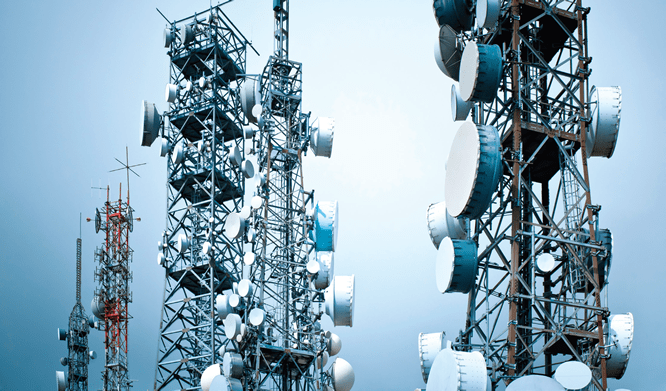
Determined to guarantee global best practices in the industry, the Nigerian Communications Commission (NCC) it was gathered, is developing an Incentive-Based Spectrum Investment Framework (IBSIF) to encourage telecommunications operators to channel capital into network expansion in exchange for spectrum-related incentives.
The initiative is taking place even as spectrum acquisition costs have surged up to three to fourfold since 2016, making it difficult for telecomm operators to meet growing broadband demand.
Speaking during a media briefing on the proposed policy, Umar Abdullahi, Special Adviser (Technical) to the NCC Executive Vice-Chairman and member of the IBSIF committee, said the framework will tie spectrum value directly to measurable infrastructure investments.

Abdullahi disclosed during the briefing that Nigeria’s monthly data consumption has more than tripled, jumping from roughly 517,670 terabytes in January 2023 to 1.73 million terabytes in September 2026.
He projected that demand will rise further alongside expansion of artificial intelligence, cloud computing, digital government services, banking, and streaming.
“Yesterday’s challenge was about connecting people. Now it’s about powering the country. It’s about services and industry,” Abdullahi said.
Bridging the 5G and Capacity Gap
despite operators investing over $1 billion in capital expenditure last year to deploy nearly 3,000 new sites.
He added with about 8,000 sites across the country, this year alone, the commission has worked towards achieving 12,000-site target.
Abdullahi noted that service quality complaints will vanish because of the capacity to immediately absorbs new demands.
He pointed out that high spectrum fees divert funds that operators could otherwise use to upgrade networks.
“The spectrum costs have gone up about three to four times from 2016 to now. When you compare that with the revenues, it is even more glaring,” he stated.
According to the commission, while 4G population coverage stands at roughly 82 per cent, 5G coverage lags at between 13 and 14 per cent.
Abdullahi howwver, noted that Nigeria being a mobile-first market reliant on smartphones and MiFi devices rather than fixed broadband, has significant room to catch up with peers like India and Brazil, which launched 5G around the same period.
Under the proposed IBSIF, operator commitments will undergo strict technical and financial verification, with network performance tracked through objective metrics, including crowdsourced quality-of-experience data.
He noted that with expanding coverage into peri-urban, peri-rural, and semi-rural areas, the Universal Service Provision Fund (USPF) will continue to handle commercially unviable zones, making such areas commercially viable for the operators without disrupting services in such disadvantaged areas.