

By Ifeatu Agbu
Conversations about the Niger Delta often revolve around what lies beneath the soil rather than what grows from it. It is true that the Niger Delta has powered Nigeria’s economy since crude oil was discovered in commercial quantities in 1956 at Oloibiri, Bayelsa State.
Today, the narrative is changing as efforts are underway to reposition agriculture to help secure Nigeria’s future prosperity. The plan is to build an agricultural economy that rewards investment, drives industrial growth and positions the Niger Delta as one of Nigeria’s leading destinations for agribusiness.
The Niger Delta possesses the natural and economic fundamentals that investors seek. The region is endowed with fertile land, abundant freshwater resources, diverse ecological zones, extensive coastline and inland waterways, and access to major domestic and export markets. Across the Niger Delta states lies enormous potential for crop production, aquaculture, livestock, agro-processing and agricultural trade.
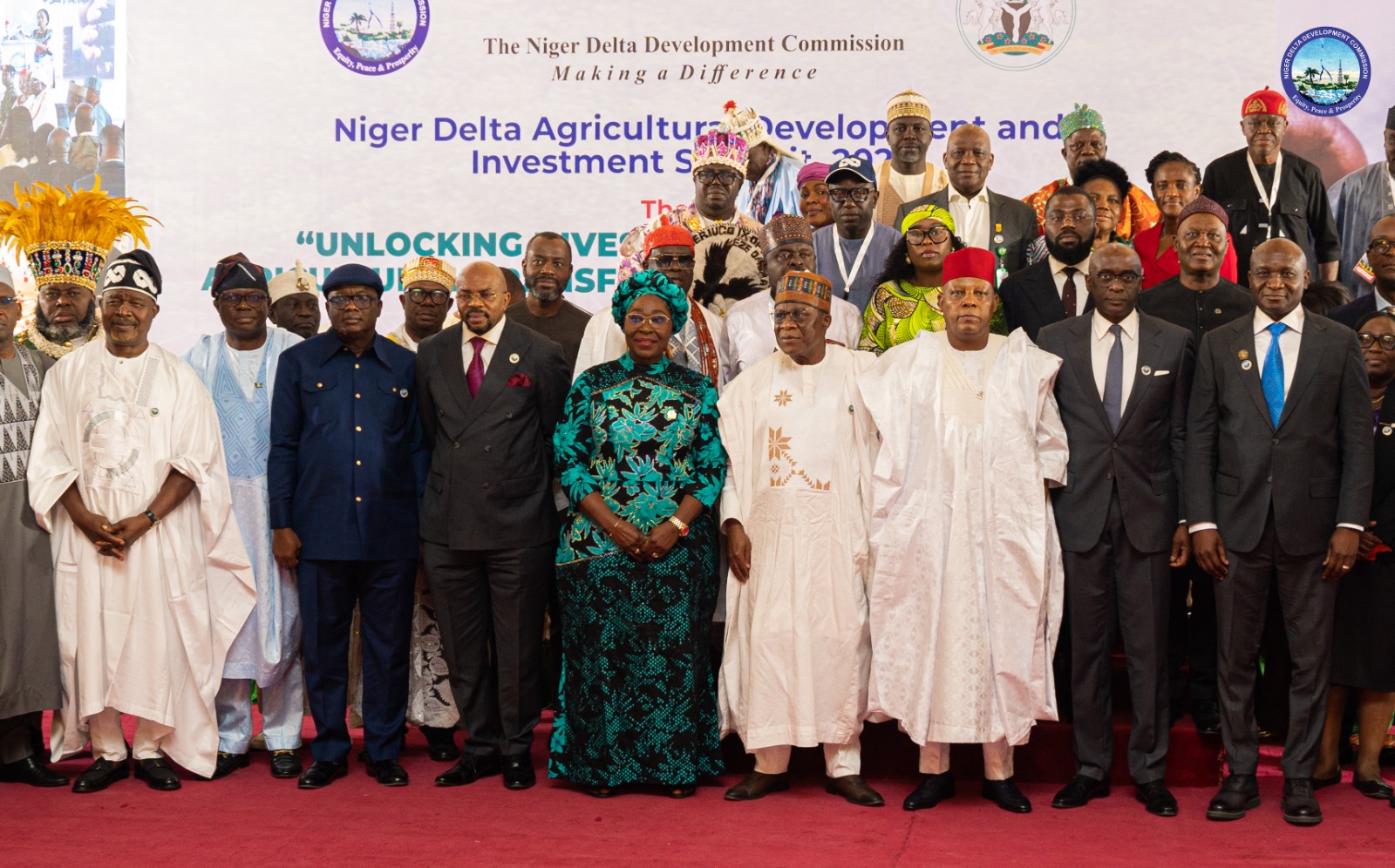
On July 15, the Banquet Hall of the Presidential Villa, Abuja, came alive with strategies for repositioning agriculture in Nigeria’s oil-rich region. It was a day the Vice President, Senator Kashim Shettima, unveiled the Niger Delta Agricultural Development and Investment Fund and inaugurated a Coordinating Council for agricultural development and investment in the Niger Delta region.

The milestone event was the Niger Delta Agricultural Development and Investment Summit, described as a game-changer for Nigeria’s economy, with a $500 million investment fund to boost food production and create over 500,000 jobs.
The summit was jointly organised by the Office of the Vice President and the Niger Delta Development Commission, NDDC, with the support of the governors of the nine Niger Delta mandate states. was anchored on the theme: “Unlocking Investment for Sustainable Agricultural Transformation in the Niger Delta.”
For the first time, government, development finance institutions, private investors and strategic partners are coming together around a shared vision for agricultural transformation in the Niger Delta.
According to him, the fund would be a commercially driven investment platform to finance projects across the agricultural value chain, including oil palm, aquaculture, cassava, cocoa, rice, horticulture, livestock and marine resources.
It is also expected to attract capital from multilateral development institutions, commercial financiers and private investors.
The Vice President stated: “Before oil took centre stage in our economy, it was the soil that paid our bills. We must, therefore, return to agriculture for our economic development.”
Shettima said agriculture remained central to the Tinubu administration’s development agenda because of its role in ensuring food security, economic growth and national stability.
He said the fund would coordinate commitments from development partners, including the World Bank, the African Development Bank, the Islamic Development Bank, the European Bank for Reconstruction and Development, as well as private and commercial financiers.
“Above both stands the Niger Delta Agricultural Development and Investment Council, which I am honoured to chair, with the NDDC as its Secretariat. Beneath it lies a demand-side strategy preparing bankable projects across all nine mandate states.
“It is no coincidence that President Bola Ahmed Tinubu placed food security among the earliest priorities of this administration, because nations that lose control of their food eventually surrender control of their future.”
Earlier, the NDDC Managing Director, Dr Samuel Ogbuku, noted that the region’s economy had historically been driven by agriculture before the discovery of crude oil.
He said: “The Niger Delta has for decades been known for oil, but it is time to unlock the enormous opportunities beneath its fertile soil. Agriculture offers the region a pathway to food security, employment, investment and lasting prosperity.”
The NDDC boss stated that the summit marked the beginning of a coordinated investment programme to attract private capital and diversify the region’s economy.
According to him, the transition of international oil companies from onshore operations to deep offshore assets presents an opportunity for agriculture to emerge as the next major investment destination in the Niger Delta.
The Chairman of the NDDC Governing Board, Mr Chiedu Ebie, remarked that although the Niger Delta region was known as “the home of oil and gas,” it must be recognised that it was also richly endowed with arable land for agriculture.
Ebie said: “We remain guided and aligned with the agricultural policies of the Federal Government. The eight presidential priorities encompassing food security, poverty eradication, job creation, and the fight against corruption serve as our roadmap toward a brighter and more prosperous Niger Delta.”
Earlier, the Senior Special Assistant to the President on Agribusiness and Productivity Enhancement, Dr Kingsley Uzoma, said the summit sought to connect the Niger Delta’s agricultural potential with investment, partnerships and institutions needed to unlock sustainable growth.
He said the region possessed vast agricultural resources, waterways and entrepreneurial talent, but required coordinated implementation and access to capital to realise its full potential.
In her speech, the NDDC Director of Agriculture and Fisheries, Dr Winifred Madume, said that the next chapter of the Niger Delta must be written through agriculture, particularly modern, commercially driven agriculture that attracts investment, creates value, generates employment, and competes globally.
She said: “The Niger Delta possesses the natural and economic fundamentals that investors seek. Our region is endowed with fertile land, abundant freshwater resources, diverse ecological zones, extensive coastline and inland waterways, and access to major domestic and export markets. Across our nine mandate states lies enormous potential for crop production, aquaculture, livestock, agro-processing and agricultural trade.”
Madume insisted that the next chapter of the Niger Delta must be written through agriculture – not subsistence agriculture, but modern, commercially driven agriculture that attracts investment, creates value, generates employment and competes globally.
“Around the world, the global conversation on agriculture has changed. Agriculture is no longer viewed simply as a development sector. It is now recognised as a strategic investment sector that creates wealth, strengthens economies and secures nations,” she said.
“The Niger Delta offers access to one of Africa’s largest consumer markets, a strategic location for regional trade, and diverse opportunities across agricultural value chains. Investors, bring your technology. Bring your expertise. Bring patient capital. Together, we can build globally competitive agribusinesses that deliver strong commercial returns while strengthening food security and economic growth.”
Development finance institutions, commercial banks and investment partners must continue to collaborate to unlock financing for commercially viable agricultural enterprises. From all indications, the Niger Delta has never lacked potential. What it has lacked is investment at the scale required to unlock that potential.