



The Governor of Borno State, Prof. Babagana Zulum, has ordered the immediate closure of the Internally Displaced Persons (IDP) Camp in Bama, the largest displacement facility outside the state capital, Maiduguri, while also giving the hint that the Gwoza IDP Camp would be shut down.
The Governor announced this on Thursday in Gwoza shortly after an assessment visit to the Government Secondary School IDP camp.
“We visited Bama yesterday and supervised the screening of IDPs, and by 12 noon, Bama IDP camp should be closed,” Zulum stated.

“Today we are here in Gwoza, we have profiled all of them, and Insha Allah, in the next two or three weeks this camp will also be closed.”
According to Gov. Zulum, the return of the inmates has been possible by the relative peace now prevailing in most communities hitherto occupied by Boko Haram insurgents.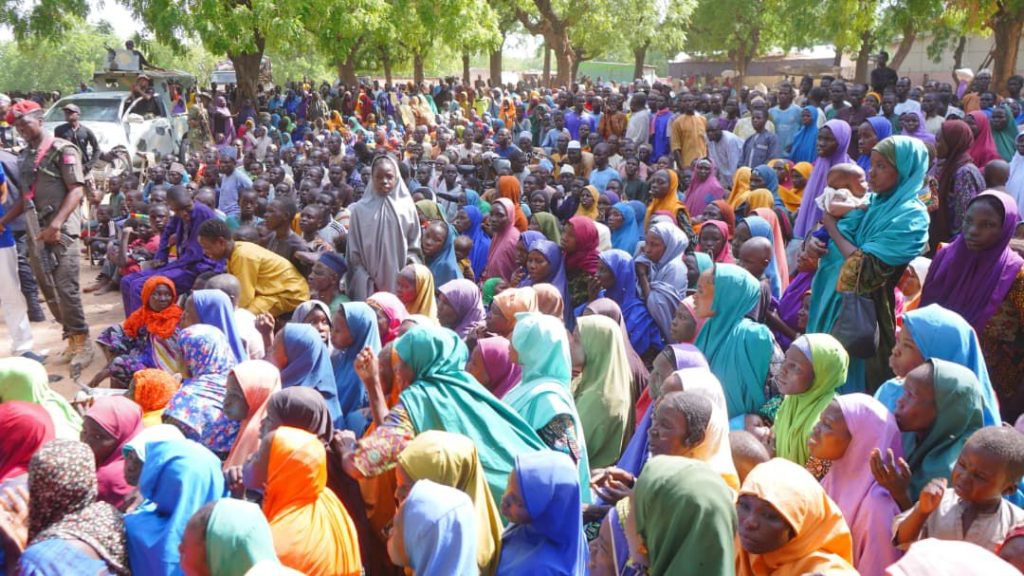 *A cross section of Internally Displaced Persons at an IDP in Bama
In the past seven years, Borno State Government has successfully resettled several communities in Bama Local Government Area, including Darajamal, Nguro Soye, Goniri, Banki, Abbaram, Ngoshe, Kirawa, Warabe and other locations across the state.

However, Zulum expressed concern over the rising criminality within the IDP camps, pointing to the proliferation of illicit activities that have turned these facilities into hotspots for social vices.
“In our camps now, there is an ongoing criminality; we have identified all of them and they’ll be resettled based on their localities and to their community heads. Otherwise, Boko Haram/ISWAP are gradually infiltrating the camps,” he said.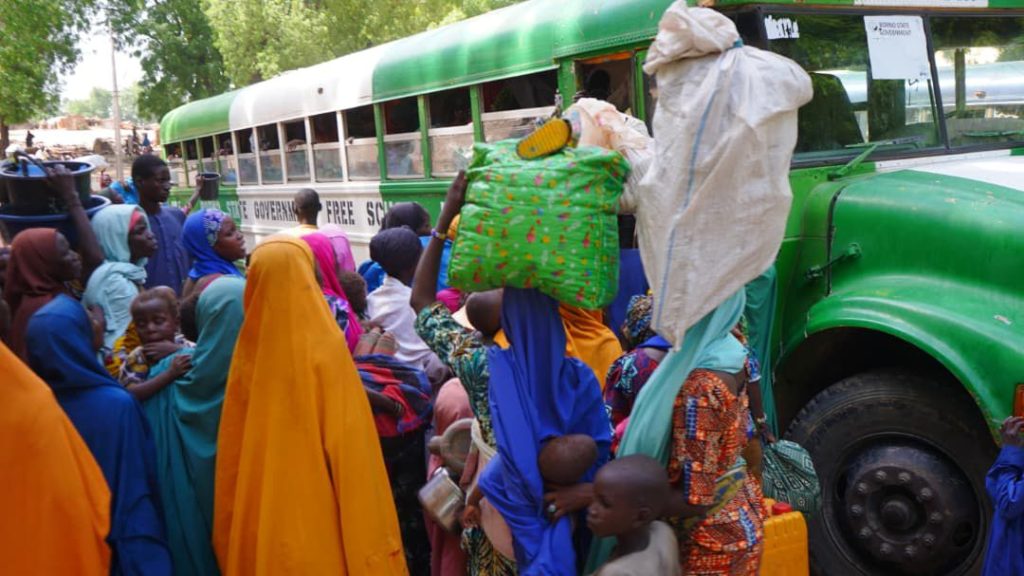
He also raised the alarm over the disturbing trend of people leaving their homes to resettle in camps to collect relief items from non-governmental organisations.
The Governor hinted that a significant number of fake IDPs had been identified during the screening exercise, stressing that the government cannot sustain the maintenance of camps under such circumstances.
The Governor also hinted that several other camps in different parts of the state will also be closed before his tenure ends.
“Many of those that are residents living in their homes are returning to the camps to receive handouts from non-governmental organisations. We will ensure the returns are sustainable.
“One year ago, this was almost a ghost camp with not more than about 400 households.
“It is surprising that about 3,000 households are back in the camp, and most of them are residents living within the town,” he said.