


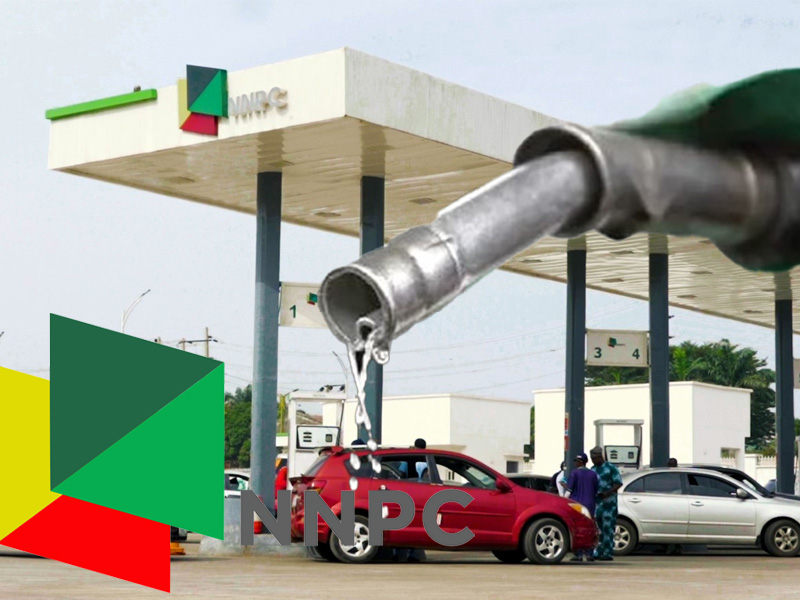
The African Democratic Congress (ADC) has rejected the Presidency’s claim that implementing its presidential candidate, Atiku Abubakar’s, proposed petrol subsidy to bring pump prices down to about ₦600 per litre could cost Nigeria ₦19.1 trillion annually.
The party described the presidency’s earlier subsidy figures as “phantom”, accusing the Presidency of creating a hypothetical subsidy model based on a $40-per-barrel differential and then using the resulting projection to discredit Atiku’s proposal.
In a statement by its National Publicity Secretary, Mallam Bolaji Abdullahi, the ADC said the Presidency had failed to demonstrate that the proposed policy would actually require ₦19.1 trillion annually.
The party argued that the fundamental issue was that millions of Nigerians could no longer afford the cost of unsubsidised fuel and that any petroleum policy must therefore take the welfare of citizens into account.
According to the ADC, Atiku’s proposal was fundamentally different from the former petrol subsidy regime because it would shift government intervention from imported refined products to domestic production.

It explained that the proposed model would provide a controlled crude-feedstock incentive to qualifying Nigerian refineries under a benchmark-and-ceiling arrangement.
Under the arrangement, government would establish a benchmark crude price consistent with a targeted maximum domestic petroleum-product price.
If the market price remained at or below the benchmark, no subsidy would apply. Where the price exceeded the benchmark, government would cover only the qualifying difference, subject to an approved fiscal ceiling.
The party therefore rejected the Presidency’s assumption of a permanent $40-per-barrel subsidy.
“The Presidency cannot simply take its own $40 assumption, multiply it across an assumed volume and announce the resulting number as the cost of Atiku’s subsidy plan,” the ADC said.
It argued that the Presidency was attacking the old import-dependent subsidy model rather than Atiku’s proposed production-support system.
The party said the old model involved importing refined petroleum products, spending foreign exchange to subsidise them and then consuming them domestically.
By contrast, it said Atiku’s proposal would involve using Nigerian crude in Nigerian refineries to produce petroleum products for domestic consumption, with surplus products potentially exported.
The ADC maintained that such an arrangement would reduce dependence on imported petroleum products, conserve foreign exchange, strengthen domestic refining capacity and retain more economic value within Nigeria.
It also argued that the proposed system would be easier to monitor because crude allocations, refinery intake, production volumes and domestic distribution could be tracked.
“What the Presidency is attacking therefore is the old subsidy regime that Atiku is seeking to replace, not Atiku’s plan,” the party said.
The ADC also challenged the Federal Government to account for what it described as the broader petroleum-related financial burden under the current administration.
It cited approximately ₦7.13 trillion reportedly recorded under “Energy Security” in NNPC’s audited 2024 accounts and referred to broader petroleum-related exposure of about ₦17.5 trillion, depending on the accounting categories included.
The party stressed that it was not equating those figures with conventional petrol subsidy expenditure but demanded transparency regarding their purpose, implementation and economic value.
It also accused the government of inconsistency over fiscal incentives in the petroleum industry, pointing to the Deep Offshore Oil and Gas Projects Incentives (Tax Remission) Order 2026.
According to the ADC, the order provides production tax credits of between $3 and $4.50 per barrel under specified conditions, with supplementary credits capable of raising the aggregate incentive to $11.50 per barrel for qualifying projects.
The party questioned why government could offer fiscal incentives to oil investors while dismissing a controlled production incentive aimed at supporting domestic refineries and reducing fuel prices.
“If Nigeria can provide a production-linked fiscal incentive of up to $11.50 per barrel to stimulate offshore oil production, why is a carefully controlled crude-input incentive for domestic refineries dismissed as economic madness?” it asked.
The ADC also referred to Customs figures showing approximately ₦34 trillion in approved import-duty exemptions, while acknowledging that the figure represented the value of approved exemptions rather than direct government expenditure.
It argued that the exemptions demonstrated that government could legitimately forgo revenue where wider economic or social benefits were expected.
The party said the same principle should apply to a production incentive designed to reduce energy costs for Nigerians and promote domestic refining.
According to the ADC, cheaper petrol would benefit the wider economy and not only motorists.
It said fuel costs affect transportation, agriculture, food distribution, manufacturing, construction, logistics and household purchasing power.
The party consequently faulted the Presidency for calculating the possible cost of Atiku’s proposal without considering the economic cost of maintaining the current policy.
It asked government to calculate the cost of high transportation fares, expensive food distribution, petroleum imports, foreign-exchange demand, refinery under-utilisation and reduced competitiveness of Nigerian businesses.
“Doing nothing is not free. It is ultimately more expensive,” the party said.
The ADC demanded that the Presidency prove that Atiku’s plan would cost ₦19.1 trillion annually, establish that the $40-per-barrel assumption was contained in the proposal and demonstrate that the projected fiscal cost would outweigh the economic benefits.
It also challenged the government to calculate the potential foreign-exchange savings and industrial multiplier arising from increased domestic refining.
“Nigeria deserves an economic model, not a political talking point,” the party said.
On concerns that the policy could enrich wealthy refinery owners, the ADC said potential abuse could be prevented through strict regulatory safeguards, including measurable refinery intake, auditable production, transparent pricing, domestic-supply obligations, digital tracking, claw-back provisions and penalties for diversion.
The party further maintained that Atiku’s proposal was not a return to the old subsidy regime but a capped, audited and traceable production-support programme that could be progressively phased out as domestic refining became competitive.
It also cited Section 109(2) of the Petroleum Industry Act as providing a framework for implementing the Domestic Crude Supply Obligation in furtherance of Nigeria’s energy security.
The ADC concluded that the debate should not simply be about whether Nigeria should subsidise fuel but about what should be subsidised, why and for whose benefit.
“Nigerians are too poor not to be subsidised,” the party said, insisting that Nigerian crude should create value for Nigerians.
It challenged the Presidency to explain why cheaper energy for citizens should receive less public investment than other multi-trillion-naira interventions and fiscal incentives.
The ADC said its proposal was for a transparent production-support regime, not an opaque subsidy system.
“We do not propose to subsidise waste. What we propose is to subsidise production that directly improves capacity,” the party said, adding that the intervention would prioritise domestic value addition rather than import dependence.