


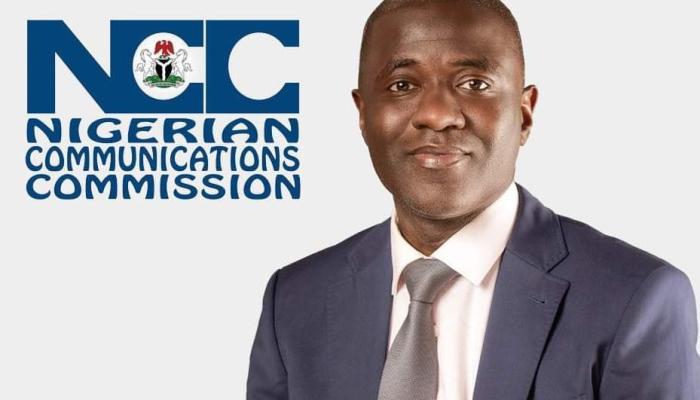
The Nigerian Communications Commission (NCC) has advocated for acceleration in Fibre-to-the-Home (FTTH) deployment to accelerate rapid broadband expansion to push the federal government’s drive to achieve a $1 trillion economy target for the country by 2030.
The Executive Vice-Chairman/CEO of the NCC, Dr. Aminu Maida, made the call on Tuesday during the Association of Telecommunications Companies of Nigeria’s (ATCON’s) Critical Conversation Forum on FTTH which held in Lagos.
Maida, speaking on the theme “Addressing Challenges, Strengthening Standards and Ensuring Sustainable FTTH Deployment in Nigeria”, maintained that resilient fibre infrastructure had transitioned from being a luxury to a critical driver of national development.

The NCC boss explained that while mobile internet access in the country have continued to grow, consolidating on the achievements requires huge investments in fixed broadband infrastructure, which have remained inadequate in the country
Latest data showed that Nigeria recorded a milestone 154.72 million internet subscriptions in April 2026, deepening broadband penetration to 55.67% (up from 48.81% the previous year) based on surge in remote work, online learning, cloud computing, and AI-driven applications, Nigerians now consume about 1.4 million terabytes of internet data monthly.
Despite the improved indices, Maida stated that out of millions of internet users in the country, only about 265,000 were active FTTH subscriptions, thereby creating opportunity for investors and economic expansion.
He stressed importance of internet connectivity in education, healthcare, commerce, governance, financial services, and innovation, stressing that telecom investors to deepen fibre rollout continued in spite of sundry challenges with the attendant negative implications for quality service delivery
He acknowledged some of the bottlenecks as damages to fibre optics, which in 2025 alone, telecom operators recorded over 27,685 fibre cuts, 4,210 incidents of theft, and 27,000 instances of denied access to infrastructure sites; multiple permitting processes, weak inter-agency coordination, and inconsistent Right-of-Way (RoW) fees across states continue to stifle progress.
Maida also disclosed that while 13 states had waived RoW charges and 16 had adopted the National Economic Council’s recommended rate of N145 per linear metre, others were still to set up such policy measures, and urged the remaining sub-national governments to remove these barriers since the long-term economic gains of robust digital infrastructure outweigh immediate RoW revenues.
He highlighted NCC’s strategic initiatives, including the launch of an Ease of Doing Business Portal, designed to simplify investments by offering centralized, state-specific data on regulatory approvals and deployment laws; on-going review of the wholesale broadband market to encourage healthy competition, protect consumer choice, and enforce affordable pricing; and a call to action for urban planners to integrate telecommunications infrastructure directly into community planning alongside traditional utilities like roads, water, and electricity.
He equally spoke on federal government’s Project BRIDGE, which aims at deploying approximately 90,000 kilometres of fibre-optic cable across all 774 local government areas.
In his address at the forum, the President of the Association of Telecommunications Companies of Nigeria (ATCON) Mr. Tony Emoekpere, called on mobile network operators (MNOs) to look inward on how best to eliminate poor installation practices and costly infrastructure duplication by sharing their active infrastructure and standardizing deployment rules in the industry.
Emoekpere, expressed optimism that decisions taken at the forum would help in identifying practical solutions required to boost last-mile internet connectivity nationwide.