

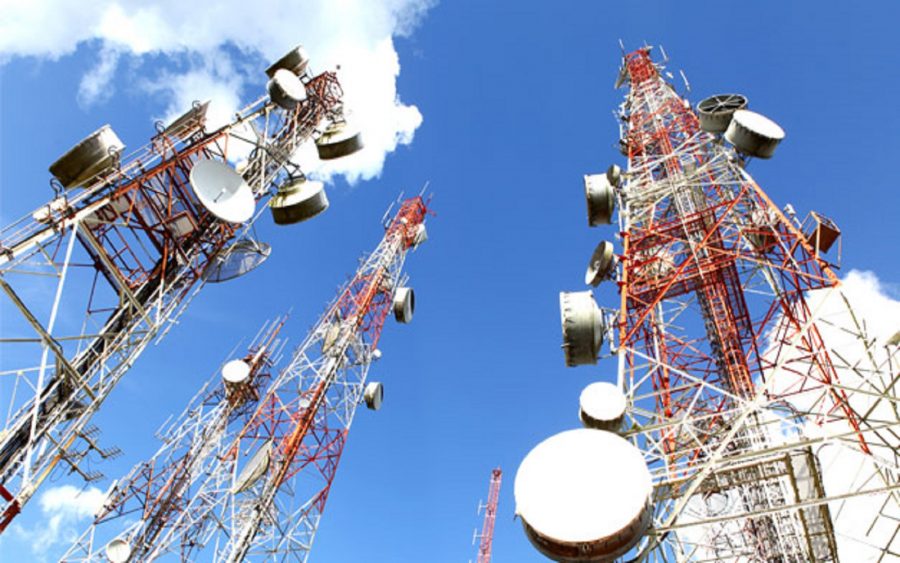
The Nigerian Communications Commission (NCC) has dismantled more than 450 illegal signal boosters mounted by operators in the Federal Capital Territory (FCT), Abuja.
Illegal signal boosters (also known as unauthorized, non-compliant, or rogue repeaters) are devices which amplify weak phone signals but such are prohibited for use because they interfere with legitimate mobile network infrastructure, leading to disruptions.
The NCC has also approved spectrum reassignments, taking radio frequency spectrum that was previously assigned to one type of service or user and reallocating it for another, to support new technologies or more efficient usage.

The NCC disclosed that in doing so, its enforcement teams dismantled the illegal signal boosters, noting that the devices degrade network quality in surrounding areas.
“Subsequent analysis indicates localised improvements in service quality, supported by crowd-sourced data, operator performance metrics and a decline in related consumer complaints.
“At least 70 network sites recorded measurable performance gains following booster removal.
“Engagements are on-going with the Nigerian Customs Service (NCS) to prevent further importation of the devices,” NCC noted.
The telecom regulator stated that in order to enhance spectrum efficiency and service delivery, it approved series of spectrum trades and reassignments, including the reallocation of approximately 50 MHz of underutilised spectrum for network expansion.
These measures, it disclosed, have resulted in demonstrable improvements in network performance, as reflected in independent monthly reports since September 2025.
“In particular, the reassignment of an additional contiguous 10 MHz to Globacom contributed to an increase in its average 4G download speeds from 9.5 Mbps to approximately 15 Mbps by November/December 2025.
In terms of telecom infrastructure protection, NCC revealed that the on-going operationalisation of the CNII Executive Order.
“In collaboration with the Office of the National Security Adviser, the Commission has convened engagements with the National Assembly, Judiciary, Federal Ministry of Works, State Attorneys-General, and the Nigeria Security and Civil Defence Corps, with plans to extend collaboration to State Ministries of Works,” it stated.
The Commission noted that this approach led to successful interventions already recorded in Kogi, Bauchi, and Osun States.
The telecom regulator said it is currently collaborating with the Central Bank of Nigeria (CBN) on Failed Airtime/Data Top-Ups and Consumer Refunds.
“Through this collaborative framework, mechanisms for transaction tracing, dispute resolution, and timely consumer refunds are being formalised.
“The initiative has already facilitated refunds exceeding N10 billion to affected consumers, contributing to enhanced confidence in digital payment channels,” it stated.
The NCC said, in collaboration with a joint industry committee, it continued to implement the Smarter Data Management Consumer Awareness Campaign.
The Commission added that the campaign focuses on promoting efficient data usage, conservation practices, and behavioural adjustments aimed at reducing passive data consumption linked to increasing network speeds and device capabilities.