

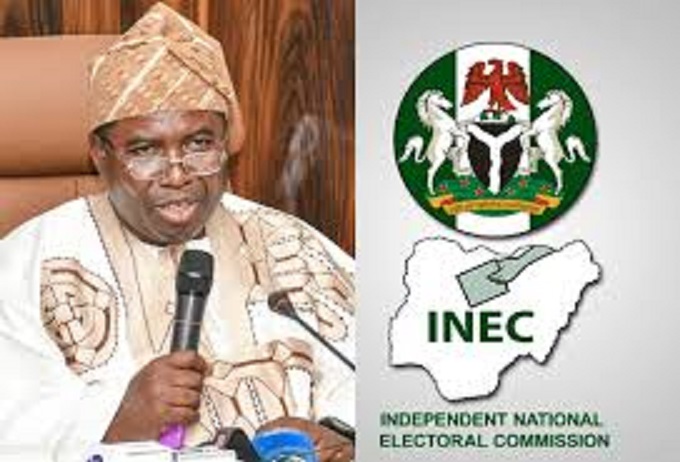
Former Chairman of the Independent National Electoral Commission (INEC), Prof. Attahiru Jega, and the Bishop of Sokoto Catholic Diocese, Most Rev. Matthew Kukah, have made separate calls for greater public trust, political accountability and responsible communication to thicken the electoral process ahead of Nigeria’s 2027 general elections.
They spoke at a public symposium organised by The Kukah Centre (TKC) and the National Institute for Legislative and Democratic Studies (NILDS), in Abuja.
The programme was co-funded by the European Union under its Support to Democratic Governance in Nigeria Programme.

The EU’s support forms part of its broader intervention through the EU-SDGN Programme for the promotion to promote democratic governance, institutional accountability and citizen participation in Nigeria.
With the theme, “Political Communication, Election Security and the Future of Nigerian Democracy,” the talkshop had in attendance electoral officials, academics, political communication experts, and civil society leaders,
Basically, the event was put together to examine how political narratives, institutional transparency, and election security shape public confidence ahead of the 2027 polls.

Speaking at the event, Most Rev. Kukah told the gathering that the nation’s democratic future would largely depend on decisions and actions taken now.
“Nigerian democracy has a future, but this future will be determined by the present,” Kukah said in a message to the symposium.
The clergyman called on Nigerians to engage political candidates and their manifestoes during election campaigns, and also demand of them answers on critical national issues before entrusting them with public office.
In his remarks, Professor Jega spoke on the essence of effective communication by electoral management bodies in building public confidence in the electoral process.
Jega, who chaired the event said, “How an EMB communicates can be as consequential as the decisions it takes.”
The former INEC boss emphasized the need for electoral institutions to provide timely, transparent and credible information, adding that communication plays an important role in shaping public perceptions of electoral decisions and outcomes.
He said this had become important particularly in an environment where misinformation and competing political narratives can influence public perceptions of elections.
While calling for collective responsibility in protecting electoral integrity, Jega said the task should involve political actors, civil society organisations, citizens and other stakeholders have important roles to play in protecting the democratic process.
At the parley were Prof. Jibrin Ibrahim, Prof. Okechukwu Ibeanu, INEC National Commissioner, Malam Kudu Haruna, civic activist, Aisha Yesufu and Samson Itodo of Yiaga Africa.
They specifically dwelt on the influence of political communication on election management, the responsibility of political actors in shaping public discourse and the need for stronger collaboration among stakeholders to address threats to electoral security and credibility.
The symposium became a veritable platform for electoral authorities, academics and civil society players to critique emerging democratic challenges ahead of the 2027 elections, with all of them insisting that credible elections require more than effective technical administration and security arrangements.
They stressed that public confidence, transparent institutions, responsible political communication and the willingness of citizens to demand accountability from elected officials remain central to sustaining Nigeria’s democracy.