


The Minister of Power, Joseph Tegbe, has ruled out any increase in electricity tariffs in 2027, assuring Nigerians that the Federal Government is prioritising improved power supply and expanded access to electricity without imposing additional financial burdens on consumers.
Tegbe gave the assurance during an interview on Arise News on Monday, November 23, 2026, where he discussed the government’s efforts to address outstanding debts owed to electricity generation companies (GenCos), reduce the cost of power generation and improve electricity supply across the country.
The minister said the administration was determined to address the challenges confronting the power sector through alternative financial and operational measures rather than increasing electricity tariffs.
“Let me make it categorically clear to Nigerians. And I’ll say it again. There’s no plan to increase tariff,” he said.
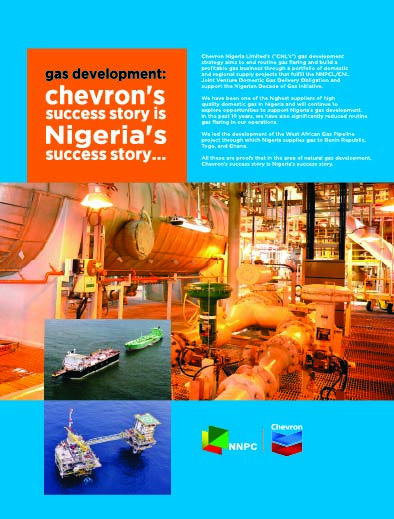
Tegbe explained that the Federal Government was considering introducing a concessionary gas pricing arrangement for electricity generation companies to reduce their operational expenses and improve electricity generation.
According to him, the government is exploring ways to leverage Nigeria’s gas resources to support power generation while ensuring that gas suppliers remain financially viable.
He said President Bola Tinubu’s administration was interested in developing a model that would make gas more affordable to GenCos without undermining the businesses supplying the commodity.
“The most important thing for me is, how do I get electricity to Nigeria? And I’ll tell you, Mr President is saying, we own the gas. People need to give GenCos gas at a particular concessionary rate that is not going to make gas suppliers go out of business. Let’s look at the model,” he said.
The minister further disclosed that the government was reviewing some of the assumptions contained in the electricity tariff model, noting that certain components might require adjustments to reflect prevailing realities in the power sector.
However, he insisted that such reviews should not be interpreted as preparations for an increase in electricity tariffs, reiterating that the government had ruled out any upward adjustment in 2027.
On the financial challenges confronting electricity generation companies, Tegbe disclosed that the Federal Government had paid ₦1.23 trillion out of the negotiated ₦3.3 trillion debt owed to the companies.
He said the government was making progress towards clearing the outstanding balance, expressing confidence that the remaining debt would be settled in 2027.
According to him, the administration is exploring different payment mechanisms to ensure that the outstanding obligations are addressed without creating additional pressure on consumers.
“Today, we are paid 1.23 trillion. We’re speaking 1.23 trillion in this economy in a speed of about one and a half years. And we’re on track to finish paying the rest next year. Because we are looking at different ways to settle it,” he said.
The minister explained that one of the options under consideration was offsetting part of the debt against royalties and corporate income tax obligations.
He added that the government was also engaging the Nigerian National Petroleum Company Limited (NNPCL) on possible arrangements to reduce the cost of gas supplied to electricity generation companies.
The measures, he suggested, were part of broader efforts to improve the financial sustainability of the electricity sector and ensure that generation companies could continue operating effectively.
The minister also defended his earlier controversial remark that “freezers are freezing”, which attracted criticism from Nigerians experiencing persistent electricity shortages.
Tegbe explained that the statement was made light-heartedly following positive feedback from some electricity consumers who had noticed improvements in power supply in their areas.
He cited the commissioning of a 1.6-megawatt mini-grid project at the University of Abuja, saying the facility had provided students with free, round-the-clock electricity over the past year.
According to him, some beneficiaries had sent him videos and messages expressing satisfaction with the improvement in electricity supply.
He said his remark was intended to acknowledge such positive feedback rather than suggest that all Nigerians were enjoying uninterrupted electricity.
The minister, however, acknowledged that many households and businesses were still struggling with unreliable power supply.
“I had no disregard, please. I had no disregard for the people that still have challenges with power, and that wasn’t my intention,” he said.
He added that the government would not relent in its efforts to ensure that electricity became more accessible and reliable across the country.
“We would stop at nothing until Nigerians get electricity,” Tegbe said.
Speaking on the timeline for addressing the country’s electricity challenges, Tegbe acknowledged that the infrastructure deficiencies in the power sector were more extensive than initially anticipated.
He noted that improving electricity supply would require sustained investments and interventions across the power value chain, including gas supply, generation, transmission and distribution.
Despite the challenges, the minister expressed confidence that the Federal Government remained on course to deliver significant improvements in electricity supply within the next three to five years.
He maintained that the administration’s immediate objective was to expand electricity access, strengthen the sector’s financial framework and address infrastructure gaps while protecting consumers from additional tariff increases.
The assurance comes amid longstanding concerns over electricity costs, unreliable supply and the financial difficulties confronting operators in Nigeria’s power sector.