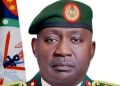



The Minister of Defence, Christopher Musa, has disclosed that the Nigerian military is receiving real-time intelligence and satellite support from the United States to track and target militant leaders ahead of the general elections scheduled for January.
Musa made the disclosure while speaking to journalists during a briefing on Monday, according to a report by Reuters.
The Defence Minister said Nigerian troops had killed several terrorist and bandit leaders during overnight operations in the North-West and North-East, adding that the military was conducting near-daily operations with improved intelligence support.

He explained that satellite images, intelligence sharing and training provided by the United States had strengthened the military’s capacity to track and attack targets.
“We took out a lot of the bandit leaders and the terrorists themselves,” Musa said.
He added that Nigeria and the United States were expanding their security cooperation as the country continued to battle Islamist insurgents in the North-East, armed bandits in the North-West and kidnapping gangs operating across the country.

Musa also disclosed that Nigeria was expecting additional helicopters from the United States and Italy to support military operations.
He said security agencies were intensifying preparations for the general elections through intelligence-led operations aimed at preventing violence before, during and after the polls.
The minister further revealed that security agencies were monitoring the use of Starlink, cryptocurrencies and commercial drones by militant groups, adding that Nigeria was working with US authorities to disrupt the groups’ funding networks.
According to the Defence Minister, Nigeria had also reached an agreement with Cameroon, Niger and Chad, allowing troops to pursue militants and bandits up to five kilometres across their shared borders.
Musa warned that Islamic State Sahel was making efforts to recruit criminal gangs in North-Western Nigeria, expressing concern that bandit groups, which are largely motivated by financial gains, could evolve into ideologically driven insurgents similar to the Islamic State West Africa Province (ISWAP) operating in the North-East.
He explained that militants and bandits often exploit dense forests and weak border controls with Niger and Benin to escape security forces after carrying out attacks.
However, Musa said improved surveillance had enabled the military to track the criminal groups through difficult terrain while restricting their movements.
“We don’t want them to develop that capacity,” Musa said.
“We’re blocking the logistics and taking them out from within Nigeria”.