


By Elijah Terdoo Ikpanor, PhD
The political story of Ushongo Local Government Area ahead of 2027 is not one of noise, party rallies, or aggressive posturing. It is a quieter and more consequential decision. It is the decision of a people who, by every conventional expectation, should be at the heart of the opposition, yet have looked at the record of governance and reached a settled conclusion. Ushongo is the home local government of the PDP’s 2023 governorship candidate and on paper, this is the hostile territory for Governor Hyacinth Alia. In practice, it has become the site of one of the most significant political realignments in Benue State. That realignment is the seen as the Ushongo Accord for Alia, 2027.

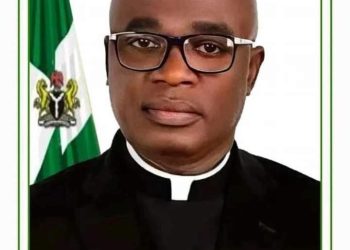
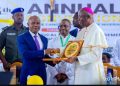
The accord is not a document signed in a secretariat. It is a verdict rendered at Kartyo-Lobi, at a thanksgiving and reception in honour of Rev. Fr. Prof. Gabriel Ngbea, a Federal Commissioner whose appointment was influenced by Governor Alia. Here, the people of Ushongo declared in word and in presence that they stand with Alia for 2027. The phrase used by the Mbaivende people, “wa kwende kpôrkpôr for Alia in 2027,” captures it precisely. The matter is settled. We have agreed. There is nothing left to contest. For a people whose support for the opposition was historically assumed, this is not a small thing. It is a political earthquake, and it rests on a foundation of concrete delivery. These deliveries are seen in different dimensions.
*The Road Infrastructure that has settled the argument*
Arguments about governance often dissolve into abstraction. Roads do not. In Ushongo, the Alia administration has done something that no previous government achieved since the creation of Benue State over forty years ago. It awarded a 16 kilometer road stretching from Gbem through Hegha, Igbor, and Mbayegh to Ushongo Town. In fact, previously, the Mbagwaza Development Association did not mince words on this impact. Chief Engr. Matthew De, once said that Governor Alia had made history and scored a hat trick with this project that will move oranges, mangoes, and cassava from farms to markets with a speed and dignity that the community had never known.

That road is not an isolated gesture. In Lessel, the Ushongo headquarters, the council chairman has flagged off the construction of the first asphalt township road in the town’s history, a 3 kilometer stretch executed with direct support from Governor Alia. At River Lessel, the governor approved the immediate construction of a four cell box culvert to ease movement between Mbagba and Ihugh, a project that speaks directly to farmers and traders who have for years navigated the uncertainty of that crossing.
These are not campaign promises. They are contracts awarded, equipment mobilized, and asphalt laid. For the people of Ushongo, the question of 2027 is increasingly being answered by the road beneath their feet.
*Representation and the contract with the people*
Politics in our dear state, Benue is often analyzed through the lens of big names and party structures. But for communities, representation is measured in something more tangible. Is our son at the table? Is our daughter on the payroll? By this measure, the Alia administration has rewritten Ushongo’s relationship with the state government.
The appointments are concrete. Dr. Samuel Yuwa serves as Special Adviser to the Governor on Policy Coordination and Cabinet Matters. Prof. Terkura Tarnande is Director General of the Benue Civil Service Institute. Hon. Denis Ter Iyaghigba is Commissioner for Marine and Blue Economy, the first commissioner from Mbagba since Benue State was created fifty years ago. The Governor’s Chief Press Secretary, Sir Tersoo Kula, is himself a son of Ushongo, a fact that carries weight in a political culture where access to the governor’s ear is not a small currency.
The representation goes further. Prof. Member George-Genyi has been appointed Chairman of Council, College of Education, Oju, and is the first female substantive Vice Chancellor Administration at Rev. Fr. Moses Orshio Adasu University, Makurdi. Comr. Godwin Anyia serves a member, Assembly Service Commission, Dr. Donatus Aondona Mkor serves as Special Adviser, while the Governor’s Chief Physician Dr. Torhile Antiev and many other officials are also sons and daughters of Ushongo. With these, Ushongo has not been an afterthought in this administration. It has been a participant.
*The Recruitments that are also evidence at the household level*
In our rural communities, macroeconomic figures rarely move voters. A salary alert moves a household. The Alia administration’s recruitment record is therefore politically potent not because of the totals alone, but because of what those totals mean in places like Ushongo.
The figures are substantial. About 10,000 teachers have been recruited by SUBEB alone, with over 5,000 others employed by BIPC, BIRS, BSUTH, Benue Links, BPPC, RAAMP, and other MDAs. At the Benue State University Teaching Hospital, 400 staff were recruited, including 60 medical doctors and 140 nurses, a direct investment in healthcare capacity that creates professional opportunities for Benue’s young people. BIPC has been executing a recruitment drive across its expanding portfolio, including its Food Basket Brewery subsidiary, with training programs and job placements that reach young people from across the state’s geopolitical zones.
For Ushongo specifically, the recruitment of sons and daughters through SUBEB, the Teaching Hospital, and BIPC is not a statistical footnote. It is the reason a family in Mbayegh or Mbagwaza can point to a son or daughter who is now employed because of a decision made in Makurdi. For Ushongo, that decision is not an argument. It is lived experience.
*Ber Agbum as a Stake in the Future*
The Governor’s accord in Ushongo is not only about what has been done. It is about what is coming. At the Kartyo -Lobi gathering, Governor Alia announced plans to resuscitate Ber Agbum Farm in Mbaivende, with the stated intention of attracting investment, boosting agricultural productivity, and creating employment. Foreign investors have reportedly expressed interest, and the governor expressed optimism that the revival would be concluded soon.
This matters politically because it transforms the 2027 question from a referendum on the past to a choice about the future. A community that has seen a 16 kilometer road awarded and a first ever township road flagged off is one thing. A community that is also waiting on a revived farm, with the jobs and enterprise that would follow, has a material stake in continuity. To vote against Alia in 2027 would be to risk the very projects that are only now beginning to take root.
Ushongo started this, the records are there and must be sustained in 2027. In 2023, Ushongo delivered more than 31,000 votes for Alia, compared with just over 8,000 for his closest rival. That margin was not an accident. It was an early signal that Ushongo’s political judgment was not captive to party labels. The 2027 declaration at Kertyo is the maturation of that signal into a settled community position.
The decision for voting Alia again in 2027 is not abstract. It is the 16 kilometer road from Gbem to Ushongo Town. It is the first tarred road in Lessel. It is the culvert at River Lessel. It is Dr. Yuwa and Prof. Tarnande in government. It is Prof. George-Genyi at the College of Education, Oju, and at Rev. Fr. Moses Orshio Adasu University, Makurdi. It is Dr. Mkor as Special Adviser. It is the Comr. Godwin Anyia’s Assembly Service Commissioner. It is the Governor’s Chief Physician and many other Ushongo sons and daughters in service. It is the SUBEB teacher from Ushongo, the nurse at BSUTH, the BIPC recruit. It is the promise of Ber Agbum Farm. And it is the voice of a people who have said, in their own words, “se wa a wa kwende kpôrkpôr.”
Ushongo has queued behind the governor. The queue is no longer silent. In 2027, it will be counted.
*Elijah Terdoo Ikpanor, PhD Writes from Tsar-Mbaduku, Vandeikya LGA