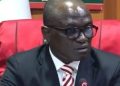



The Joint Revenue Board (JRB) says the performance of 23 states has risen by 27 per cent since the new tax laws took effect.
The board’s Executive Secretary disclosed this Wednesday, October 28, 2026, in Abuja, at a media parley on the first year of implementation.

“From the returns we got from 23 states, when compared to their performance last year, the same 23 states, we’ve seen a 27% increase. This is between January and June this year,” he said.
He attributed the growth to a deliberate focus on high-net-worth individuals, rather than low earners, as the reforms intend.
“The vision is to tax prosperity, not poverty,” he said, recalling the philosophy behind the reforms. He added that, based on data from the 23 states, about 92 per cent of income earners who pay tax now pay lower rates or none at all.

Explaining the new personal income tax structure, he said the first N800,000 of income is now taxed at zero per cent, followed by 15 per cent on the next N2.2 million. The top rate is 25 per cent, which he said remains the lowest among Africa’s 12 largest economies.
He said an earner with a given level of deductions would save over N80,000 monthly, almost N1 million annually, under the new regime.
The Executive-Secretary stressed that the government has introduced no new tax.
“No new tax has been introduced. Instead, multiple levies have been consolidated into nine taxes, and the model harmonisation law has been adopted by 21 states,” he said.
He said the consolidation targets multiple taxation at sub-national level, and that the board has issued uniform guidelines for tax administration.
He also highlighted the National Tax ID, developed with the Nigerian Revenue Service, which he said is interoperable across states. It allows authorities to verify a taxpayer’s record anywhere in the country, ending repeated verification and the burden of paying in two states.
On illegal collections by unions and associations on roads, he said the board is working with the police and state authorities on a national structure to curb the practice.
“You can’t just be stopping and harassing people,” he said, adding that authorities must adopt technology. He admitted the problem would take time to fix.
He said informal sector traders are exempt from income tax, and that nobody should demand it from them. He called for sustained public education to counter misinformation on the reforms.
He said the National Economic Council last week set a 90-day action plan that includes harmonising sub-national taxes, and expressed confidence that more states would adopt the law within that period.
He urged Nigerians with complaints about revenue agencies to approach the Office of the Tax Ombud, which he said charges nothing.
“By next year, it will be better, and by 2030, it will be better,” he said.