

The Obi of Onitsha, His Royal Majesty, Igwe Nnaemeka Alfred Achebe, has stated that his greatest achievements since ascending the throne have been restoring peace, reconciling a divided community and rebuilding the collective spirit of Ndi Onitsha.
Achebe, who described his administration as one built on peace, reconciliation, truth, transparency and mutual respect, dislcosed that his vision was to establish a united community capable of working together to achieve sustainable development.

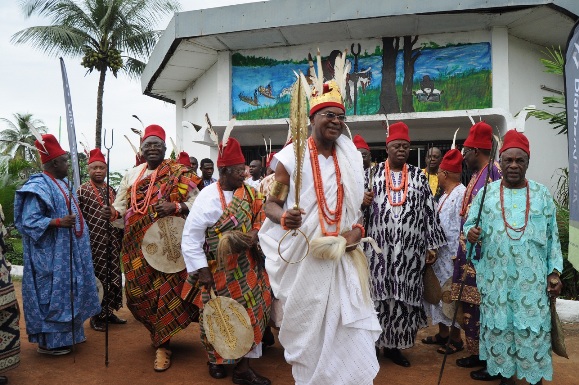
He spoke shortly at the end of the 2026 Ofala Festival hosted by telecommunications giant, Globacom.
“Essentially, we’ve restored peace. We’re reconciled as a community in love and people are together,” the monarch said.
He disclosed that when he ascended the throne, Onitsha was experiencing loss of direction, following the prolonged illness of his predecessor, a situation he said, weakened the community’s sense of cohesion.

“When I came onto the throne, Onitsha was disoriented. You know, my predecessor was ill for a long period and I think the community lost its gravitas. You know, there’s no focus,” he said.
According to him, the monarchy occupies a central position in the community because it serves as a focal point with which the people identify.
Consequently, his initial challenge was to rebuild public confidence, resolve disputes and restore a shared sense of purpose.
Achebe said that his leadership philosophy was developed around the conviction that peaceful coexistence and mutual respect were critical in providing the foundation for collective development.
“Basically, saying that if you have a peaceful community, a community where people respect each other, they can work together for the development of the community, and that’s what I’ve tried to achieve,” he said.
The monarch identified honesty and the courage to confront difficult truths as essential elements of his approach to resolving disputes.
He disclosed that plans were underway to publish a book documenting cases brought before him and resolved during his reign.
“We’re going to publish a book by next year, by this time next year, on the cases that came to my attention which we resolved,” he said.
He maintained that resolving disputes requires impartiality and the willingness to acknowledge the truth, regardless of the parties involved.
“In any dispute, both sides of the disputes, they know what the truth is. Okay, and then of course, the rest of the community who are observing know what the truth is,” he said.
He added that consistent truthfulness, empathy and accessibility were important in earning the confidence of the people.
He added that COVID-19 pandemic, provided an opportunity to demonstrate these principles by supporting vulnerable members of the community and ensuring that those in need received attention.
He also emphasised his accessibility to young people, who he described as central to the present and future of Onitsha.
“The youths have unlimited access to me anytime,” he said, explaining that young people were not merely the next generation but are already an important part of the present generation.
He acknowledged that some elements of his experience in corporate leadership had influenced his approach to traditional governance.
However, he stressed that modern management practices had to be adapted without undermining the community’s customs, traditions and culture.
“Some of that was brought in from my experience in corporate leadership to traditional governance, without compromising on our customs and tradition and governance and culture,” he said.
For him, effective leadership requires the ability to introduce changes while carrying the people along rather than imposing decisions on them.
He explained that the combination of reconciliation, inclusive leadership and respect for tradition helped in restoring the spirit of Onitsha.
The monarch said that his ambition extended beyond maintaining peace during his reign and would establish institutions and structures that would remain effective after his departure.
“I also want to leave a situation that becomes completely institutionalized and will not die with me, while others can build on it,” he said.
According to him, the community’s progress is not the work of the monarch alone but the product of cooperation among traditional council members, spiritual heads, titled men and women, young people and Onitsha indigenes living in different parts of the world.
He noted that professional groups and community associations have continued to contribute ideas and resources to development initiatives.
The global Onitsha community, he added, remained connected to its homeland, with people abroad organising viewing centres to watch the Ofala Festival and celebrate their cultural identity together.
Such participation, he notes, reflects the return of a collective spirit that are essential to the community’s continued progress.
“That’s the spirit of Onitshanness that has come back,” he added.
He equally commended Globacom for sponsoring the 2026 Ofala Festival, which he noted had remained an annual festival that showcases the rich cultural ensemble of Onitsha community.