


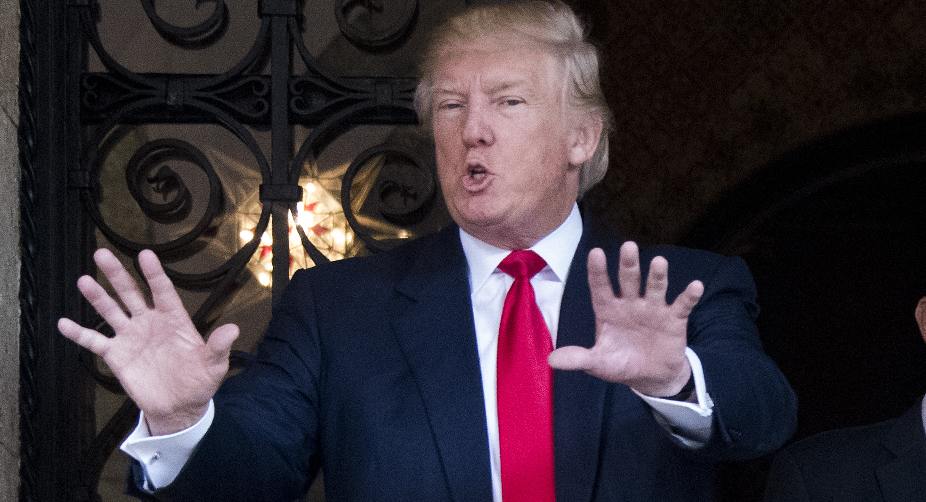
Global oil prices fell on Wednesday after the President of United States, Donald Trump, said that American and Iranian representatives had held “very good” and productive discussions on the sidelines of the United Nations General Assembly in New York.
Brent crude, the international benchmark, dropped below the $100-per-barrel mark, while US West Texas Intermediate also declined, as investors responded to the hope that diplomatic engagement could ease tensions in the Middle East.
From reports, Brent crude fell to $98.41 per barrel in afternoon Asian trading, while WTI declined to $89.23 per barrel.
Trump had told White House reporters that the three-hour meeting between the US and Iranian representatives was productive and that another round of discussions had been scheduled.
“They had a very good meeting, a very productive meeting; they have another one scheduled in the very near future,” Trump said.
The comments was made only hours after Trump delivered a strongly worded speech at the UN General Assembly, in which he said he was considering whether to reach an agreement with Iran or take further military action against the Islamic Republic.

The latest movement in oil prices reflected expectations that renewed diplomatic contact could reduce the risk of further escalation in the Middle East.
Stephen Innes of Quintex Intel, said the three-hour US-Iran meeting had shifted market sentiment from focusing primarily on escalation towards the possibility of a diplomatic process, although he noted that a final agreement remained distant.
The conflict has disrupted energy markets since US-Israeli strikes triggered war in February. Iran has kept the Strait of Hormuz closed, while the United States has maintained a counter-blockade of Iranian ports.
The situation has also affected energy flows in the Red Sea, where conflict involving Saudi-backed government forces and Iran-backed Houthi fighters in Yemen has placed additional pressure on regional exports.
Trump has previously said oil prices would fall once the United States achieves its military objectives in the conflict.
Meanwhile, Saudi Arabia is said to have moved to restore oil exports.
The decline in crude prices also coincided with reports that Saudi Arabia had restarted operations along its East-West Pipeline, a major export route that had been shut following drone attacks.
The world’s largest crude oil exporter is reportedly targeting a resumption of exports through the route later in the week.
Bloomberg reported that Saudi oil giant Aramco had informed some Asian refiners that they could soon collect crude from the Red Sea port of Yanbu.
However, European buyers were reportedly told that they would not receive allocations for October.
Meanwhile, Asian financial markets recorded mixed performances as investors assessed developments in the energy market and the wider global economy.
Hong Kong’s Hang Seng Index fell one per cent, while Shanghai’s Composite Index declined 0.4 per cent. South Korea’s Kospi and Taiwan’s Taiex gained 0.9 per cent and 0.8 per cent respectively.
European markets opened higher, while investors also looked ahead to a meeting between Trump and Chinese President Xi Jinping expected to focus on trade relations between the world’s two largest economies.
Analysts said developments in the Middle East remained a major factor for oil markets, with attention also focused on whether China could use its influence with Tehran to support diplomatic efforts.
At about 0215 GMT, WTI was down 1.4 per cent at $89.23 per barrel, while Brent crude was down 0.9 per cent at $98.41 per barrel.