

By Myke Uzendu
The Independent National Electoral Commission (INEC) has urged journalists and newsroom managers to strengthen fact-checking and digital verification systems to combat artificial intelligence-driven misinformation and deepfakes ahead of the 2027 general elections.
The Commission also warned media organisations against publishing or amplifying unofficial election results, saying premature reporting of privately collated figures could create conflicting narratives and undermine public confidence in results formally declared through the electoral process.

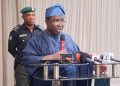
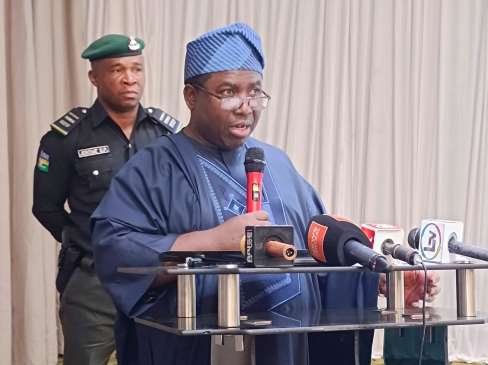
INEC Chairman, Prof. Joash Amupitan, SAN, represented by the Resident Electoral Commissioner for Enugu State, Dr Chukwuemeka Chukwu, gave the charge on Thursday at the 22nd All Nigeria Editors Conference (ANEC) 2026 in Enugu.
Amupitan, in an address titled “The Ballot, the Media and the Task of Keeping Democracy Alive,” said generative artificial intelligence, voice cloning, deepfake videos and automated bot networks had made it increasingly difficult to distinguish authentic election information from manipulated content.
He said malicious actors could now produce convincing videos purporting to show electoral officials announcing false results, clone the voices of INEC officials and circulate fabricated result sheets designed to trigger public outrage before the official collation process was concluded.

“We have moved far beyond simple political bias, hyperbole, or unverified rumours into an era of synthetically manufactured reality,” Amupitan said.
He warned that the greatest danger posed by synthetic disinformation was not merely the spread of individual falsehoods but the erosion of public trust in genuine information.
“When deepfakes render lies believable, real truth is greeted with skepticism. Cynicism replaces civic engagement,” he said.
According to him, misinformation could turn elections from peaceful contests of ideas into environments driven by manipulated emotions, ethnic tensions and outrage.
“For an election management body, administrative success on the ground can be instantly erased on a smartphone screen by a well-timed, algorithmically boosted deepfake,” he added.
Amupitan disclosed that INEC had established a dedicated Artificial Intelligence Division within its Information and Communication Technology Department as part of measures to respond proactively to emerging technological threats.He said the Commission had also commenced the deployment of automated AI auditing tools within its Results Management process to identify discrepancies before final verification.
The INEC chairman, however, stressed that the automated systems remained subject to human oversight and were being governed by a five-pillar AI Governance Framework.
He also urged media organisations to establish specialised fact-checking desks, deploy forensic image-analysis tools and verify electoral information through official INEC channels before publication.
On election results, Amupitan specifically cautioned journalists against relying on privately collated figures circulated by political actors or other sources on social media.“
Let’s resist premature result declarations. Under the Electoral Act, statutory authority to declare election results rests exclusively with INEC,” he said.
He added that publishing unverified figures could create competing narratives around election outcomes.“
Amplifying unverified, privately collated figures published by political actors on social media creates conflicting public narratives that undermine official outcomes,” he said.
Amupitan urged editors to use their platforms to educate citizens on how to identify synthetic content, fake letterheads and other forms of digitally manipulated information.
He acknowledged the pressure on news organisations to be the first to publish breaking information but said accuracy should take precedence over speed during elections.“
The pressure on modern newsrooms to be first is immense. But in national elections, it is vastly more important to be right than to be first,” he said.
He warned that rushing to publish unverified claims, including fabricated result sheets, doctored videos or unconfirmed statements, could give legitimacy to deliberate deception and create consequences that would be difficult to reverse.
Amupitan called on the Nigerian Guild of Editors to regard responsible media gatekeeping as an important component of protecting democratic processes.
He urged newsrooms, INEC and other stakeholders to develop what he described as a “collaborative firewall” against AI-driven disinformation before, during and after the 2027 elections.
The INEC chairman also linked the quality of journalism to the welfare of media practitioners, warning that poor remuneration could expose journalists to political and financial inducements.
“A poorly compensated journalist is vulnerable; a financially neglected newsroom is fertile ground for compromise,” he said.
The INEC boss argued that journalists who received decent remuneration and structured welfare would be better positioned to resist inducement, scrutinise false narratives and report elections objectively.
Amupitan said INEC had adopted a similar approach to the welfare of its personnel through the establishment of the Consolidated Election Management Body Salary Structure (CEMBSS), which separated the Commission’s workforce from the regular Civil Service salary structure with effect from January 1, 2026.
The President of the Nigerian Guild of Editors, Eze Anaba, said the media had a responsibility to protect democratic institutions by holding those in power accountable and providing platforms for diverse voices.
“We have a responsibility to ensure that our democracy survives. The media must hold power accountable and provide the space for diverse voices to be heard,” Anaba said.
He added that political actors were not the only stakeholders responsible for sustaining democracy, noting the roles of the judiciary and media.
The Obi of Onitsha, Igwe Nnaemeka Alfred Achebe, also called on INEC to establish a joint rapid-response desk involving newsrooms to counter election misinformation and quickly provide accurate information to the public.He urged editors to take a more active role in addressing voter apathy by educating Nigerians on the importance of participating in the electoral process.
The Archbishop Emeritus of Abuja, John Cardinal Onaiyekan, also stressed the importance of a free press to democratic governance.
Onaiyekan noted the diversity of Nigeria’s media landscape, including newspapers, radio, television and social media, while acknowledging the opportunities and challenges presented by artificial intelligence.
“The latest arrival, of course, is artificial intelligence, AI. It is already working wonders in the communication space, though not without its dangers if it is allowed to spin out of human control,” he said.
On preparations for the 2027 elections, Amupitan said INEC had commenced a six-zone interactive meeting and readiness assessment tour, which began in Lagos on September 7.
He said the exercise was aimed at assessing the Commission’s preparations across the country and engaging stakeholders ahead of the elections.According to him, the media would remain critical to the process because modern elections were contested not only at polling units but also within the information environment.
The 22nd All Nigeria Editors Conference brought together editors and other stakeholders to discuss issues affecting journalism, democracy and the 2027 electoral process.