

By Sam Otuonye
Minister of Budget and Economic Planning, Senator Abubakar Atiku Bagudu, has urged federal appointees to deepen their understanding of the policies and reforms of the President Bola Ahmed Tinubu administration and communicate their impact effectively to Nigerians, particularly at the grassroots.
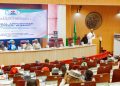
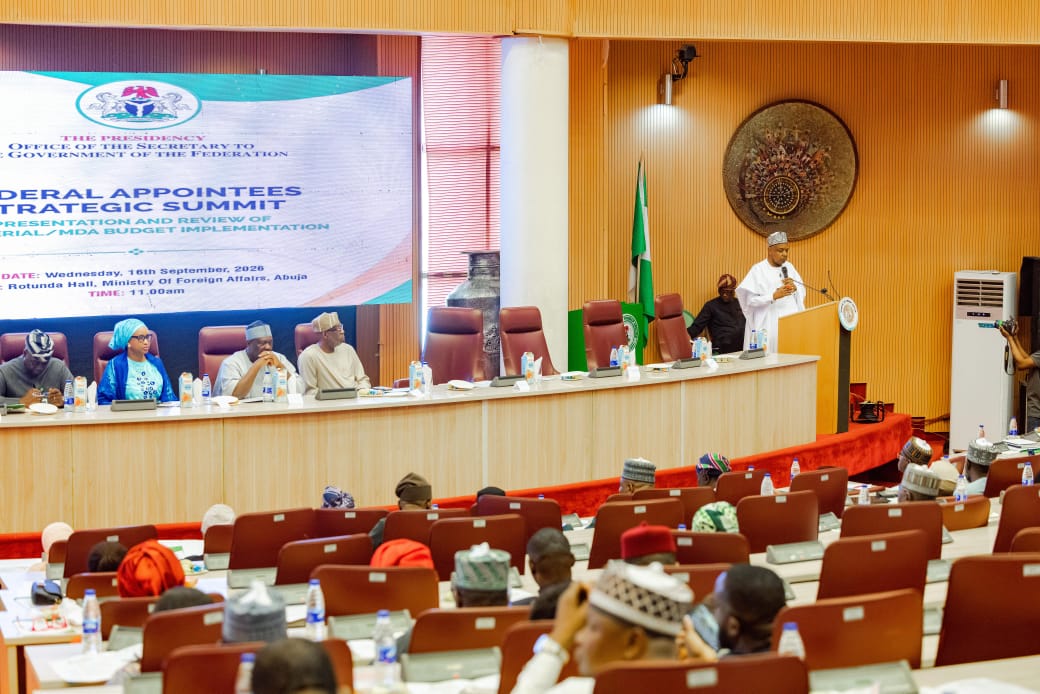
Bagudu made the call while delivering a keynote address at the Federal Appointees Strategic Summit: Presentation and Review of Ministerial/MDAs Budget Implementation, where he highlighted the administration’s economic reforms, improved fiscal capacity across the three tiers of government, and ongoing efforts to place the Nigerian economy on a sustainable growth trajectory.

The minister said the administration’s decision to remove the fuel subsidy and undertake foreign exchange market reforms came against a backdrop of significant economic challenges, noting that the government had not anticipated the scale of subsequent turbulence in the global economy.
He acknowledged that the reforms, along with international economic pressures, had contributed to cost-of-living challenges and other pressures facing citizens, but maintained that the administration remained focused on achieving long-term economic stability and inclusive growth.
According to him, the reforms have created an opportunity to strengthen the fiscal position of the Federal Government, states and local governments, while giving sub-national governments more resources to fulfil their constitutional responsibilities.

He noted that the increased revenues accruing to the various tiers of government were consistent with President Tinubu’s commitment to strengthening fiscal federalism.
“Rather than keeping additional revenues at the centre, the President has taken the position that we should give local governments and states more money and energise everyone so that we can interrogate and fulfil our responsibilities,” he said.
Bagudu also highlighted measures the Federal Government has taken to address outstanding financial obligations to the states, saying these steps aimed to strengthen the federation and improve the capacity of all tiers of government to deliver public services.
He recalled periods when several states struggled to pay workers’ salaries despite relatively high international oil prices, even as infrastructure and other public services remained constrained.
The minister said the current improvement in states’ fiscal position had given them greater scope to invest in infrastructure, education, security and other areas within their constitutional responsibilities.
On the broader economy, Bagudu said several indicators were beginning to move in a positive direction, including the country’s revenue-to-GDP ratio, while taxation reforms were being implemented to improve efficiency rather than unnecessarily burdening citizens.
He, however, acknowledged that the reforms’ benefits were being pursued amid ongoing global uncertainties, conflicts, and pressures on international trade and tariffs that have affected food prices and the wider cost of living.
He stressed that the progress recorded so far should not be treated as an endpoint, noting that President Tinubu had consistently challenged members of his administration to do more.
According to him, the administration’s ambition is to build a $1 trillion economy by 2030, with inclusive growth that can improve living standards and address poverty.
Bagudu described the target as ambitious yet achievable, emphasising the need to put in place the necessary elements of the National Development Plan to support the country’s long-term economic transformation.
He also highlighted the administration’s efforts to strengthen domestic production and to ensure that the benefits of economic reforms reach citizens at the grassroots level.
The minister said discussions at the National Economic Council had also focused on encouraging state governments to adopt measures to boost domestic production and ensure that the benefits of economic reforms were widely felt.
Speaking on resource allocation, Bagudu rejected suggestions that government spending was intended to favour particular parts of the country.
He explained that major areas of government expenditure, including security, infrastructure and livelihood support, had national objectives and were intended to meet the needs of Nigerians across the country.
He noted that significant security spending, for instance, directly benefits communities facing insecurity, while infrastructure investments promote connectivity and economic activity across locations.