

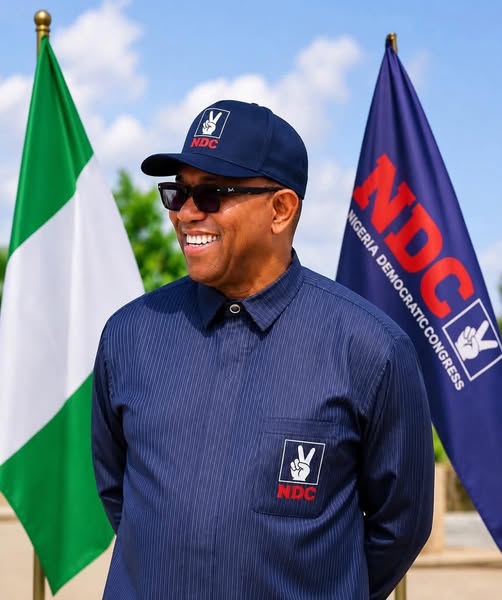
The Peter Obi Media Office has defended the popularity and growing political profile of the presidential candidate of the Nigeria Democratic Congress (NDC), Peter Obi, saying his aspiration to become president is based on his record in public office, his integrity and not political propaganda.
The media office was reacting to what it described as claims by supporters of President Bola Ahmed Tinubu that Obi was “overhyped” and that his popularity and ratings in the Nigerian political space were exaggerated.

In a statement signed by the spokesman of the Peter Obi Media Office, Idris Zekeri Jnr, on Sunday, the group said Obi had demonstrated the experience and capacity required to seek the presidency, particularly through his record as governor of Anambra State.
The office listed 10 factors it said justified Obi’s standing in Nigerian politics, including his experience in managing a state before seeking to lead the country.
It noted that Obi served as Anambra State governor from 2006 to 2014, with interruptions arising from political and legal disputes surrounding his tenure. He was re-elected in 2010 and completed his second term.

According to the statement, one of the central features of Obi’s record was fiscal discipline, with the former governor’s 2023 manifesto citing substantial savings and investments accumulated during his administration, including about $500 million in investments and savings and $156 million in dollar-denominated bonds.
The media office argued that Obi demonstrated that government could save and invest public resources rather than focus solely on spending.
It also highlighted his administration’s emphasis on education, saying his government returned mission schools to their original owners and established partnerships with them.
The statement claimed that Anambra subsequently improved its performance in WAEC and NECO examinations, moving from 24th position to first position for three consecutive years.
Beyond physical infrastructure, the media office said Obi prioritised human capital development through scholarships, healthcare investments and poverty mapping.
It also cited his administration’s investment in healthcare institutions and accreditation, claiming that more than 12 health institutions, including two hospitals, had secured accreditation by the end of his tenure, compared with none at the beginning.
The statement further credited Obi with attracting development partnerships involving organisations such as the World Bank, UNDP, DFID and the European Union, as well as engaging foreign governments on development issues.
His administration, it added, employed data and planning in governance through poverty mapping, aerial mapping and planning initiatives, as well as the Anambra Integrated Development Strategy (ANIDS).
The media office also pointed to Obi’s business and banking background before entering politics, arguing that his private-sector experience complemented his public-sector record.
It said the former governor’s strongest argument for the presidency was that Nigerians could assess his record based on what he achieved while managing Anambra’s resources.
“Peter Obi is not asking Nigerians to make him President so that he can learn how government works. He is asking Nigerians to entrust him with Nigeria after demonstrating, as Governor of Anambra, how he manages money, builds institutions, invests in human capital and plans for the future,” the statement said.
The media office, however, contrasted Obi’s record with what it described as 10 failures of the Tinubu administration.
It cited the rising cost of living, inflation, declining purchasing power, naira depreciation, increased petrol prices, rising poverty and hardship, unemployment and insecurity among its criticisms of the administration.
It also raised concerns over transparency and accountability, alleging that controversies surrounding government spending, appointments, procurement and management of public resources had continued to generate public questions.
The group further accused the administration of giving the impression that political consolidation and preparations for the 2027 elections sometimes received greater attention than institution-building.
On the economy, it argued that the removal of petrol subsidy and other reforms had resulted in higher food, transportation and other living costs, while naira depreciation had increased the cost of imported goods, medicines, machinery and industrial inputs.
The statement also criticised the government’s handling of security, saying banditry, terrorism, kidnapping and communal violence continued to affect parts of the country.
It acknowledged that Tinubu inherited a difficult economic and security situation but argued that the key question was whether Nigerians were better off after the reforms introduced by his administration.
“The fundamental question is not whether Tinubu inherited a difficult Nigeria. He did. The question is whether, after taking difficult decisions, Nigerians are better off today—and whether the government has convincingly demonstrated that today’s sacrifice is producing tomorrow’s prosperity,” the statement said.
The media office said that its answer to the question was “an obvious capital NO,” insisting that the 2027 presidential contest would ultimately be a referendum on the records and performance of the competing political leadership.