

*Peace can be possible, but it needs trust and sincerity
By Obi Anyadike, Senior Editor (Africa), The Humanitarian
This is the first in a series of reports exploring the feasibility of dialogue as a path to peace in Africa’s protracted civil conflicts.

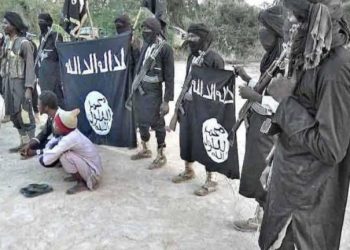
A ceasefire agreement with the jihadist group Boko Haram has been in effect for the past three months and is expected to be extended, but has not been previously reported publicly, The New Humanitarian has learned.
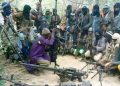
The agreement is linked to hostage negotiations that secured the release in June of 360 civilians abducted by the group from Ngoshe village, in the foothills of the Mandara mountains on the border with Cameroon. The mass kidnapping occurred in March during a Boko Haram attack on a nearby army base.
Three people with contacts among Boko Haram members, some of them senior figures, independently told The New Humanitarian that a truce had been in effect since June and was likely to be extended for a further 40 days. Communities in the Ngoshe area – regular victims of Boko Haram predation – say attacks have stopped since the ceasefire, according to two of the sources.

The deal that freed the villagers also reportedly included a ransom payment of five billion naira ($3.7 million) by the government, a transaction Abuja has denied amid controversy over the alleged misappropriation of some of the money.
The New Humanitarian reached out to spokespeople for the government, defence headquarters, and the army to verify reports of a ceasefire, but received no reply prior to publishing.
What remains unclear is the longer-term significance of any agreement. “It could be just a temporary, tactical ceasefire that benefits both sides, but doesn’t really affect the trajectory of the war,” said conflict researcher Malik Samuel. “I don’t think it’s a step towards a sustainable peace settlement.”
The deal does not involve so-called Islamic State West Africa Province (ISWAP), an offshoot and rival to Boko Haram, based on the islands of Lake Chad and a rural swathe of northeastern Borno State. Clashes have continued between the two groups.
After 17 years of a war that has indirectly cost close to 350,000 civilian lives, the idea of negotiations with Boko Haram – officially Jama’at Ahl al Sunna li Da’wa wal Jihad (JAS) – and other armed groups sharply divides Nigerians. Those living closest to the conflict tend to be far more supportive of dialogue than the rest of the country.
However, the government’s public position is an emphatic rejection of talks with a group legally proscribed as a terrorist organisation.
President Bola Tinubu has instead announced the beefing up of an overstretched army – an initiative related to elections early next year in which public safety will be a key issue. The promised 30,000 new recruits and four extra divisions will provide the “teeth that are needed to defeat terrorism and banditry”, Tinubu said in July.
Nevertheless, behind the scenes, “the government seems very interested in having a dialogue with Boko Haram, perhaps realising a military response alone is inadequate to resolving the problem,” noted Samuel.
“Both sides believe a settlement is possible”
Since the Boko Haram insurgency began in 2009, there has been a long if faltering history of under the radar dialogue approaches, according to security officials, diplomats, and mediators, who spoke to The New Humanitarian on the condition of anonymity so they could talk freely.
“Both sides believe a settlement is possible,” a diplomat with knowledge of the chronology of contacts told The New Humanitarian. “For all parties, a non-kinetic [military] approach is intellectually acceptable. But they still believe that by improving their military situations they can influence those negotiations.”
Those talks have been led on the government’s side by the Office of the National Security Advisor and the spy agency, the Department of State Services. They have repeatedly failed, typically scuppered by spoilers within the government and military, forcing the parties to rebuild confidence each time.
Historically, “we’ve negotiated a couple of ceasefires but they couldn’t be maintained,” said a government security official with knowledge of the dialogue process. “The last hudna [armistice] was in the 2022/2023 period but it also collapsed.”
The current agreement may suffer the same fate. Two sources who told The New Humanitarian about the deal warned that Boko Haram may be using the ceasefire to strengthen its position, potentially by moving “equipment” into the Mandera mountains.
“Who’s who”
Boko Haram is headed by Ibrahim Bakura Doro, the overall commander and imam (religious leader), based on the islands on the northern section of Lake Chad, on the Niger Republic border.
Boko Haram has three factions, all of which have sworn allegiance to Bakura: Darul Gazwa, operating in southeastern Borno and headed by Alhai Kale; the Sadiku group of Abubakar Sadiku Saidu, active around north-central Nigeria; and the Ali Ngulde faction, which carried out the Ngoshe kidnappings.
The success of the ceasefire depends on whether Bakura, from his Lake Chad base thousands of kilometres away, can yoke the three other Boko Haram commanders into a sustainable deal.
Rival ISWAP is operationally and organisationally distinct from Boko Haram, its jihadist cousin. While Boko Haram survives on looting and extorting civilians – a practice known as ghanima – plundering is banned by ISWAP.
Boko Haram is also more locally focused whereas ISWAP – among the most active of so-called Islamic State-Central’s franchises – is loyal to the transnational “caliphate”, which effectively hands IS-Central veto power over any dialogue initiative, according to people familiar with the group.
“ISWAP needs buy-in from IS. They make the final decision,” a rehabilitated former ISWAP commander told The New Humanitarian. “But Bakura needs money, you can make a deal with him.” Splits and rivalries: A timeline of Boko Haram/ISWAP discord
Money is not just an inducement but also a practical requirement. “Any arrangement involves a payment, otherwise how would they eat as there would be no ghanima?” explained the Abuja-based security official.
Buying off opponents has also been the traditional approach of the Nigerian political establishment, from ending the insurgency in the oil-rich Delta in 2009, to ongoing attempts to try and contain bandit violence in the northwest.
However, such a transactional arrangement can be a negative incentive, creating a demand for more. “If you give them money, that doesn’t guarantee peace,” cautioned a former Boko Haram hostage negotiator.
“Do a deal with one, to fight the other”
Yet the scenario the security establishment would most welcome – and see as tantalisingly plausible – is if dialogue could then lead to an alliance with Bakura against ISWAP: “To do a deal with one, to fight the other.”
ISWAP is the most lethal of the jihadi insurgents. It is centralised, bureaucratic, and well-funded, with a tax base that far outstrips the revenue Borno State earns.
It has also proven tactically adaptable, technologically advanced, and its combat successes have attracted experienced fighters and instructors from across the Sahel and North African Maghreb.
The failure of the Nigerian navy to undertake a meaningful lake-based offensive – which would involve navigating through a complex and changing ecology of swamps, channels, and islands – means ISWAP’s bases are relatively safe.
“They are only nervous about the [air force] bombing, but every house has a shelter,” said Abu Jabir, a farmer who lives in ISWAP-controlled territory but comes to Maiduguri to buy fishing gear.
Bakura, however, is seen as a persistent danger to ISWAP. “Bakura people are always attacking: They are powerful, they know how to fight on the water,” he explained.
Bakura holds a particular animosity towards ISWAP. When Boko Haram split in 2016 (see timeline), he remained loyal to the group’s then leader and imam, Abubaker Shekau, who rewarded him with significant autonomy.
But in 2021, ISWAP managed to overrun Shekau’s Sambisa Forest base in southern Borno, and Shekau detonated a suicide vest.
“For Bakura, it’s personal,” said Samuel. “Former Bakura fighters have told me that he prefers to attack ISWAP rather than the military. Even if he attacks military bases, it’s to get weapons to attack ISWAP.”
*Finding a path to peace: Nigeria’s long, faltering history of dialogue with Boko Haram
Editor’s note: This is the second article in a series exploring the feasibility of dialogue as a path to peace in Africa’s protracted civil conflicts.
Mamman Nur, the senior cleric of Islamic State West Africa Province (ISWAP), had tried to escape detention by his own comrades twice before – he knew this failed third attempt was likely his death sentence.
The influential ideologue had been a leading figure in Nigeria’s insurgent jihadist movement for more than two decades. He had been one of the closest aides to Boko Haram’s deceased founder, Mohammed Yusuf, was a key link to Islamic State-Central, and for a time was popularly thought of as ISWAP’s leader.
But the tall, charismatic teacher was now undone. He had been accused of secret contact with the Nigerian government through an initiative known as the “Swiss process”, which was exploring a path to dialogue and regarded Nur as a possible interlocutor. To ISWAP’s governing Shura council, this was treason.
With the blessing of IS-Central, Nur was detained while the council debated what to do. In September 2018, he was sentenced to death and publicly shot by the head of the amniya, ISWAP’s secret police.
Nur’s fate exposed the central problem facing any attempt to negotiate with Nigeria’s jihadists: Can a movement that treats dialogue as treason ever be persuaded to make peace? Nearly eight years later, a reported ceasefire between the government and Boko Haram suggests that, however tentatively, the answer may be changing.
“Can you make peace with jihadists?”
After 17 years of war and close to 350,000 indirect civilian deaths, the conflict in Nigeria’s northeast is stalemated. Yet behind the scenes there has been a long if faltering attempt by the Nigerian government to find a negotiated breakthrough to the jihadist insurgency.
The idea of negotiations with “Boko Haram” – officially Jama’at Ahl al Sunna li Da’wa wal Jihad (JAS) – and ISWAP, its offshoot and rival, sharply divides Nigeria. The government officially says there can be no talks with groups legally proscribed as terrorist organisations, even though a three-month ceasefire with JAS, agreed in June, seems to be holding.
The New Humanitarian has spoken to security officials, diplomats, mediators, and former jihadist fighters – protecting their anonymity so they could speak freely – to explore the potential of that dialogue process. Is there a path to a sustainable peace with extremist groups that reject the legitimacy of the Nigerian state, its secular constitution, and world view?
“Both sides believe a settlement is possible,” a diplomat with knowledge of the chronology of the dialogue process told The New Humanitarian. “For all parties, a non-kinetic [military] approach is intellectually acceptable.”
Military operations alone rarely resolves insurgencies. Political settlements, where they are possible, are more likely to produce lasting peace. But governments tend to exceptionalise jihadist groups and publicly shun the idea of dialogue with people typically characterised as irredeemably violent.
These groups’ perceived maximalist ideological demands are seen as obstacles to peace – the spiritual and sacred regarded as incompatible with the give and take of political bargaining.
Yet Islamist ideology is not monolithic. Extremist groups are political actors that shape and are shaped by their environments. Supposed “red lines” over political demands can also fade over time. In Egypt, Gama’a al Islamiya carried out armed attacks for two decades before it renounced violence and stood in elections in 2011. And more recently, in Syria, Hay’at Tahrir al-Sham transformed from an al-Qaeda franchise into the dominant force behind a transitional government.
However, the cell-like structures of jihadist groups, legal prohibitions, histories of distrust, and the difficulty of building domestic political consensus all weigh on the timing and incentives for peace talks. Negotiations demand patience, political will, and good intelligence networks, said the diplomat. Nigeria has struggled on all three fronts.
Successive governments have also avoided confronting the grievances driving the northeastern conflict or properly understanding their opponents. The traditional establishment approach has been to “settle” troublemakers, buying them off with money and positions. But JAS and ISWAP have been different: ideological foes not seeking a financial reward or patronage.
“Peace can be possible, but it needs trust and sincerity,” a former ISWAP commander who surrendered to the authorities last year, told The New Humanitarian. “The problem is that up until now, nobody has sat with [JAS/ISWAP] to understand them.
A close observer of the Nigerian conflict was far more sceptical. “The record shows that jihadist groups, like other insurgent groups, can engage in negotiations, at least preliminary or limited ones, when they are under pressure,” he noted. However, there are fewer examples of longer-term political solutions.
“Talking about talks”
The insurgency, which began in northeastern Maiduguri in 2009, was still growing when President Goodluck Jonathan was elected two years later. A southern Christian, his poll victory sparked riots in several predominantly Muslim northern cities in a controversy over whether he should have stood. For some in his administration it was proof of a conspiracy: that JAS was manufactured by aggrieved northern elites to undermine Jonathan’s rule.
In the early days of the conflict, mediation efforts were largely privately led. Former president Olusegun Obasanjo made the first attempt in 2011, followed by Sheikh Ibrahim Datti Ahmad, the respected president of the National Supreme Council of Sharia. Both ended almost as soon as they had begun – with each side blaming the other.
Demands by JAS were basic: the release of detained wives and colleagues, the rebuilding of homes and buildings destroyed by the security forces in Maiduguri, the payment of compensation to families of members killed, and the prosecution of the policemen responsible for the assassination of Yusuf, the movement’s founder. They have not included larger ideological goals.
“Splits and rivalries: A timeline of Boko Haram/ISWAP discord”
As the conflict dramatically worsened – with bombings, kidnappings, attacks on towns, and the cold-blooded slaughter of civilians – Jonathan’s team seemed to struggle with a strategy. He was being urged by northern politicians to offer amnesty. He responded that his opponents were “ghosts” – although there were enough JAS detainees who could have served as conduits. Western governments, meanwhile, warned that there should be “no compromising with terrorism”.
With the intelligence service seemingly blindsided, a cottage industry quickly emerged of intermediaries claiming contact with JAS. Some may have been genuine, others were more fanciful – simply out to scam the government. JAS disowned all of them.
But the groundwork was being laid for a more strategic response. National Security Adviser Sambo Dasuki, in particular, was looking for an alternative approach. He hired psychologist Fatima Akilu to head a new outfit, the Behavioural Analysis and Strategic Communication unit, where she helped develop an ambitious countering violent extremism (CVE) framework.
Its significance was that it shifted thinking from a purely anti-terrorism strategy to one aimed at tackling the roots of radicalisation. It was recognised that JAS needed to be engaged rather than simply destroyed, with pathways to redemption created. Akilu’s work led to the creation of a series of defection and reintegration programmes, which arguably have had more success at reducing extremist ranks than battlefield action.
“The professionals”
In March 2014, a JAS unit stopped at a secondary school in Chibok, a small farming town in the northeast. It had come to steal food supplies and the school’s brickmaking machine, but on a whim the commander decided to kidnap the 276 schoolgirls they had managed to round up. The global reaction of outrage handed JAS new-found leverage, but it also kicked into gear a more professional approach to negotiations.
The Swiss government offered their “good offices” as neutral intermediaries between Dasuki, the domestic spy agency, the Department of State Services (DSS), and JAS. That evolved into what became known as the Dialogue Facilitation Team.
It comprised Swiss diplomat Pascal Holliger, Maiduguri lawyer Zannah Mustapha (who had helped arrange the Obasanjo visit), and a small core of people from the city who had links to JAS members. They all received negotiation training at an Alpine hotel on the shores of Lake Thun.
In August 2016, two years after the Chibok abduction, 21 exhausted teenagers were ushered towards Mustapha at a roadside rendezvous following the payment of a substantial ransom and the freeing of four detained senior JAS commanders. A second group of 82 Chibok students were freed in 2017. Over the years, some managed to escape on their own, but tragically in total more than 90 of the schoolgirls remain unaccounted for.
It had taken an incredible amount of painstaking work to put the initial release together – to find the right conduits to JAS leader Shekau, to win his trust, and to navigate Nigeria’s intense security inter-agency rivalries. The ambition was that the new opening would kickstart a broader dialogue process.
In February 2018, the formula was put to the test again, after ISWAP abducted more than 100 students from the Government Girls Science and Technical College in Dapchi, Yobe State. A month later, each one of the schoolgirls – bar the only Christian – were released. For Abuja, it was a step towards what it described at the time as a “wider cessation of hostility talks”.
Nur, ISWAP’s chief cleric, was behind the Dapchi release – a decision reinforced by IS-Central’s condemnation of the kidnapping. That reinforced an attitude he was key to a future dialogue. Although Nur was placed under US sanctions in 2015, he was not viewed by his comrades as a battlefield commander, and was not among the original “pioneers” – who together with Shekau – built JAS’s Sambisa Forest base.
He was on the negotiators’ radar partly as a result of a then clandestine programme run by the DSS known as sulhu (peacemaking). The initiative targeted jihadist commanders, encouraging them to defect and stay in contact with their former comrades in the bush to persuade them to also cross over.
“Sulhu is more than a counter-insurgency strategy,” said a member of Nigeria’s security establishment. “The goal is for those contacts to reach [Lake Chad, the base for ISWAP and JAS]. The Swiss want to help negotiate a hudna (truce).”
Nur, though, had come under suspicion by ISWAP’s aminya over a computer he had requested from a courier based in northern Nigeria, and a small amount of money, The New Humanitarian was informed. Six months after the release of the Dapchi students, he was executed on Murfu island – one of the hundreds in the Lake Chad region.
“The Swiss process”
After taking office in 2015, President Muhammadu Buhari gave his blessing to negotiations and a “soft power” CVE approach, but insiders argue that it was never institutionalised. “For something as important as this, it needs a political home, taking official direction from the president who drives it,” said a former diplomat who served in Abuja.
Instead, the mediation organogram was a complicated one. Overall responsibility officially rested with the Office of the National Security Advisor. Day-to-day authority for running operations was under the DSS, and Borno State had its own initiatives. The military on the ground, however, weren’t always informed of operations, and that “caused problems”, two diplomatic sources confirmed.
Key to the overall strategy was the Swiss dialogue team, which had the mandate to try and find an entry point. Running parallel to their work was the British firm Inter Mediate, set up by Jonathan Powell, the UK’s chief negotiator on the Good Friday Agreement with the IRA that ended decades of violence in Northern Ireland. Inter Mediate was hired by the Nigerian government in 2012 in an advisory role, with a brief to help think through a negotiation process, the observer noted.
Inter Mediate wasn’t directly involved in dialogue outreach: that was left to a team known as the “intermediaries”, working with the UK firm, and linked to the government’s Norwegian-supported Fusion Centre for Dialogue and Peace Processes, a specialised military and security initiative.
The head of the fusion centre played a key political role, and the Swiss looked to blend their work with his intermediaries. But there were occasional frictions. “The bottom line was that the Swiss delivered, and the intermediaries didn’t – they didn’t have the buy-in from the guys in the lake,” said the Nigerian security official.
Much of Inter Mediate’s work was with the Borno State government’s “Borno Model” – an initiative aimed at demobilising and reintegrating former jihadist combatants. The strategy was linked to a broader Lake Chad Basin “soft power” approach backed by the World Bank, the UN Development Programme, and Western embassies.
“Disarmament, demobilisation and reintegration”
Borno’s demobilisation initiative was a version of the military’s Operation Safe Corridor – the direct descendant of Akilu’s CVE programme. But whereas OSC dealt only with low-level recruits, the Borno model included their families and tended to neglect both the deradicalisation and reintegration end of the work.
From its inception in 2021, it was caught up in a surge of defections. ISWAP had overrun Shekau’s Sambisa base, and he had committed suicide. JAS members refusing to accept ISWAP’s far stricter discipline – or who had had enough of the fierce fighting between the two groups – surrendered in droves.
The state government estimated that between 2021 and 2026, close to 350,000 people defected. The vast majority were women, children, and non-combatants who had been forcefully conscripted. The government lacked the resources to properly look after so many new arrivals, and it has largely failed as an advertisement for a better post-war life for combatants still in the bush.
Nevertheless, between 2022 and 2023 the Nigerian government felt it was on the brink of a series of ceasefires with JAS. The group, now led by Ibrahim Bakura Doro, was involved in intense fighting with ISWAP, while clashes with the military were declining. But the ceasefires “couldn’t be maintained”, said the security official.
“What would a settlement look like?”
For the past three months, a ceasefire does appear to have held between JAS and the government since the release in June of 360 people abducted from the village of Ngoshe in southern Borno – although the government has not commented on the reported truce. How sustainable it is, and whether it could develop into a broader agreement, is an open question.
“It could be just a temporary, tactical ceasefire that benefits both sides, but doesn’t really affect the trajectory of the war,” said conflict researcher Malik Samuel. “I don’t think it’s a step towards a sustainable peace settlement.”
One currently involved mediator acknowledged that a longer-term agreement was still a long way off. “The discussions are not yet into that,” he told The New Humanitarian. “Right now, it’s easier to talk about ceasefires, it’s all about the tactical.”
Akilu noted that so many more steps are needed before that point could be reached. “Do we actually have that many skilled negotiators? You need to build a skills set for peace – profilers, researchers, trauma specialists,” she explained. “There’s a whole series of steps needed before serious, long-term negotiations can start.”
There is also a political problem. There is a sharp regional divide in Nigeria over the idea of dialogue. Communities closest to the violence are more receptive to talks, but much of the rest of the country is extremely wary. “We have seen something similar with the negative reception to the issue of DDR (disarmament, demobilisation and reintegration),” said Samuel. Politicians and religious leaders have loudly condemned the alleged “coddling” of “terrorists”.
That prospect worries Akilu. “There has been no national strategic comms strategy to pave the way, to build consensus, to explain why we’re talking,” she noted. “We have a short four-year political cycle, and eyes are always on the next election [in January 2027]. For a government this is a hot potato, but it needs political will and buy-in to work.”
While JAS could perhaps be ultimately persuaded to accept a negotiated surrender, researchers suggest – with amnesty incentives, start-up grants for reintegration, and a more certain future promised for their families – ISWAP is a different proposition.
“We have communications with both groups,” said the mediator. “But JAS is easier to deal with. Bakura can hold a Shura meeting and make a decision. ISWAP needs greenlight approval from the ‘caliphate’ (IS-Central).”
Examples have been given of Pakistan’s tribal territories as a self-governing model that might apply to a Nigerian political settlement – few doubt that could work in a polarised multi-faith country where there are growing regional demands for secession. “Yes, it would be a challenge,” acknowledged the diplomat.
*Edited by Andrew Gully