


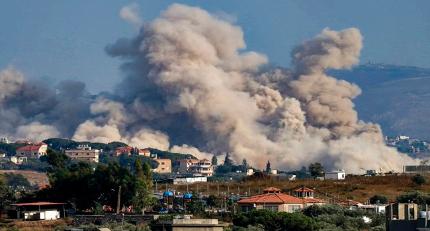
The United States has resumed military strikes against Iran, targeting Iranian rocket launchers on Larak Island in the Strait of Hormuz, in the latest escalation of the conflict between Washington and Tehran.
The strikes, carried out on Sunday, August 30, marked the first direct US military action against Iran in about a month and have renewed concerns over the security of the strategically important waterway, which is a major route for global oil shipments.
*US cites threat to shipping
The United States Central Command said the operation targeted Iranian forces that were preparing to deploy rockets and sea mines in the Strait of Hormuz.

According to the US military, the action was intended to prevent attacks on commercial vessels and protect the movement of ships through the strategic waterway.
US officials described the operation as limited and precise, saying the strikes were carried out after American forces detected preparations to place sea mines that could threaten civilian mariners and international shipping.
The development comes after US forces recently completed mine-clearing operations along international shipping routes in the Strait of Hormuz.

*Iran retaliates
Iran responded to the strikes by launching ballistic missiles towards US military installations in Jordan, with Jordanian authorities saying several of the missiles were intercepted.
Iranian authorities condemned the American operation as an act of aggression and warned that further attacks could trigger a stronger response.
The latest exchange of fire has raised fears that the conflict could once again widen across the Gulf region, where Iran and the United States have military assets and strategic interests.
The confrontation also comes after weeks of relative calm between the two countries, following earlier military exchanges and diplomatic efforts aimed at reducing tensions.
*Hormuz remains strategic
The Strait of Hormuz, which lies between Iran and Oman, remains central to the latest confrontation because of its importance to international energy supplies.
The waterway provides a major passage for oil and other energy exports from Gulf countries to international markets. Disruption to shipping through the strait has therefore raised concerns about possible effects on global oil prices and energy security.
Although US President Donald Trump has maintained that the strait remains open, the volume of maritime traffic has remained significantly below levels recorded before the conflict.
Renewed fighting could further discourage commercial vessels from using the route and increase pressure on global energy markets.
Oil prices rose following the latest US-Iran exchanges, reflecting concerns among investors over possible disruptions to supplies and shipping through the waterway.
*Trump threatens further action
US President Donald Trump has meanwhile warned that Washington could take further action against Iran following the latest attacks.
The American president’s position signals that the renewed strikes could mark the beginning of another phase of military pressure on Tehran, despite previous diplomatic efforts to reduce tensions.
Iranian President Masoud Pezeshkian, however, has indicated an interest in diplomacy, with Tehran maintaining that continued military confrontation would not serve the interests of either side.
The latest escalation has consequently renewed international concerns over the possibility of a wider conflict in the Middle East, particularly if attacks on military installations or commercial shipping continue.
For now, attention remains focused on the Strait of Hormuz, where any sustained military confrontation could have consequences beyond the United States and Iran, particularly for global energy markets and international maritime trade.