



By Sen. Amb. Prof. Iyorwuese Hagher, OON
I write today with a heavy heart but a clear conscience. I write not out of hatred for the Fulani or any ethnic group, not against livestock development, and certainly not against ranching as a modern system of animal husbandry. I write because justice must precede development, truth must precede reconciliation, and security must precede settlement. The dead must not be dispossessed a second time by policies constructed over their blood, bones and graves.
The Federal Government has identified Benue, Plateau, Nasarawa, Kaduna, Adamawa and the Federal Capital Territory as priority areas for implementation of its National Ranching Policy, largely because these areas have recorded some of the country’s worst farmer-herder violence. Government has also identified hundreds of grazing reserves and consulted pastoral organisations. But this raises a painful moral question: why should the very communities that have suffered killings, displacement and destruction now become priority territories for cattle ranches? Why must ranches, grazing reserves, RUGA settlements or whatever nomenclature government adopts repeatedly return to the same wounded landscapes? Why must the victim always surrender more?

Only recently, reports from my own village area in Kasar, Katsina-Ala Local Government Area of Benue State again reflected the frightening insecurity that has become normal in many rural communities. Armed criminal elements, described locally as herders, reportedly mounted illegal checkpoints, robbed travellers and terrorised communities. Across parts of Benue, farmers remain afraid to return to their farms, crops are destroyed, homes have been burnt, families displaced and women and girls live with the fear of violence. To government officials these places may be “conflict flashpoints.” To us, they are home. They are the villages where our fathers are buried, the farms from which our mothers fed us and the ancestral compounds where generations were born, married and buried.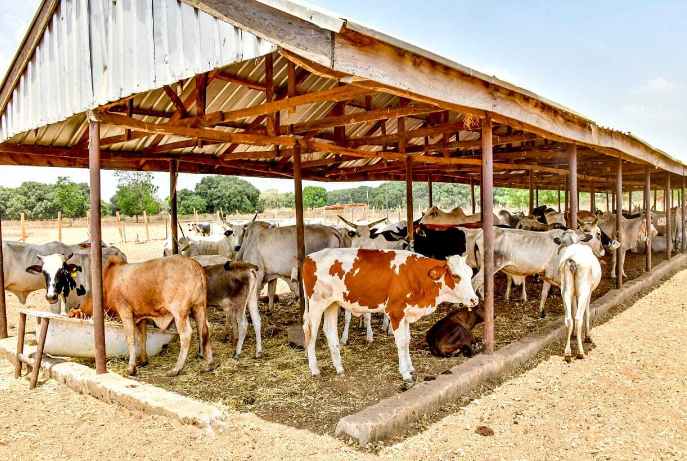 *A typical ranch (Photo: Premium Times)
The Nigerian state must never create the impression that violence can produce economic or territorial advantage. If people are violently driven from their ancestral homes and government later facilitates permanent livestock settlements on those same lands before the original inhabitants return, what message does that send? That displacement creates available land? That sustained violence can eventually generate political concessions? That a community can lose through policy what it first lost through terror? Such a precedent would be morally indefensible and nationally dangerous.
The scale of the human tragedy should sober every policymaker. Amnesty International reported in 2025 that thousands had been killed in Benue in attacks by armed groups and that hundreds of communities had been affected, while more than half a million people were estimated to be internally displaced. Then came Yelewata, where more than 200 people were reported killed in June 2025. President Bola Ahmed Tinubu visited Benue and demanded the arrest of those responsible. But Yelewata is only one name in a long catalogue of grief stretching through Sankera, Kwande, Gwer West, Guma, Agatu, Ukum, Logo, Katsina-Ala and other parts of the state. These are not statistics. They are fathers, mothers, farmers and children. They had names. They owned farms. They belonged to communities. Some of their surviving relatives still cannot safely return home.

So I ask the Federal Government: before you establish ranches, where have you established justice? Before allocating land for cattle, where is the secure land for the Nigerians driven from their farms? Before constructing livestock estates, where are the rebuilt homes, schools, clinics and markets destroyed during years of violence? Before asking traumatised communities to embrace ranching, where are the prosecutions, convictions, compensation and restitution? Where is the safe return of displaced citizens?
Nigeria is a federation, and federalism cannot merely be a decorative constitutional expression. Federalism means negotiation, consent, reciprocity and respect for the rights and peculiarities of constituent communities. One section of the federation cannot simply identify a need and make another section’s ancestral land the solution. Accommodation must come through lawful negotiation, not intimidation; consent, not coercion; justice, not bloodshed. Land made empty by violence is not vacant land. A displaced person does not lose ownership because he has been forced to flee.
I therefore caution the governors of the states selected for ranching. History is watching you. Ask why your states were chosen. Ask whether conflict should make land more available for livestock infrastructure or more sensitive to questions of justice and ownership. Ask whether the displaced have returned, whether communities have been consulted, who will own the ranches, who will benefit, and what happens to farming populations when ancestral land is permanently committed to private livestock businesses. Political tenures end; land decisions can endure for generations.
The Federal Government’s description of these areas as conflict flashpoints should lead to greater caution, not automatic allocation. A conflict zone first needs security, investigation, justice, reconciliation, resettlement and clearly established land rights. It does not first need a territorial arrangement that victims may reasonably interpret as rewarding aggression. Criminality must never become a successful negotiating instrument. At the same time, the crimes of armed herders and criminal gangs must never be transferred to every Fulani Nigerian. Collective ethnic guilt is unjust. Our quarrel is not with ethnicity. Our quarrel is with murder, terrorism, land seizure and impunity.
There is one moral test that should guide this policy: where are the displaced people? Before any ranch boundary is drawn, government should identify the families who lived on that land. Before any allocation is made, determine whether somebody is sitting in an IDP camp because he was violently driven from that same territory. Let the farmer return first. Let the widow return first. Let the orphan return first. Let the school, clinic, market, church and mosque reopen. Let communities become secure again. Then, where communities freely choose to participate in modern livestock projects, transparent negotiations can begin.
Mr President, modernise Nigeria’s livestock economy by all means. Support ranching. End unsustainable open grazing. Build veterinary systems, dairy industries, feedlots and meat-processing facilities. Support peaceful pastoralists who want to modernise their businesses. But do not place the burden of that modernisation upon communities already crushed by violence. Do not ask victims to finance reconciliation with their ancestral inheritance. Do not place cattle before citizens.
I conclude not merely as a former Senator, diplomat, professor or public servant, but as a son of the Middle Belt. Our soil has absorbed enough blood. Our mothers have cried enough. Our children have lived in displacement long enough. Somewhere beneath land now discussed in policy meetings lies a farmer who once cultivated it. Somewhere in an IDP camp sits a child whose inheritance may tomorrow be described as a grazing reserve or ranching corridor. That child may have no powerful lobby in Abuja. He may have only his memory—and those of us who can still speak.
So we shall speak. We shall speak for the dead, the displaced, the farmer, the widow and the orphan. We ask the Federal Government to suspend any ranching arrangement that cannot guarantee justice, security, lawful land rights, community consent and the prior restoration of displaced Nigerians. Do not build development upon dispossession. Do not convert terror into title. Do not draw ranch boundaries across the memory of massacred communities.
The Middle Belt does not reject peace; we demand peace founded upon justice. We do not reject development; we demand development founded upon consent. We do not reject our fellow Nigerians; we reject murder, dispossession and impunity.
Give us justice. Give our people security. Return the displaced to their homes. Restore their farms. Prosecute the killers. Then let us discuss what development should rise upon the land.
For no ranch, no policy and no economic programme can be worth more than the blood of a Nigerian citizen.
Let the living return home. Let the dead rest in peace. And do not dispossess either of them.
*Sen. Amb. Prof. Iyorwuese Hagher, OON, is the Grand Patron, Middle Belt Youth Development Organisation Top of Form