

The Federal Government has signed an agreement with Premium Steel and Mines Limited (PSML) to facilitate the full rehabilitation and revival of the former Delta Steel Company in Ovwian-Aladja, Delta State.
The agreement, signed between the National Iron Ore Mining Company (NIOMCO), Itakpe, and PSML, is expected to provide the raw material foundation required for the reactivation of the integrated steel plant.
The development represents a major step in the Federal Government’s efforts to restore Nigeria’s steel industry and reposition it as a catalyst for industrialisation, job creation and economic diversification.
Commissioned in 1982, the Delta Steel Plant was designed to produce one million tonnes of liquid steel annually. However, years of operational difficulties resulted in the plant operating at only about 25 per cent of its installed capacity before it was eventually shut down.
The Federal Government privatised the company in 2005 in a bid to attract private capital, with Global Infrastructure Holdings Limited taking over the asset. In 2015, the Asset Management Corporation of Nigeria (AMCON) subsequently sold the company to PSML as part of efforts to recover unserviceable debts.

Under the latest agreement, PSML has pledged more than $1.3 billion for the exploration and exploitation of raw materials, rehabilitation and modernisation of the steel plant and restoration of full-scale production.
The company is expected to achieve full reactivation and begin commercial operations within 18 to 24 months, with the availability of sustainable iron ore supply now being supported through the agreement with NIOMCO.
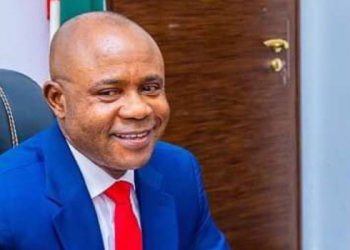
According to a statement at the weekend, the Minister of Steel Development, Prince Shuaibu Abubakar Audu, described the development as a significant milestone in the Federal Government’s efforts to restore Nigeria’s steel-producing capacity.
Audu said the revival of the plant aligned with President Bola Ahmed Tinubu’s Renewed Hope Agenda, particularly the administration’s focus on local manufacturing, industrial expansion and employment generation.
He said the project was not simply about reopening a dormant facility but about rebuilding Nigeria’s capacity to produce steel locally, stimulate downstream industries and create opportunities for young Nigerians.
The minister assured investors in the sector of the Federal Government’s commitment to providing the necessary policy support, infrastructure and raw materials needed to ensure sustainable operations.
The project is expected to reactivate NIOMCO and support the development of the Ajabanoko iron ore deposits, while facilitating the commercial operation of PSML.
It is also projected to create about 5,000 direct jobs and more than 20,000 indirect jobs, while contributing to the Federal Government’s target of achieving 10 million tonnes of liquid steel production annually by 2030.
In addition, increased production is expected to boost freight activities along the Central Rail Line and facilitate greater utilisation of the Delta Steel Company Jetty.
The Federal Government said the success of the initiative would ultimately be determined by the actual development of the mines, rehabilitation of the plant, commencement of commercial steel production and creation of sustainable employment within the agreed implementation period.
The Ministry of Steel Development commended the Ministries of Justice and Solid Minerals Development for their support towards the agreement and expressed confidence that the initiative would strengthen Nigeria’s domestic steel value chain.
The Federal Government reiterated its commitment to developing Nigeria into a competitive steel-producing country capable of reducing dependence on imported steel and playing a stronger role in Africa’s metals and steel industry.