

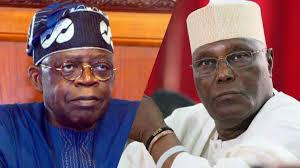
Former Vice-President of Nigeria and Presidential candidate of the African Democratic Congress (ADC), Atiku Abubakar,has dismissed President Bola Tinubu’s economic record as a desperate attempt to substitute propaganda for performance, insisting that no amount of statistical manipulation can erase the daily suffering of millions of Nigerians.
In a statement issued by his Senior Special Assistant on Public Communication, Phrank Shaibu, Atiku stated it was remarkable that the Presidency devoted thousands of words to attacking the opposition while failing to answer the one question every Nigerian is asking: If the economy is doing so well, why are Nigerians getting poorer?
He said it was even more ridiculous that the same Tinubu administration that is simultaneously implementing the 2024, 2025 and 2026 budgets is now asking Nigerians to forget the consequences of its economic decisions in earlier years.
“As the Yoruba rightly say, the one who defecated yesterday may quickly forget, but the person who cleaned up the mess never does. Nigerians have not forgotten the pain this administration unleashed through the disastrous management of every fiscal year since 2024.
“Those wounds remain fresh, and no amount of revisionism, selective statistics or government propaganda can erase them.”
Atiku noted that the Presidency’s response was remarkable not for the strength of its arguments but for the contradictions it inadvertently exposed.

“The State House celebrates macroeconomic indicators while ordinary Nigerians struggle with microeconomic realities. It speaks glowingly about GDP growth while families skip meals.
“It boasts of debt ratios while businesses shut their doors. It trumpets reforms while millions of citizens slide deeper into poverty. It applauds statistical improvements while market women, artisans, manufacturers, transporters and young graduates confront an economy that has become increasingly hostile to honest enterprise.”
Atiku said the Presidency’s repeated celebration of GDP growth exposes a dangerous disconnect between government statistics and the lived realities of ordinary Nigerians.
“The Presidency proudly announced that Nigeria’s GDP has increased significantly since the exchange-rate adjustment. We ask a simple question: Has the purchasing power of the average Nigerian increased? Can civil servants buy more food today than they could three years ago? Are transport fares lower? Are manufacturers paying less for energy? Have small businesses become more profitable?
The answer, tragically, is no.”
He noted that even the International Monetary Fund, whose report the Presidency repeatedly cites as validation of its policies, cautioned that conditions remain difficult for many Nigerians, estimating that 63 per cent of Nigerians now live below the national poverty line, while about 27 million Nigerians faced food insecurity in late 2025.
Responding to the Presidency’s argument that Nigeria’s debt-to-GDP ratio remains moderate, Atiku said the government had deliberately avoided the real issue.
“No serious economist argues that borrowing is inherently wrong. Nations borrow. The real question is this: what has Nigeria obtained in return for the unprecedented debts accumulated under this administration?
“A debt-to-GDP ratio is only one indicator. Equally important is whether borrowed funds generate productive investments, improve infrastructure, create jobs, strengthen public services and raise living standards. On these measures, Nigerians have every right to ask difficult questions.”
He noted that while the Presidency celebrates debt ratios, Nigerians continue to grapple with unreliable electricity, worsening insecurity, rising unemployment, collapsing purchasing power and one of the most severe cost-of-living crises in recent history.
Turning to the Presidency’s defence of fuel subsidy removal, Atiku said Nigerians have never opposed difficult reforms. What they reject is hardship without accountability.
“No serious economist disputes that fuel subsidy had become unsustainable. The real question has never been whether subsidy should be removed. The question is: where are the gains?
“Government cannot ask citizens to celebrate sacrifice while the promised rewards remain invisible.”
The former Vice-President said it was ironic that while the Presidency claimed subsidy had been eliminated, it also admitted that substantial crude oil revenues remain tied down by obligations arising from subsidy-related financing arrangements.
“The Presidency cannot simultaneously claim victory over subsidy while explaining away missing oil revenues by pointing to obligations created by subsidy financing. That contradiction speaks louder than any press statement.”
Atiku noted that the Presidency celebrated increased allocations to states and local governments as proof that subsidy removal had succeeded.
“Yes, FAAC allocations have increased significantly. But increased allocations are not an end in themselves. They must translate into visible improvements in the lives of citizens.
“If revenues flowing to all tiers of government have reached unprecedented levels, why are Nigerians still confronted with collapsing purchasing power, worsening insecurity, rising unemployment and deepening poverty?”
He said the Federal Government cannot take credit for higher allocations while distancing itself from the deteriorating living conditions across the country.
“The purpose of public finance is not merely to move money between government accounts. It is to improve the welfare of the people. On that score, Nigerians remain unconvinced.”
Responding to the Presidency’s claim that its tax reforms are progressive, Atiku said no tax policy can succeed in an economy where businesses are already struggling to survive.
“Government cannot tax its way into prosperity while simultaneously shrinking the productive capacity of the economy.
“Manufacturers are battling record energy costs. Small businesses face multiple taxes, rising electricity tariffs, escalating logistics expenses and declining consumer demand. Families are paying more for virtually every essential service.
“A tax reform that expands government revenue while ordinary citizens become poorer cannot honestly be described as progressive.”
He added that successful tax systems are built on expanding productivity, creating jobs and widening the tax base through economic growth—not by extracting more from an already distressed economy.
Atiku described the Presidency’s explanation on the so-called oil windfall as the most revealing part of its entire response.
“In attempting to rebut our position, the Presidency inadvertently strengthened it. It admitted that despite higher international crude oil prices, Nigerians cannot fully benefit because substantial volumes of the nation’s crude have already been committed under crude-backed financing arrangements.
“That is not a defence. It is an indictment.”
He said if Nigeria’s future oil earnings have been encumbered to such an extent that citizens cannot enjoy the benefits of favourable international oil prices, then the administration has merely replaced one fiscal burden with another.
“If the proceeds of Nigeria’s most valuable natural resource have already been committed through opaque financing arrangements, Nigerians deserve full disclosure.
“Who authorised these transactions? How many barrels have been pledged? What are the repayment terms? How much has been received? Which projects have been financed? Who are the counterparties? These are not political questions; they are constitutional questions about transparency and accountability.”
The former Vice-President said transparency—not propaganda—is the true test of fiscal responsibility.
“No government that refuses to fully disclose the terms under which future crude oil revenues have been committed can credibly lecture Nigerians about prudence and accountability.
“If subsidy has truly ended and the reforms are yielding the benefits being advertised, Nigerians deserve to see those benefits reflected not merely in government spreadsheets but in their homes, their businesses and their daily lives.
“The Presidency says revenues have improved dramatically, yet borrowing continues at record levels.
“It says subsidy has been removed, yet admits that crude oil revenues remain tied down by obligations arising from subsidy-related financing arrangements.
“It celebrates GDP growth, yet independent institutions acknowledge rising poverty and widespread food insecurity.
“It boasts of improving living standards, yet simultaneously expands cash transfer programmes because it recognises that millions of Nigerians cannot survive without government assistance.
“It insists the economy has recovered, yet asks Nigerians to endure more sacrifices because the benefits remain somewhere in the future.
“These contradictions expose the difference between government propaganda and the everyday experiences of ordinary Nigerians.”
Atiku noted that Nigerians do not require economic lectures to know the condition of their own lives.
“The market woman knows what she paid for a bag of rice yesterday and what she pays today.
“The manufacturer knows what it costs to keep his factory running.
“The transporter knows what it costs to fill a fuel tank.
“The farmer knows the cost of fertiliser and the danger of reaching his farm.
“The unemployed graduate knows the difference between official optimism and the harsh reality of joblessness.
“No government press release can persuade Nigerians to disbelieve the evidence of their own empty pockets.”
He said no government can credibly claim that its economic policies are succeeding while the productive engine of the economy is grinding to a halt.
“A government cannot claim its economic policies are working when the country’s industrial sector is actively shutting down. Nations do not build prosperity by celebrating macroeconomic statistics while their factories close their gates.”
He said while the Presidency speaks glowingly about progressive tax reforms, GDP growth and macroeconomic recovery, the Manufacturers Association of Nigeria (MAN) has painted a grim picture of an economy under severe distress.
“According to MAN, 767 manufacturing companies have shut down, while 335 others are classified as distressed under the weight of the current economic environment.
“Manufacturers are sitting on approximately ₦2.14 trillion worth of unsold finished goods, not because Nigerians do not need these products, but because millions of citizens have lost the purchasing power to buy even basic necessities.
“Global companies such as Procter & Gamble, GlaxoSmithKline, Sanofi and Kimberly-Clark have either shut down or exited local manufacturing operations, while indigenous companies, including Jubilee Syringe Manufacturing, have also been forced to suspend production.
“To make matters worse, local manufacturers spent about ₦1.11 trillion on diesel alone to keep their factories running after electricity tariffs for Band A customers increased dramatically, further worsening the cost of doing business.”
Atiku said these are not opposition figures but the findings of Nigeria’s foremost manufacturing body.
“Factories do not shut down because the opposition writes press statements. Manufacturers do not accumulate trillions of naira in unsold goods because critics hold press conferences. Multinational companies do not abandon billion-naira investments because of political rhetoric.
“They leave because the economic environment has become increasingly hostile to production, investment and enterprise.
“The true verdict on this administration’s economic policies is not written by government spokespersons. It is written in the silent factories, the abandoned production lines, the shuttered warehouses, the unemployed workers and the empty pockets of millions of Nigerians. No amount of propaganda can erase that reality.”
Atiku said the Presidency should spend less time writing lengthy essays defending its record and more time confronting the failures that have made life increasingly unbearable for millions of citizens.
“Governments are not judged by the elegance of their press statements or the sophistication of their economic theories.
“They are judged by whether families can afford food, whether businesses can survive, whether young people can find jobs, whether communities are secure, and whether citizens have hope for tomorrow.
“No amount of propaganda can substitute for competent governance. No statistical gymnastics can erase hunger.
“No carefully curated economic indicators can silence empty stomachs. No government can successfully persuade citizens that they are prospering while they struggle daily to survive.
“The true report card of this administration is not written in the corridors of Aso Rock. It is written every day in the markets, on the farms, in the factories, in hospitals, in classrooms and in millions of Nigerian homes.
“That report card is not being written by the opposition. It is being written by the Nigerian people themselves. And its verdict is becoming clearer with each passing day.”