

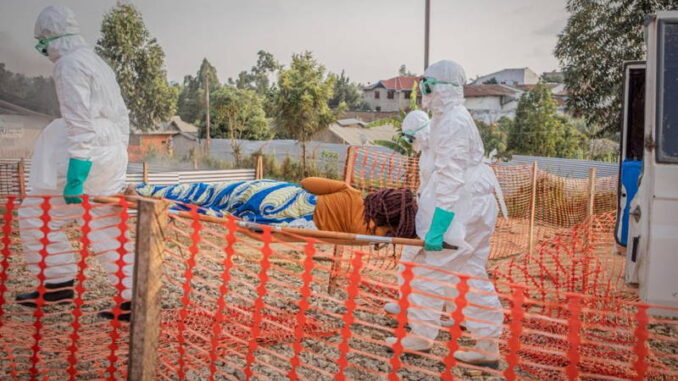
The Ebola outbreak in the Democratic Republic of Congo (DRC) has claimed 600 lives, according to the latest figures released by the World Health Organization (WHO), highlighting the rapid spread of the deadly disease across parts of the country.
The updated data, published on Thursday, showed that the death toll increased by more than 100 within three days after fatalities surpassed the 500 mark earlier this week.
The WHO said the outbreak remains one of the most serious public health emergencies currently facing the Central African nation.

According to the UN health agency, the DRC has recorded 1,759 confirmed Ebola cases since the outbreak was officially declared in mid-May.
Of the confirmed cases, 600 people have died, giving the outbreak a case fatality rate of 34 per cent based on figures provided by the country’s health authorities.
The WHO noted that the outbreak continues to evolve as surveillance teams monitor new infections and suspected cases.
Despite the rising death toll, health officials said 285 patients have recovered from the disease since the outbreak began.
The WHO also disclosed that 304 suspected Ebola cases are currently under investigation as authorities work to determine whether they are linked to the ongoing outbreak.
Neighbouring Uganda has also reported infections, with two deaths recorded and 17 of its 20 confirmed patients having recovered.
The outbreak has spread across four provinces in northeastern Democratic Republic of Congo, although Ituri Province remains the worst-hit area.
The region, which is rich in mineral resources, has long struggled with insecurity caused by the activities of armed groups, making disease surveillance and response efforts more challenging.
The DRC officially declared its 17th Ebola outbreak on May 15 after several deaths were recorded in Ituri.
Health experts said the outbreak is being driven by the rare Bundibugyo strain of the Ebola virus.
Unlike some other strains of the disease, there are currently no approved vaccines or specific treatments for the Bundibugyo variant, posing additional challenges for health authorities.
Ebola is transmitted through close contact with infected individuals or exposure to infected bodily fluids, making early detection and isolation critical to containing outbreaks.
In an effort to improve treatment outcomes, clinical trials involving two potential therapies commenced in the DRC on July 2.
Researchers are evaluating the effectiveness of the monoclonal antibody MBP134 and the antiviral drug remdesivir, both separately and in combination.
Health authorities and international partners hope the trials will provide valuable evidence that could improve the treatment of patients infected with the Bundibugyo strain and help strengthen future outbreak responses. (Blueprint)