


By Uzor Maxim Uzoatu
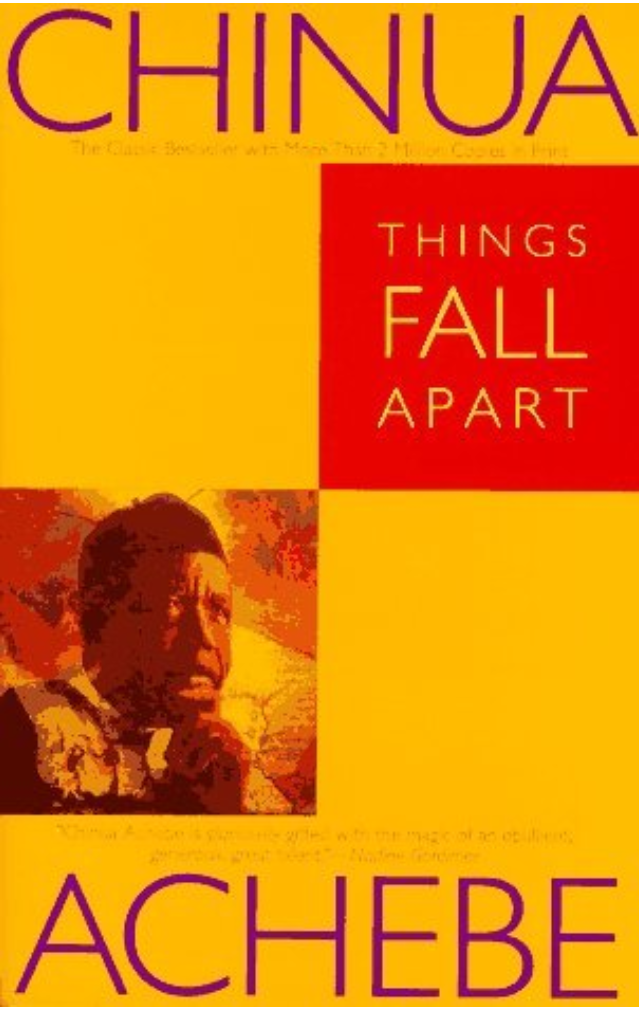
On Tuesday, June 17, 1958, Things Fall Apart was published in England.
The book has over the years become a standout phenomenon as one of the most influential novels in world literature.

Chinua Achebe’s Things Fall Apart ranks as one of the rare books that has never gone out-of-print since its publication.
It has been published all over the world in some 70 languages and has sold more than 30 million copies.
The publication date of Things Fall Apart, June 17, was in 2020 declared “Achebe Day” by World Ebony Network.

Feb 26, 2008 – New York, New York, USA – The writer CHINUA ACHEBE (Nigeria/USA), photographed February 26, 2008, New York (Credit Image: © Beowulf Sheehan/ZUMA Press) (Newscom TagID: zumaamericaseight735192.jpg) [Photo via Newscom] In 2023, Senator Angela Alsobrooks issued a proclamation recognizing June 17th in Prince George’s County, Maryland, USA as the day to celebrate ethnic equity and equality against the backdrop that ethnic groups should tell their own stories.
It needs to be recalled that the manuscript of Things Fall Apart was nearly lost when the naïve young wannabe author sent it to London for typing!
It’s not in my constitution to go into the minutiae of that near tragedy here!
I do not want to also dwell on the Cameroonian professor who borrowed the only surviving manuscript of the novel from Achebe and thereafter conveniently lost it!
It suffices to just stress that in its 68-odd years of existence Things Fall Apart has proven to be the single most important piece of literature out of Africa.
Things Fall Apart has only 50,380 words but it contains more heft and substance than the fattest of books.
The novel which has been likened to epic Greek tragedies is taught not just in literature classes but in history, sociology and anthropology departments in colleges and universities across the globe.
In a racist trial in the United States, the trial judge made it as a part of his ruling that the convicted racist must perforce read Things Fall Apart!
The archetypal theme of the meeting of the white world and the black race makes Things Fall Apart an epochal event in the annals of world literature.
Things Fall Apart tells the deceptively simple story of Okonkwo, a strong man whose life is dominated by the fear of failure.
As a teenager he brought honour to his village by throwing the hitherto unbeatable Amalinze the Cat in a wrestling match.
His fame spread through the nine villages of Umuofia and even beyond like harmattan bushfire, but he remained troubled that his master flutist father, Unoka, was a debtor and a failure.
As if to compound matters, Okonkwo notices weakness in his own son, Nwoye, and he comes to the sad conclusion that raging fire only ends up as impotent ash.
Against the warning of an elder, he kills the ill-fated child, Ikemefuna, who had been given over to the people of Umuofia as ransom, a child who called him “father”.
An accidental gunshot that kills a fellow villager at a wake leads to Okonkwo being exiled from Umuofia for seven years.
When he comes back from exile he discovers that the Christian missionaries had overrun the land, and even his son Nwoye had joined them.
In anger, Okonkwo cuts off the head of the white man’s messenger but the people of Umuofia would not follow him to war.
He hangs himself on a tree and ends up being buried by the strangers he had spent his life fighting.
The book works at several levels, and can be read at any age from 10 to 100.
As a child, one can enjoy the incidents such as the match with Amalinze the Cat, Unoka’s dismissal of his creditor, Okonkwo’s attempted shooting of one of his wives, the visitation of the masked spirits etc.
Later in life, the many ironies in the book come into play such as the joke on the District Commissioner thinking that Okonkwo’s story can only end up as a paragraph in his planned book, The Pacification of the Primitive Tribes of the Lower Niger, without knowing that one Chinua Achebe had taken the thunder from him by giving Okonkwo an entire book in which the story is narrated from inside!
It is not for nothing that Achebe is celebrated as the father of African literature.
He changed the perspective of world literature from the gaudy picture of Africa as painted by Europeans such as Joseph Conrad, Joyce Cary and Sir Rider Haggard to the authentic telling of the tale by the Africans.
Unlike earlier African writers like Guinea’s Camara Laye, author of The African Child, who painted a romantic picture of the continent, Achebe is relentlessly objective in his narration, telling it as it is, warts and all.
It’s because of the phenomenal success of Things Fall Apart that the publishers, Heinemann UK, launched the African Writers Series (AWS) in 1962 with Achebe’s first novel as the first title.
For many years, Achebe served as a non-remunerated Editorial Adviser of the series in which the majority of African writers got their breakthrough in publishing.
Things Fall Apart reputedly accounted for 80 percent of the entire revenue of the AWS.
Nelson Mandela called Achebe “the writer in whose company the prison walls fell down.”
The rave reviews for Achebe’s most famous novel have somewhat dwarfed his other novels such as No Longer at Ease (1960), Arrow of God (1964), A Man of the People (1966) and Anthills of the Savannah (1987).
Achebe won the Man Booker Prize for his lifetime achievement in fiction writing, beating a formidable shortlist that included Philip Roth, Salman Rushdie, V.S. Naipaul, Ian McEwan, etc.
Things Fall Apart has earned its uncommon distinction as a modern classic and was thus adopted into the esteemed Everyman’s Library of world classics.
At the turn of the 20th century, the book was universally voted as Africa’s “novel of the century”.
Achebe has in the book given the world a new English language which paradoxically portrays African life without facetiousness or affectation.
It’s worth reiteration: June 17 is Achebe Day because of Things Fall Apart.
*Uzor Maxim Uzoatu is a renowned poet, journalist and author