


…as WHO commends Nigeria’s healthcare resilience
BY SAM OTUONYE
The federal government through the National Blood Service Agency (NBSA), has approved a digital National Blood Management System that would enable real-time online streamlining of blood donation and transfusion processes, access blood type information and blood supply services through mobile devices and other digital platforms.

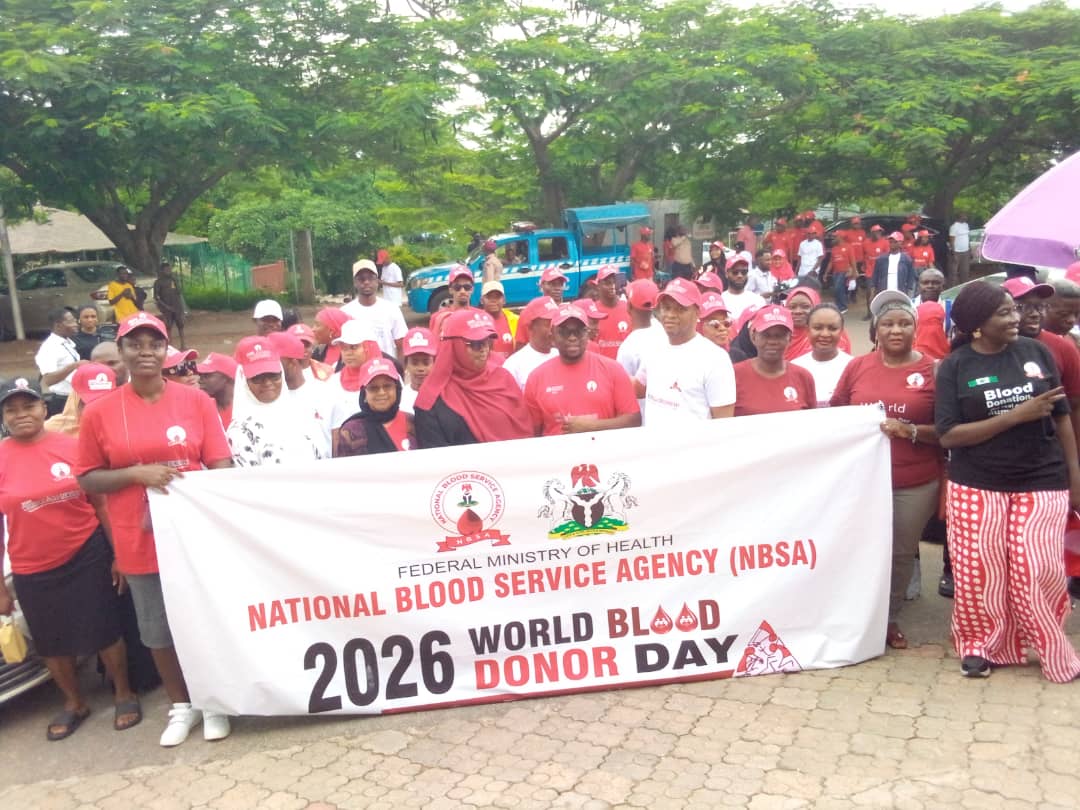
This was disclosed on Monday, 15 June, 2026, by the Director General, National Blood Service Agency (NBSA), Prof. Saleh Yuguda during the commemoration of 2026 World Blood Donor Day, in Abuja.
Speaking at the event Prof. Yuguda, represented by Dr. Sani Abubakar, noted that the Agency has strived in strengthening blood donation and transfusion services nationwide.
He noted that under the initiative, blood centres, hospitals and partner facilities across the country will be fully digitised, enabling donors, healthcare professionals and patients to access blood-related information electronically.
The digital platform is expected to streamline blood donation and transfusion processes, allowing users to access blood type information and blood supply services through mobile devices and other digital platforms.
The DG stated that World Blood Donor Day is dedicated to recognising the invaluable contribution of voluntary blood donors whose selfless actions sustain healthcare systems and save countless lives.
“This year’s theme, ‘One Drop of Humanity, Give Blood, Save Lives,’ aptly captures the essence of voluntary blood donation as a profound expression of compassion, solidarity and collective responsibility,” he said.
According to the agency, Nigeria’s blood collection figures have shown remarkable growth, with the national pool of blood donations “almost doubling” between 2024 and 2025.
“It is on record that our pool of blood collections has almost doubled between 2024 and 2025, and we expect even greater progress this year,” the statement said.
The agency attributed the achievement to new policies, stronger partnerships and the dedication of NBSA personnel across the country.
Also speaking at the event, World Health Organization (W.H.O) representative Dr. Chavan Lamikant commended Nigeria’s efforts in expanding access to safe blood and blood products, describing it as a critical pillar of a resilient healthcare system.
According to him, thousands of Nigerians rely on blood transfusions daily, including women facing complications during pregnancy and childbirth, children suffering from severe malaria and anaemia, victims of road traffic accidents, surgical patients, and individuals living with chronic health conditions.
“Access to safe blood and blood products is not just a medical necessity; it is a cornerstone of a resilient health system and an essential component of achieving universal health coverage and health security,” he said.
Dr. Lamikant noted that WHO recommends that countries collect at least 10 blood donations per 1,000 population, adding that Nigeria has made encouraging progress by doubling its blood donation figures over the past two years.
“I congratulate Nigeria because in the last two years, blood donations have doubled. However, there is still a need to strengthen regular, voluntary and unpaid blood donation as the safest and most sustainable source of blood,” he stated.
He praised voluntary blood donors across the country, describing them as “silent heroes” whose generosity and compassion save lives every day. He also called on young people, institutions, faith-based organisations, communities and the media to promote voluntary blood donation and help dispel myths surrounding the practice.
Further more, Dr. Bunmi Amoo, Director of Prevention Services at APIN Public Health Initiatives, and Nurse Shalom Edeh, Founder of Shalom Health Foundation, stressed the need for increased public participation in voluntary, non-remunerated blood donation.
They noted that despite ongoing efforts, many healthcare facilities still face blood shortages, leaving patients with life-threatening conditions vulnerable.
The speakers commended long-standing partnerships with the National Blood Service Agency and highlighted ongoing initiatives such as the Secondary School Blood Safety Club Programme, aimed at educating young people on the importance of blood donation and encouraging healthy lifestyles.
NBSA celebrated Madam Amina Giwa as Blood Donation Champion of the year, for donating blood 40 times, noting that she was the first woman that has earned the honour in so many years.
Highly elated Amina attributed her commitment to saving lives through blood donation to divine protection and her desire to support humanity.
The event brought together government officials, healthcare experts, development partners, civil society organisations and donors, all united in their commitment to improving blood transfusion services and increasing voluntary blood donations across Nigeria.