


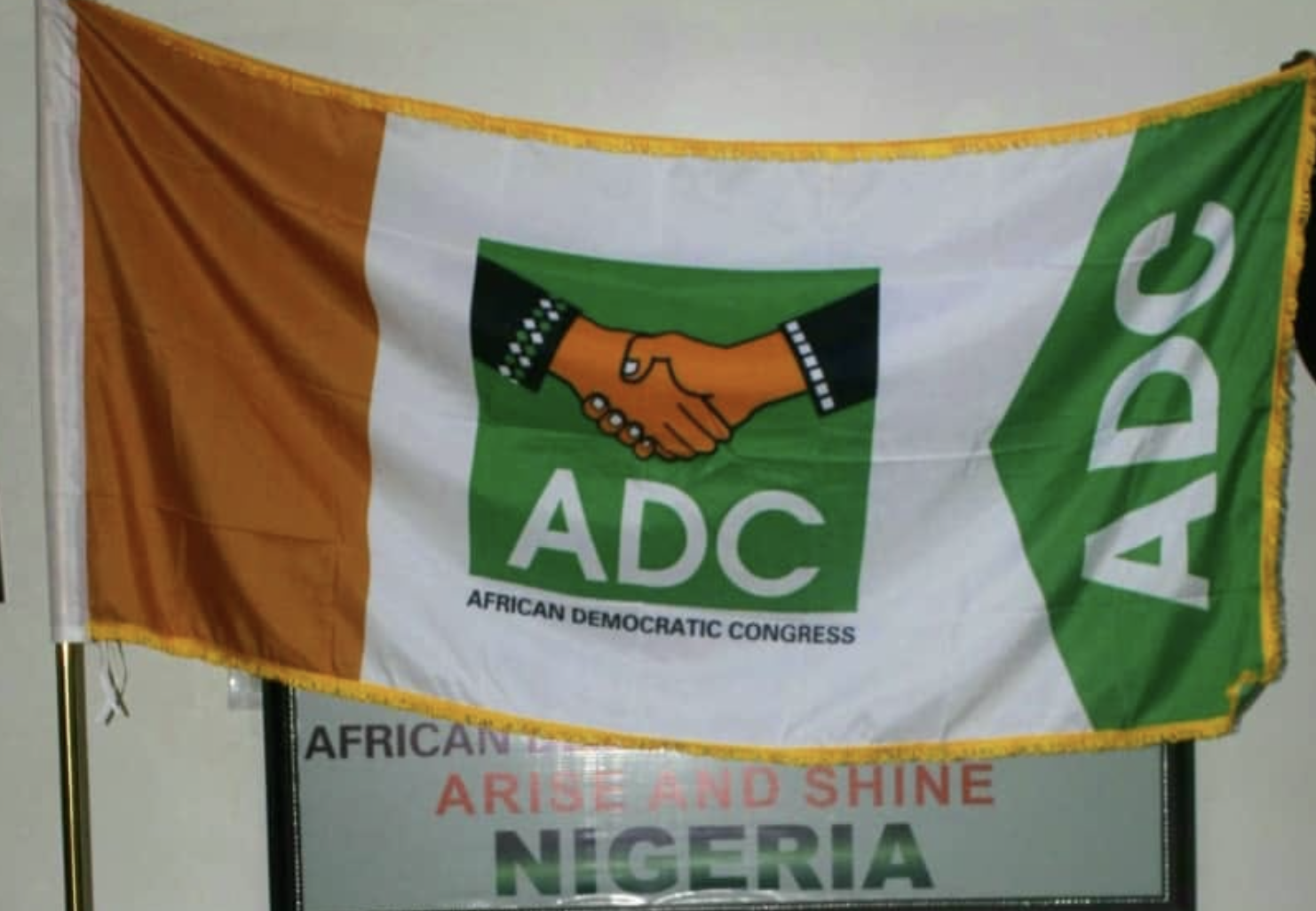
The African Democratic Congress(ADC) has announced plans to introduce a governance framework aimed at ensuring elected officials are held accountable to campaign promises, declaring that Nigerian politics can no longer revolve around unfulfilled pledges and abandoned manifestos.
The party said its new policy direction ahead of the 2027 general elections would require candidates to govern based on clearly defined commitments contained in the party’s manifesto and policy principles.

Speaking on the initiative, Secretary of the ADC Policy and Manifesto Committee, Salihu Mohammed Lukman, in a statement on Friday, stated that the party was determined to change the culture of governance by linking elected officials directly to measurable policy commitments.
According to Lukman, one of the major failures of governance in Nigeria has been the consistent abandonment of campaign promises after elections, noting that Nigerians have become increasingly frustrated with rhetoric unaccompanied by results.
“The Nigerian state must be reconstructed to serve the Nigerian citizen,” Lukman said.

He explained that the party’s newly adopted manifesto and policy principles are designed to rebuild trust by placing accountability, measurable outcomes and public welfare at the centre of governance.
Lukman stated that the manifesto covers twelve major sectors, including the economy, agriculture, education, healthcare, infrastructure, security, governance and industrialisation, with implementation strategies intended to move Nigeria away from what he described as a consumption-driven and dysfunctional system.
He said unlike existing governance practices where campaign promises often end as political slogans, the ADC intends to institutionalise what he termed “manifesto compliance as a governance norm.”
According to him, aspirants and candidates of the party would undergo induction and orientation programmes to ensure they understand and commit to implementing the party’s manifesto if elected.
“Nigerians are anxiously looking forward to a situation whereby politicians can be held accountable to electoral promises they made ahead of elections. This is an area that should distinguish the ADC from the APC and other parties in the country,” he said.
Lukman criticised the ruling All Progressives Congress for allegedly failing to implement promises made during the 2015 elections, arguing that weak ideological discipline and poor policy accountability have contributed to worsening economic and social conditions.
“One of the big disappointments of Nigerians with the APC is how after winning the 2015 elections, the party abandoned its manifesto and almost all the electoral promises made in 2015,” he stated.
He further said the ADC rejects economic reforms that impose hardship on citizens without adequate social protections, insisting that policy reforms should be humane and focused on improving living standards.
“Macroeconomic stability must protect people, not just markets,” Lukman said.
The ADC official added that the party’s economic philosophy prioritises job creation, productive growth, industrialisation, food security, social protection and citizen-centred governance.
He described the ADC coalition as more than a political alliance, saying it represents a structured national effort aimed at promoting disciplined leadership, institutional accountability and policy-driven governance.
According to him, the party seeks to move Nigerian politics “from politics as rhetoric to governance as delivery, from state capture to citizen-centred institutions, and from reactive crisis management to prevention and resilience.”
Lukman said the party would soon unveil its manifesto and broader engagement framework to prepare candidates for issue-based campaigns and accountable governance ahead of the 2027 elections.