

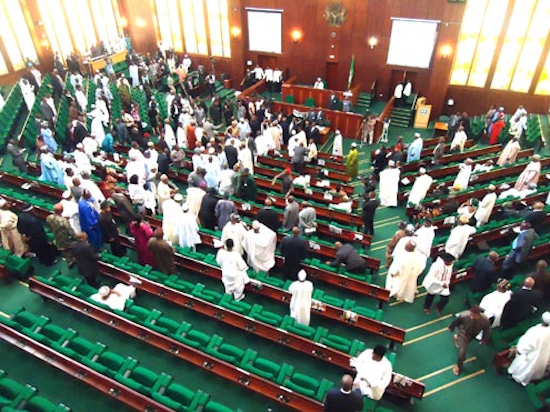
Minority members of the House of Representatives staged a dramatic walkout from plenary on Tuesday in protest against the passage of key provisions in the Electoral Act Amendment Bill 2025.

The protest followed the adoption of Clause 60(3), which provides for both real-time electronic transmission and manual transmission of election results.
Hon. Bamidele Salam had moved a motion seeking the deletion of the provision allowing manual transmission of results.
Hon. Kingsley Chinda, Minority Leader, said the minority could not support any provision that opens the door to manipulation of election results. “Our position is that elections shall and should be transmitted electronically,” he declared.
The minority also opposed the passage of Clause 84, which deals with primary elections and the method of candidate selection by political parties. Chinda said the caucus maintains that the choice of whether to adopt direct primaries, indirect primaries or consensus arrangements should remain strictly an internal affair of political parties.
“We support that parties should be allowed to adopt the method best suited for them – direct primaries, indirect primaries, or consensus primaries,” Chinda said.
Chinda explained that the walkout was a deliberate move to formally register their objection before Nigerians.
“For us, after what happened on the floor, we felt it was better to register our position with Nigeria, which is the court of public opinion,”he said.
Chinda disclosed that the minority had proposed that where there is any conflict between the manually collated Form EC8A results and electronically transmitted results, the electronically transmitted version should prevail. “Those positions were torn down,” he said.
Chinda alleged that APC members opposed electronic transmission on grounds of political party affiliation, not patriotism.
“We are aware that they were torn down by members of the APC, not on grounds of patriotism, but on grounds of political party affiliation,” he said.
Despite the protest and walkout, the House proceeded with the amendments, setting the stage for what is expected to be intense political debate as the country inches closer to the 2027 general elections.
The latest development underscores deep partisan divisions within the Green Chamber over the direction of Nigeria’s electoral reforms, with the minority vowing to continue mobilising public opinion against provisions they believe could undermine transparency and internal party democracy.