

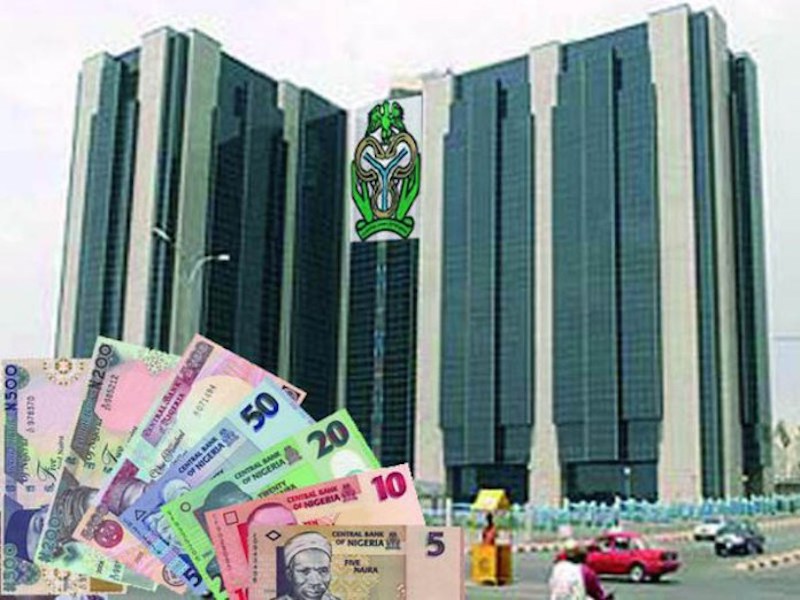
The Socio-Economic Rights and Accountability Project (SERAP) has filed a lawsuit against the Central Bank of Nigeria (CBN) “over the failure to account for and explain the whereabouts of the missing or diverted N3 trillion of public funds, including the over N629 billion paid to ‘unknown beneficiaries’ as part of the Anchor Borrowers’ Programme.”
The lawsuit followed the grave allegations contained in the latest annual report by the Auditor-General of the Federation, which was published on 9 September 2025.
In the suit number FHC/ABJ/CS/250/2026 filed last week at the Federal High Court in Abuja, SERAP is seeking: “an order of mandamus to direct and compel the CBN to account for and explain the whereabouts of the missing or diverted N3 trillion of public funds, including detailed reports of how exactly the funds were spent.”

In the suit, SERAP is arguing that, “These grim allegations by the Auditor-General suggest grave violations of the public trust, the provisions of the Nigerian Constitution 1999 [as amended], the CBN Act, and anticorruption standards.”
SERAP is arguing that, “These grave violations also reflect a failure of CBN accountability more generally and are directly linked to the institution’s persistent failure to comply with its Act and to uphold the principles of transparency and accountability.”
According to SERAP, “These violations have seriously undermined the ability of the CBN to effectively discharge its statutory functions and the public trust and confidence in the bank. The CBN ought to be committed to transparency and accountability in its operations.”
SERAP is also arguing that, “Nigerians have the right to know the whereabouts of the missing or diverted public funds. Granting the reliefs sought would advance the right of Nigerians to restitution, compensation and guarantee of non-repetition.”
SERAP said, “Section 15(5) of the Nigerian Constitution requires public institutions to abolish all corrupt practices and abuse of power. Section 13 of the Constitution imposes clear responsibility on the CBN to conform to, observe and apply the provisions of Chapter 2 of the constitution.”
The suit filed on behalf of SERAP by its lawyers Oluwakemi Agunbiade and Valentina Adegoke, reads in part: “According to the Auditor-General, the CBN in 2022 failed to remit over N1 trillion (N1,445,593,400,000.00] of ‘the Federal Government’s portion of operating surplus’ into the Consolidated Revenue Fund (CRF) account.
The Auditor-General fears that the money may have been ‘diverted.’ He wants the money recovered and remitted to the treasury.
“The CBN also failed to recover over N629 billion [N629,040,000,000.00] paid to ‘unknown beneficiaries’ as part of the Anchor Borrowers’ Programme, a programme ‘meant to support farmers to ensure sustainable food production in the country.’
“But ‘the numbers of beneficiaries who collected the money are unknown.’ The CBN has also failed to ‘recover the money.’ The Auditor-General fears ‘the money may have been diverted’, which could have ‘contributed to the difficulty in sustaining food security in the Nation.’
“He wants the money recovered and remitted to the treasury.
“The CBN has also failed to recover over N784 billion [N784,410,108,864.47] ‘being 32 unpaid, overdue loans and interventions disbursed by the Bank between 2018 and May 2022.’
“The Auditor-General said ‘there was no evidence that the Bank was doing enough to recover the loans/interventions, which ought to have been paid.’ He wants the money recovered and remitted to the treasury.
“The CBN in 2022 also spent over N125 billion [N125,374,000,000.00] ‘on questionable intervention activities.’ The CBN claimed it spent the money ‘on intervention activities in connection with national security, the federal government, state securities, armed forces and to build the capacity of the financial sector’.
“But the Auditor-General is concerned that the money may have been spent ‘without the approval of the National Assembly.’ There was also no document to ‘support the expenditure.’
“The ‘expenditure also may not have been in the public interest and consistent with the objectives of the CBN in section 2 of the CBN Act.’ The Auditor-General fears the money may have been ‘diverted.’ He wants the money recovered and remitted to the treasury.
“The CBN in 2022 also ‘unjustifiably’ spent over N1 billion [N1,792,769,160.00] to buy 43 operational vehicles for the Nigeria Immigration Service (NIS).
“According to the Auditor-General, ‘the spending is unjustified because there is no connection with buying operational vehicles for the NIS and the objectives of the CBN as stated in section 2 of the CBN Act.’
“The NIS also ‘failed to provide any evidence to show that the vehicles were actually supplied and delivered.’ There ‘were also no procurement and payment records or documents.’ The Auditor-General fears the money may have been ‘diverted’. He wants the money recovered and remitted to the treasury.
“The CBN also awarded 43 contracts for over N189 billion [N189,50,066,756.73]. The Auditor-General said that ‘the contractors deliberately delayed completion of these contracts by seeking extension of the completion period.’
“The contractors then ‘requested for variation of the contracts due to extension of completion period.’ Following the request, the CBN paid the contractors over N9 billion [N9,270,849,691.61] ‘irregular variation of contract price.’
“There ‘were no relevant procurement documents such as contract files, procurement records, and payment vouchers’ for the payment. The Auditor-General fears ‘the money may have been diverted’ and the projects may have been abandoned.’ He wants the money recovered and remitted to the treasury.
“The Katsina state branch of the CBN also failed to recover over N90 million [N90,163,610.00] being ‘outstanding loans and interventions disbursed to 33 small and medium enterprises during Covid 19 in 2020.
“The Auditor-General fears ‘the money may have been ‘diverted’ or ‘mismanaged’. He wants the money recovered and remitted to the treasury.
“Paragraph 3112(ii) of the Financial Regulations 2009 provides: ‘Where a public officer fails to account for government revenue, such officer shall be surcharged for the full amount involved and such officer shall be handed over to either the EFCC or the ICPC.’
“Section 51 of the Fiscal Responsibility Act provides that, ‘A person shall have legal capacity to enforce the provision of this Act by obtaining prerogative orders or other remedies at the Federal High Court, without having to show any special particular interest.’
“The Nigerian Constitution, Freedom of Information Act, and the country’s anti-corruption and human rights obligations rest on the principle that citizens should have access to information regarding their public institutions’ activities.”