

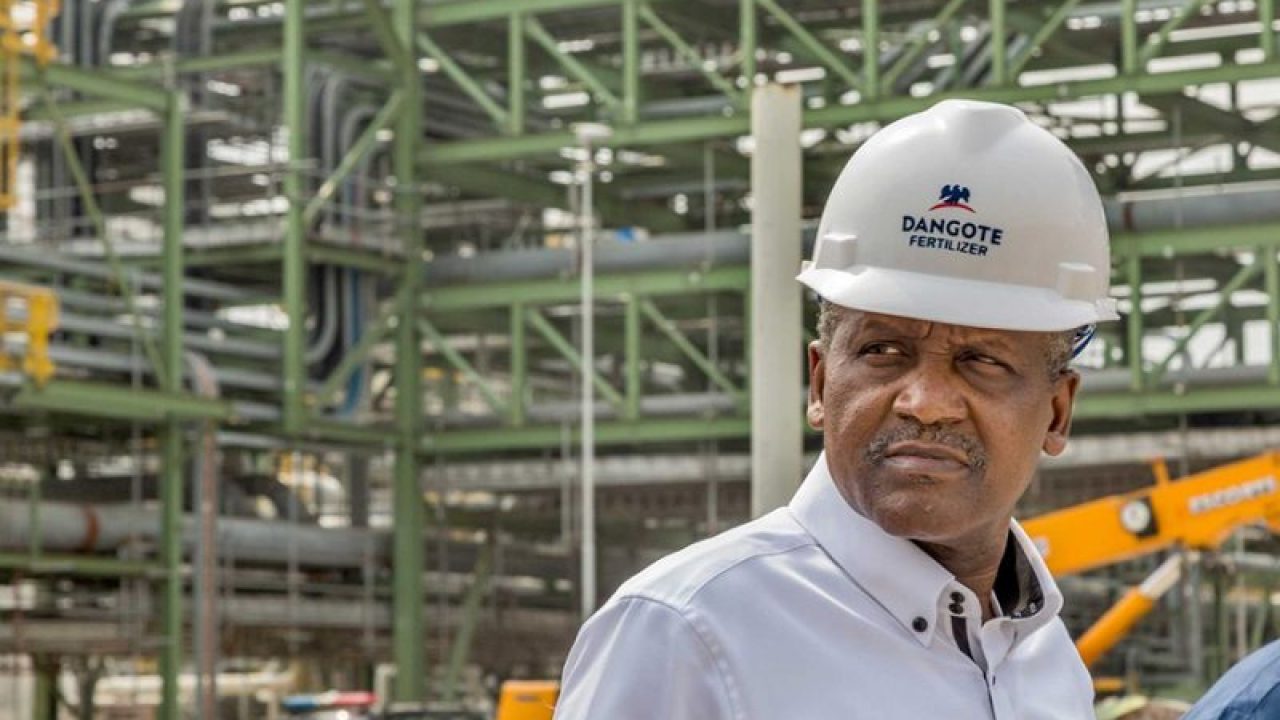
Businessman and President of the Dangote Group, Aliko Dangote, has disclosed that the successful construction of his multi-billion-dollar refinery in Lagos was made possible through the decisive intervention of the Ooni of Ife, Oba Adeyeye Ogunwusi, who ordered the removal of 19 shrines from the project site.
Alhaji Dangote made the statement while speaking in a video on Friday, explaining that construction activities at the refinery site in Ibeju-Lekki was initially brought to a standstill due to the presence of several traditional shrines scattered across the refinery site.
According to the billionaire industrialist, the shrines became a serious obstacle, as workers and contractors were unwilling and unable to approach the site out of fear and spiritual concerns.

Dangote said, “I must recognise and thank the Ooni of Ife for enabling the building of our factory. What happened was that when we got there, there were over 19 shrines at the site. Nobody was able to go near there to do anything.”
He further stated that the situation changed dramatically when the Ooni of Ife personally visited the location and took a bold and historic decision that cleared the way for construction to begin.
The business mogul explained that the respected monarch did not delegate the task but instead confronted the situation head-on, instructing that all the shrines be removed, regardless of the spiritual weight attached to them.
“But Ooni went there, stood there and said ‘remove all of them. Let the gods come and talk to me’. Your Royal Majesty, I want to thank you from the bottom of my heart because without that singular act of yours, I don’t think we would have been able to build the refinery,” Dangote stated.
The Dangote Refinery, situated within the Dangote Industries Free Zone in Ibeju-Lekki, Lagos State, is recognised as the world’s largest single-train refinery, with an installed capacity of 650,000 barrels of crude oil per day.
Dangote had previously revealed that he paid $100 million to the Lagos State Government to acquire the vast expanse of land for the project. However, despite the financial commitment, construction suffered major delays due to unresolved community and cultural issues linked to the shrines on the land.
Now operational since 2024, the refinery is widely regarded as a game-changer for Nigeria’s oil and gas sector. It is expected to drastically reduce, and potentially end, the country’s long-standing dependence on imported petroleum products, while also generating thousands of direct and indirect jobs for Nigerians.
The exposition underscores the critical role traditional institutions can play in national development, as well as the delicate balance between cultural heritage and large-scale economic transformation in Nigeria.