

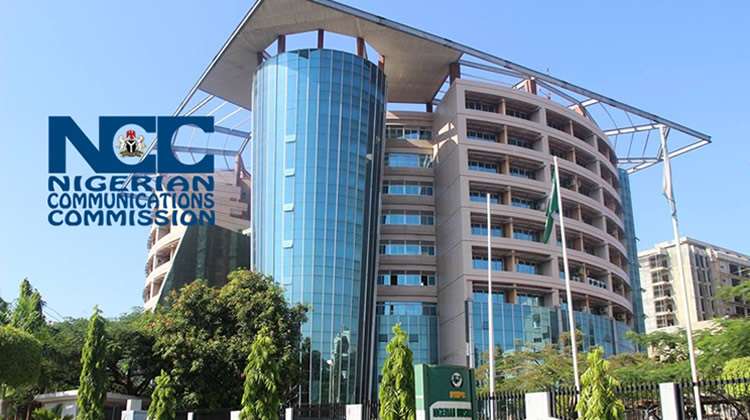
The Nigerian Communications Commission (NCC) has restricted about 1.58 million certified fake and cloned International Mobile Equipment Identity (IMEI) numbers in a 24-day nationwide enforcement exercise
NCC took the decision to curb the circulation of counterfeit and non-compliant mobile devices in Nigeria.

The exercise, conducted between November 1 and 24, 2026, also resulted in more than 3.5 million restrictions on device-SIM connections associated with fake, invalid and cloned IMEIs.
The figures were disclosed by the Commission during a media briefing in Lagos last Friday, where officials rolled out an update on the implementation of its Device Checker initiative.
According to the Commission, 2.81 million of the restricted connections involved older phones with fake or invalid IMEIs transferred to new SIM cards, while 742,749 affected connections on devices with standard fake or invalid IMEIs.
Another 12,052 restrictions were linked to cloned IMEIs.
NCC clarified that the figures represent restricted device-SIM connections and not individual handsets, noting that a single phone could be associated with multiple SIM connections.
A breakdown by mobile network operators showed that MTN recorded approximately 1.86 million restricted connections, Airtel 1.38 million, Globacom about 309,000, while T2 accounted for approximately 13,000.
NCC, however, cautioned against interpreting the figures as evidence of wrongdoing by the telecoms operators, explaining that the distribution reflect the device subscribers connected to their respective networks.
A separate assessment of MTN and Airtel identified 418,500 active subscriber lines operating on fake handsets.
Kano State recorded the highest number of affected lines with 42,297, followed by Kaduna with 31,043 and Bauchi with 28,067.
Lagos accounted for 23,052, while Adamawa and Katsina recorded 21,519 and 17,197 respectively.
The Commission’s findings showed that the problem extended beyond conventional mobile phones, with smartphones accounting for 18,128 cloned-device cases, Wi-Fi routers 6,532, and feature phones 6,342. Handheld and Point-of-Sale (POS) terminals accounted for 4,689 cases, while tablets and modems recorded 566 and 286 respectively.
Given the role of POS terminals in financial transactions, the NCC disclosed that it was engaging the Central Bank of Nigeria (CBN) on compliance concerns identified through its device verification system.
The enforcement exercise forms part of the Commission’s broader efforts to strengthen oversight of mobile devices imported and sold in Nigeria through its Device Checker platform.
As part of the initiative, 874 importer and dealer accounts had been registered, but only 537 had uploaded at least part of their stock for verification.
Of the registered accounts, 149 held valid NCC licences, while 599 had paid for licence applications and were undergoing the licensing process.
Another 337 accounts had yet to upload their inventory.