


By Ike Abonyi
The Nigeria Democratic Congress (NDC) Presidential Candidate,

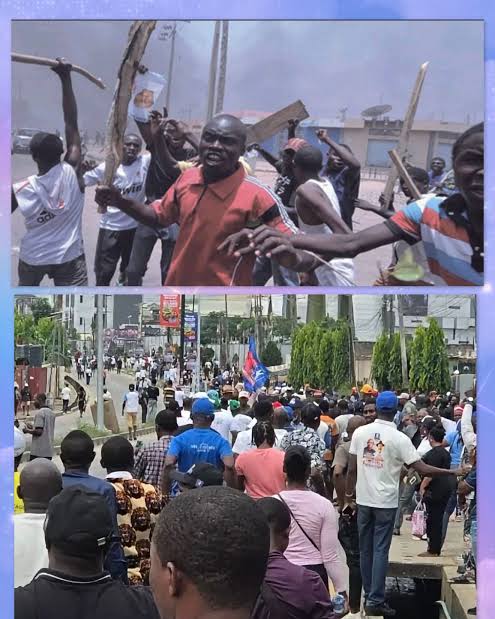
Peter Obi came to Benin on Wednesday to campaign. The APC Chairman, Jarret Tenebe, had promised AK-47 fire to anyone who stood in his way, to spit on Obi, the man he hates. On Airport Road, the bullets spoke — and the Police and DSS are still silent.
Intelligence is the art of knowing danger before it strikes. Its essence is prevention, not reaction; anticipation, not explanation; and protection of lives, not merely investigation of their loss.
The effectiveness of intelligence should not be measured merely by the volume of information gathered, the number of security reports produced or the number of arrests made after an incident.

It should also be measured by the threats detected, the dangers prevented, the lives protected and the security decisions informed by timely intelligence.
In the context of the November 25 incident in Benin City, the fundamental question is whether the earlier public threats were identified, assessed and acted upon by the relevant security agencies.
The shooting of supporters of the NDC who gathered in Benin City on Wednesday, November 25, 2026, to welcome its presidential candidate, Peter Obi, raises a fundamental question about the responsibility of Nigeria’s security agencies: Why do our security institutions wait for political threats to translate into bloodshed before taking action?
This incident is particularly disturbing because it did not happen in a vacuum. There was a troubling history of public statements by the Edo State APC leader, Jarrett Tenebe, which should have attracted the immediate attention of the Police and the Department of State Services (DSS).
Tenebe had publicly declared his hatred for Peter Obi. In an interview, he went further, saying that if he encountered Obi, he would spit in his face and bite his nose. More significantly, he had earlier declared that anybody standing in the way of the APC’s ambition to secure 2.5 million votes for President Bola Tinubu would face “AK-47 fire.”
When challenged over the implications of his language, Tenebe reportedly defended himself, arguing that he had not violated any constitutional provision by expressing his personal feelings. He attempted to explain away the AK-47 reference as a prayer rather than a threat.
But this is precisely where the responsibility of security intelligence begins. The duty of security agencies is not merely to investigate violence after it occurs. It is to identify potential threats, assess their implications and take preventive measures before lives are endangered.
A threat involving firearms, made publicly by a prominent political party chairman in an election season, cannot simply be dismissed as political rhetoric.
On November 25, the fears surrounding the increasingly hostile political atmosphere in Edo State assumed a frightening dimension.
According to the Edo State Police Command, three gunmen arrived in a black Toyota Hilux along Airport Road, Benin City. After encountering police operatives stationed at the airport exit gate and being unable to proceed, they reportedly made a U-turn and opened fire on people gathered at the scene.
One person, identified as Aimionkhale Micheal, sustained gunshot injuries to his thighs and was taken to hospital.
The police have confirmed the incident and announced an investigation and efforts to apprehend the suspects.
It is important not to assume, without evidence, that Tenebe ordered or participated in this particular attack. That is a matter for investigation. But the coincidence between his earlier public statements and the subsequent shooting creates legitimate questions that the security agencies cannot afford to ignore.
Was Tenebe questioned over his earlier statements? Did the Police or DSS conduct a threat assessment? Were the political actors and groups potentially implicated in the threats placed under appropriate security scrutiny? Nigerians deserve answers, even if there is now an immunity for a state chairman of a ruling party to do and act anyhow.
Let us be blunt: what happened in Benin City on Wednesday, November 25, 2026, was not an accident. It was not a misunderstanding. It was not “politics as usual.”
It was a threat made in public, left unpunished, and then made real with bullets.
Edo APC chairman did not whisper his hatred. He broadcast it and made it real, having said in an
interview, “I don’t like Peter Obi. I hate him. I have the right to like or hate.”
He went further. He said if he saw Obi, he would spit in his face and bite his nose and ear.
And most dangerously, he defended his infamous warning that anyone who stands in the way of the APC’s target of 2.5 million votes for Tinubu in 2027 would get “AK-47 fire.”
When challenged, he did not apologise. He doubled down, claiming he was merely wishing opponents “AK-47 fire” the way Christians wish enemies “Holy Ghost fire.”
That is not freedom of expression. That is incitement dressed up as a joke.
Freedom of expression protects your right to dislike a man. It does not protect your right as a party chairman to promise military-grade gunfire to anyone who dares to oppose you.
Amnesty International condemned the Wednesday attack and demanded investigation and protection for opposition members.
The NDC accused the APC of orchestrating it. The police say they have launched a manhunt. No one has been publicly arrested and charged as the mastermind as of this writing.
But Nigerians are not fools. When a man promises AK-47 fire, and AK-47 fire follows, the public is entitled to connect the dots — and to demand that security agencies do the same.
The essence of security intelligence is prevention. To hear a threat, assess it, and act before it becomes blood.
In Edo, the state did the opposite. It watched. It listened. It did nothing.
Tenebe was not invited for questioning after his “AK-47 fire” threat. He was not cautioned by the Police. He was not invited by the DSS. He was not charged with incitement, threat to life, or conduct likely to cause breach of peace — all offences that exist in our laws.
He was allowed to walk the streets as a party chairman, free to inflame, free to repeat, free to normalise violence as a campaign strategy.
That inaction is itself an action. It tells every thug in Nigeria to go ahead and threaten openly, and nothing will happen. Shoot openly, and the police will issue a press release and go home.
If a poor young man in Benin had said “I will use an AK-47 on anyone who stands in my way,” the DSS would have picked him up that same night. A former Minister, a former Governor, Nasir El Rural, has been in custody for months for saying he got intelligence information from a phone. But because Tenebe belongs to a ruling party as chairman, the law suddenly becomes blind, deaf, and dumb. That is not neutrality. That is complicity by omission.
This is exactly what we meant by upfront rigging.
You do not need to steal ballot boxes if you can scare voters from coming out. You do not need to falsify results if opposition supporters are too terrified to welcome their candidate.
The Benin shooting was a message, and it was received across Nigeria: If you support Obi, you can be shot in broad daylight on Airport Road, and no one will protect you.
That is voter suppression by terror. That is denial of political space by gunfire. That is how elections are rigged before January 16, 2027.
Tenebe said he had not breached the Constitution by expressing his mind. He was wrong.
The Constitution protects freedom of expression, but it does not protect threats to commit murder. When such a threat is followed by actual gunfire directed at Nigerians gathered to receive their candidate, silence can no longer be regarded as neutrality; it becomes an act of endorsement. The events in Edo on November 25 constituted a test, and Nigeria failed—not because the attackers were invincible, but because the state lacked the courage to act against the man who had promised that guns would speak. If Tenebe is neither questioned, arrested, nor prosecuted, then there should be no further pretence: every thug contemplating violence in 2027 will understand the message—fire first, and the state will look away. That is how democracy is destroyed—not necessarily through a coup, but through a barrage of AK-47 fire on Airport Road, Benin City, while the police stand by.
*Ike Abonyi, Editor@Large