

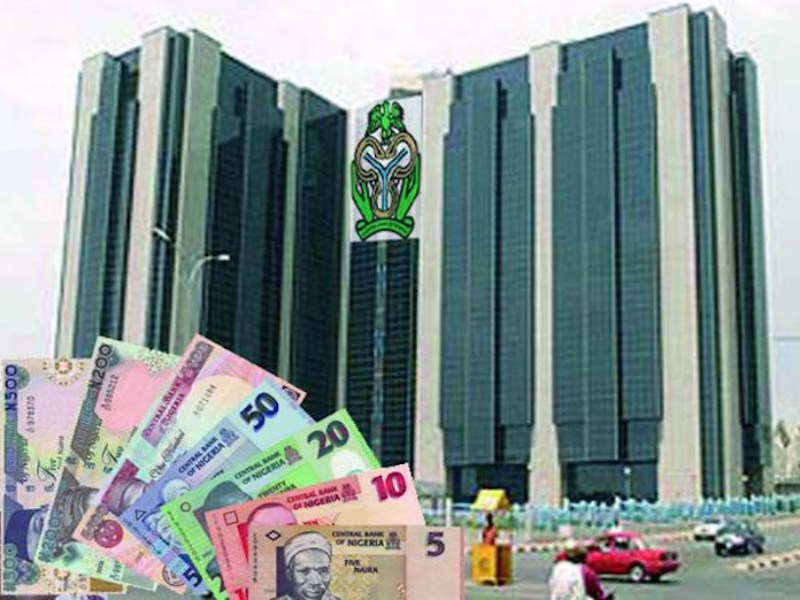
The possibility of cash scarcity is looming as the Central Bank of Nigeria (CBN) intensifies efforts to mop up excess liquidity from the financial system ahead of the 2027 general elections.
The apex bank has reportedly withdrawn more than N90 trillion from the financial system through Open Market Operations (OMO) securities between January and November 2026, representing more than double the N40.9 trillion withdrawn in the whole of 2025.
The aggressive liquidity withdrawal is part of the CBN’s monetary tightening measures aimed at containing inflationary pressures and preventing excess cash from flooding the economy as political activities gather momentum ahead of the 2027 elections.

The development has, however, raised concerns about possible liquidity constraints in the financial system, with businesses and ordinary Nigerians potentially facing tighter access to cash if the aggressive mop-up exercise persists.
According to data from CBN auctions, FMDQ and the Financial Market Dealers Association, the apex bank withdrew N13.41 trillion in January, N6.3 trillion in February and N2.36 trillion in March.
The figure subsequently rose to N4.48 trillion in April, N5.42 trillion in May and N13.96 trillion in June before moderating to N7.18 trillion in July and N4.72 trillion in August.

September recorded the highest allotment, with the CBN raising N17.5 trillion through OMO securities. It subsequently withdrew N7.53 trillion through auctions conducted on November 3, 4 and 10.
The CBN’s aggressive intervention comes amid concerns that increased government spending and political expenditure ahead of the 2027 general elections could inject substantial liquidity into the economy and undermine efforts to control inflation.
Members of the CBN’s Monetary Policy Committee had warned that election-related spending could fuel inflation, weaken fiscal discipline and complicate efforts to sustain monetary stability.
The concerns were expressed following the committee’s 307th meeting held on September 21 and 22, 2026.
The MPC members also pointed to rising money supply and government credit as potential sources of inflationary pressure.
Nigeria’s broad money supply reportedly increased to N146.60 trillion in September 2026, representing an increase of N28.82 trillion within one year, while credit to the government rose by 63.09 per cent to N39.40 trillion.
Deputy Governor of the CBN’s Corporate Services Directorate, Dr Muhammad Abdullahi, warned that election-related fiscal expansion could transmit inflationary pressures through transportation, energy and production costs.
With political activities expected to intensify in the coming months, the apex bank faces the challenge of balancing inflation control with the need to maintain adequate liquidity in the banking system.
The extent to which the ongoing mop-up exercise will affect cash availability for businesses and households remains a major concern as the country approaches the 2027 general elections.