


The nation’s local government system is entering a defining moment. For decades, the management of council funds has been dogged by allegations of financial opacity, political interference, weak accountability and poor delivery of basic services. Now, following the Supreme Court’s landmark judgment affirming the financial autonomy of the 774 local government areas, attention is shifting from who controls the money to how responsibly and transparently it is being spent.
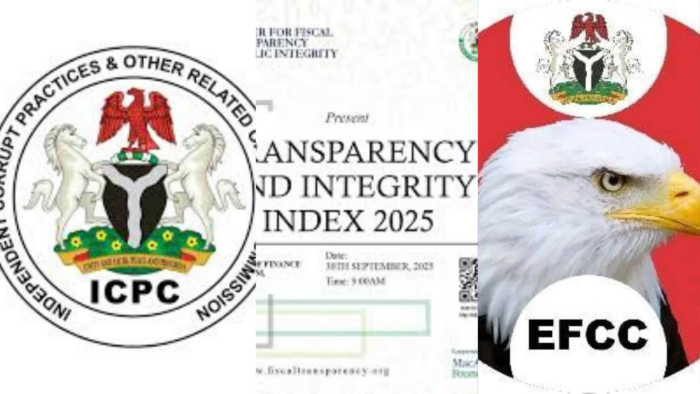
In this Weekend features, News Point Nigeria dissects and analyses the situation, examining the recovery of billions of naira from local government accounts, the Economic and Financial Crimes Commission’s (EFCC) discreet investigation of council chairmen, the Independent Corrupt Practices and Other Related Offences Commission’s (ICPC) digital transparency initiative and a nationwide assessment which raises serious concerns about corruption risks and poor governance at the grassroots.
The central question is whether financial independence will translate into better governance or simply transfer control of public resources from state governments to local political authorities without significantly changing how the money is managed.

The Supreme Court judgment of July 2024 was expected to strengthen grassroots administration by allowing elected council officials to receive and manage their statutory allocations directly. But financial autonomy alone cannot guarantee accountability, just as the release of public funds does not automatically translate into roads, healthcare, schools, clean water and other essential services.
The developments unfolding across the country suggest that the real battle for local government autonomy is only beginning. It is now a battle for transparency, administrative competence, integrity and measurable development.
The ICPC has recovered more than ₦5.3 billion following a review of local government accounts in seven states and the Federal Capital Territory. Beyond the recoveries, the commission is now pursuing a nationwide initiative to make councils publish their financial records online, allowing citizens and oversight institutions to monitor how public funds are received and spent.

The ICPC Chairman, Dr. Musa Adamu Aliyu, SAN, disclosed this on Thursday in Lafia, Nasarawa State, during the flag-off of the ICPC–National Information Technology Development Agency (NITDA) Local Government Websites Pilot. The initiative is starting in Nasarawa ahead of a planned rollout to all 774 local government areas.
Aliyu said the Supreme Court’s July 2024 judgment affirming local government financial autonomy had increased the responsibility placed on council administrations, particularly as statutory allocations were expected to flow directly to them.
“Autonomy brings responsibility. Funds that now flow directly to the councils must be spent openly and for the benefit of the people,” he said.
According to him, the recoveries demonstrate both the scale of financial risks at the grassroots and the importance of scrutiny in preventing the misuse of public resources. He explained that the proposed websites represent the preventive aspect of the commission’s anti-corruption strategy.
Built on a standardised template under the ICPC’s Accountability and Corruption Prevention Programme for Local Governments (ACPP-LG), the websites will require councils to disclose information covering five major areas: financial records, including budgets, allocations, revenue, expenditure, audits and debts; open procurement; human resources; citizen engagement, including whistleblowing channels; and control of corruption.
The objective is to make local government finances more accessible and reduce the secrecy surrounding the management of public funds.
“When these records are published regularly, citizens can follow the money, the media can ask informed questions and oversight institutions can detect risks early, before they become losses,” Aliyu said.
The Executive Governor of Nasarawa State, Engr. Abdullahi A. Sule, CON, performed the flag-off at the Banquet Hall of the Government House during an event themed “Deepening Transparency and Accountability at the Grassroots through Digital Disclosure”. The Secretary to the State Government, Dr. Shuaibu Magaji Labaran, SAN, delivered the welcome address.
Aliyu said Nasarawa was selected as the first state because of Governor Sule’s commitment to good governance. He also noted that the ICPC’s training institution, the Anti-Corruption Academy of Nigeria, is located in Keffi and has enjoyed the support of the state government.
He acknowledged an earlier commitment by the NITDA Director-General to register domain names, develop the websites and host them for at least one year for all 774 local government areas.
Under the partnership, the ICPC will provide the content standards and accountability framework, while NITDA will supply the technology and digital platform.
However, the commission recognises that launching websites without ensuring that they contain accurate and regularly updated information would defeat the purpose of the initiative.
“A website is only as good as the information on it; one that is launched and then abandoned will only disappoint the people,” Aliyu warned.
He appealed to council chairmen to nominate committed officers, take ownership of the platforms and ensure that the information uploaded is updated promptly and accurately.
The ICPC chairman also assured councils that the commission’s visits to the websites would be undertaken as a partner in corruption prevention rather than as an instrument of witch-hunting. He added that lessons from the pilot programme would help improve the template and rollout plan for the remaining states.
“Transparency is not an event. It is a habit that will lead to accountability,” he said.
While the ICPC is building a digital system to expose local government finances, the EFCC is conducting a discreet investigation into the management and spending of public funds by council chairmen across the 36 states and the Federal Capital Territory.
The investigation, being handled by the commission’s zonal directorates, is aimed at determining whether local governments have been accountable in managing their allocations since the Supreme Court affirmed their financial autonomy.
The anti-graft agency is particularly interested in how chairmen have managed funds allocated to their respective councils, their capacity to administer public resources and whether the new financial arrangement has improved service delivery.
An official of a state Ministry of Local Government had earlier confirmed the development to a correspondent, saying all local government chairmen in the state were being investigated.
“All the local government chairmen in the state are currently being probed by EFCC over their spending,” the official said.
Sources within the EFCC subsequently confirmed that the exercise was not restricted to the state but was ongoing nationwide. They stressed that the investigation was being conducted discreetly.
One of the sources said the commission wanted to establish whether the councils had demonstrated accountability and managerial competence since the Supreme Court judgment.
“All the local governments across the country are being investigated. It’s discreetly being done. You know the Supreme Court ruling granted them financial autonomy. We want to know whether they are accountable,” the source said.
The source added that the commission was interested in determining whether the autonomy had produced measurable economic benefits and whether council officials possessed the managerial skills and integrity required to administer public resources.
“We want to see their definite impact on the economy as a result of the financial autonomy that has been granted them. We want to see whether they have the necessary managerial skills, and whether their integrity quotient is high.
“We want to see comparatively what was existing before the autonomy and what is existing now and whether there has been development. It is not about the state you mentioned alone; it is across the country. All the EFCC zonal offices are handling the investigation secretly.”
The investigation is significant because the transfer of financial control does not automatically guarantee responsible administration. It removes one layer of external control over council funds but places greater responsibility on elected officials to demonstrate that they can manage public resources transparently and in the interest of their communities.
The EFCC is therefore looking beyond the amount of money received by each council to examine administrative capacity, integrity and the actual impact of the new arrangement on grassroots development.
The current scrutiny of local government finances followed a major constitutional dispute between the Federal Government and the 36 state governors over the control of council allocations and the administration of local government areas.
For years, concerns had been raised about state governments controlling funds meant for local councils, dissolving elected administrations and replacing them with caretaker committees. The practice raised questions about whether local governments were genuinely functioning as the third tier of government or merely operating as extensions of state administrations.
In May 2024, the Federal Government, through the Attorney-General of the Federation and Minister of Justice, Lateef Fagbemi, instituted a suit at the Supreme Court challenging the governors’ control of local government allocations.
The suit sought to prevent governors from dissolving democratically elected councils and replacing them with caretaker committees. It also sought to stop them from receiving and withholding funds allocated to local governments.
Fagbemi argued that the 1999 Constitution provided for a democratically elected local government system and did not recognise caretaker committees as substitutes for elected councils.
On July 11, 2024, the Supreme Court delivered a landmark judgment in favour of local government financial autonomy, declaring it unconstitutional for state governors to control or withhold allocations meant for the councils.
The seven-member panel, led by Justice Garba Lawal, also directed the Accountant-General of the Federation to pay allocations directly into local government accounts.
The judgment was expected to strengthen grassroots governance by allowing elected council officials to manage their finances independently and implement development projects without interference from state governments.
However, concerns about accountability and the management of the funds soon became central to the debate. The EFCC announced plans to monitor council spending, while the ICPC began developing a digital disclosure framework to make financial information available to the public.
The expectation is that autonomy should produce more than a change in who controls public money. It should result in better roads, functional primary healthcare facilities, improved schools, clean water, sanitation and other services that directly affect residents.
The concerns surrounding local government accountability are further reinforced by the Nigerian Local Government Integrity Index (NLGII), a nationwide assessment of governance and corruption risks across the country’s 774 councils.
The inaugural report, released by the Centre for Fiscal Transparency and Public Integrity (CFTPI), provides an assessment of transparency, accountability and corruption risks at the grassroots. It also documents weaknesses in local government administration and proposes a framework for reform, citizen engagement and institutional renewal.
According to the report, 85 per cent of local governments fall within the Very High or Critical Risk categories, characterised by opacity, weak enforcement and poor service delivery outcomes.
The report argues that financial autonomy must be accompanied by stronger oversight, capacity building, training and digital tools capable of reducing opportunities for corruption and administrative inefficiency.
It calls on federal and state governments to respect constitutional provisions governing local governments and urges councils to embrace transparency. It also encourages civil society organisations and the media to demand accountability, while urging citizens to insist that elected leaders manage public resources with integrity.
The index places local governments into five categories: Critical Risk, Very High Risk, High Risk, Moderate Risk and Low Relative Risk.
Its classification identifies 155 councils as Critical Risk, 503 as Very High Risk, 93 as High Risk, 19 as Moderate Risk and four as Low Relative Risk. The report’s figures and category totals, however, require reconciliation before publication, as the stated overall figure of 751 councils in the two highest-risk categories does not match the combined total of 658 in the tier breakdown.
The report places 155 local governments in Tier 5, the Critical Risk category. These councils are described as having high financial inflows but operating under conditions of extreme opacity, weak enforcement and, in some cases, serious insecurity.
It warns that newly elected administrations in such areas are particularly vulnerable to intimidation or co-option by criminal networks and non-state actors.
Among the examples identified are Port Harcourt in Rivers State, Southern Ijaw in Bayelsa State, Ohaji/Egbema in Imo State and Magu in Niger State.
The report recommends deploying a special security and governance task force to protect council officials and ensure that local governments receive their Federation Account Allocation Committee (FAAC) allocations directly, without interference. It also recommends mandatory EFCC and ICPC monitoring, with quarterly audited financial reports.
Tier 4, the Very High Risk category, contains the largest number of councils, with 503 local governments classified under it. The report describes them as having minimal transparency and a long history of corruption, warning that newly elected administrations are vulnerable to manipulation by state governments and powerful local political interests.
Examples cited include local governments in Oyo, Ogun, Edo, Enugu, Ebonyi and Benue states, among others.
For these councils, the report recommends public education programmes on the Supreme Court judgment and the constitutional right to financial autonomy. It also urges civil society organisations to use Freedom of Information requests and legal action to compel the disclosure of FAAC disbursement records.
In addition, it recommends extensive training for newly elected council officials on public financial management.
The concern is that even with direct allocations, local governments could remain vulnerable to political interference and entrenched practices unless officials and citizens understand their rights and responsibilities under the new arrangement.
The 93 local governments in Tier 3 are classified as High Risk. According to the report, these councils demonstrate occasional compliance with transparency requirements but remain vulnerable to pressure and a return to old practices.
Examples include Kaduna North, Jos North, Ado-Ekiti and Akure South.
The report recommends that councils in this category use their financial autonomy to execute visible projects capable of building public trust. It also proposes partnerships and mentorship programmes to strengthen administrative practices.
Tier 2 comprises 19 Moderate Risk local governments, which the report describes as positive outliers with proactive transparency efforts and functional autonomy. Examples include Ikeja in Lagos State, Dutse in Jigawa State, Keffi in Nasarawa State and the Abuja Municipal Area Council.
The report recommends open contracting, live budget dashboards and digital citizen feedback platforms, alongside mentorship programmes through which councils can share effective governance practices.
At the top of the assessment is Tier 1, the Low Relative Risk category, which contains four local governments described as national benchmarks for transparency and accountable governance. Nasarawa Local Government Area is identified as an example.
The report recommends that councils in this category work with the CFTPI and the Office of the Accountant-General of the Federation to develop a Local Government Good Governance Blueprint. It also proposes that they become a formal advisory body, providing guidance and testimony to the National Assembly.
The report further identifies Nasarawa, Kaduna and Jigawa as areas with promising reforms requiring consolidation. The precise list of councils in the lowest-risk category should, however, be confirmed against the original index.
The index also provides a state-by-state breakdown of councils across the different risk categories.
Under Tier 2, the Moderate Risk category, Lagos State has Ikeja, Surulere, Alimosho, Lagos Island, Apapa, Amuwo-Odofin, Eti-Osa, Kosofe, Somolu and Oshodi-Isolo. In Jigawa State, the listed councils are Dutse, Hadejia, Kazaure, Ringim, Gumel and Birnin Kudu.
The Tier 3 High Risk category includes Kaduna North, Kaduna South and Zaria in Kaduna State; Jos North, Jos South and Jos East in Plateau State; Ado-Ekiti, Ikere and Ikole in Ekiti State; and Akure South, Ondo West and Owo in Ondo State.
Also listed are Calabar Municipal and Calabar South in Cross River State; Minna and Suleja in Niger State; Kano Municipal, Fagge, Dala and Nassarawa in Kano State; Abeokuta South and Ado-Odo/Ota in Ogun State; and Badagry, Ikorodu and Epe in Lagos State.
Tier 4, the Very High Risk category, covers all local governments in Abia, Adamawa, Akwa Ibom, Anambra, Bauchi, Benue, Delta, Ebonyi, Edo, Enugu, Gombe, Kebbi, Kwara, Osun, Oyo, Taraba and Yobe states.
It also includes the remaining local governments in Cross River, Jigawa, Kano, Nasarawa, Ogun, Ondo and Lagos states. The nine Nasarawa councils listed are Awe, Doma, Keana, Kokona, Lafia, Nasarawa Egon, Obi, Toto and Wamba.
In Lagos, the councils listed under this category include Ajeromi-Ifelodun, Agege, Ifako-Ijaiye, Ikorodu, Lagos Mainland, Mushin, Ojo, Oshodi-Isolo, Shomolu and Surulere.
The Tier 5 Critical Risk category contains extensive lists of councils in Borno, Imo, Kaduna, Katsina, Kogi, Niger, Rivers, Sokoto, Zamfara and Bayelsa states.
In Borno, the listed councils include Abadam, Askira-Uba, Bama, Chibok, Damboa, Gubio, Guzamala, Gwoza, Hawul, Jere, Kaga, Kala-Balge, Konduga, Kukawa, Mafa, Magumeri, Maiduguri, Marte, Mobbar, Monguno, Ngala, Nganzai and Shani.
Imo State has Ohaji/Egbema, Oguta, Ideato North, Ideato South, Isu, Njaba, Nkwerre, Nwangele, Obowo, Orlu, Oru East, Oru West, Owerri West, Ehime Mbano, Ihitte-Uboma, Okigwe, Onuimo, Mbaitoli, Ikeduru, Aboh Mbaise, Ahiazu Mbaise, Ezinihitte, Ngor-Okpala and Isiala Mbano.
In Kaduna State, the councils listed are Birnin Gwari, Chikun, Giwa, Igabi, Ikara, Kubau, Kudan, Kajuru, Sanga, Zangon Kataf, Kauru and Lere.
Katsina State has Batsari, Dandume, Danmusa, Faskari, Jibia, Kankara, Sabuwa, Safana, Dutsin-Ma, Kurfi, Matazu, Rimi, Musawa, Malumfashi, Kafur, Danja, Bakori and Funtua.
In Kogi State, the list includes Dekina, Ankpa, Ofu, Olamaboro, Omala, Idah, Igalamela-Odolu, Bassa, Lokoja, Koton Karfe, Ajaokuta, Okene, Ogori-Magongo, Adavi, Okehi, Ibaji, Kabba-Bunu, Ijumu, Mopa-Muro, Yagba West and Yagba East.
Niger State has Magu, Mashegu, Rafi, Shiroro, Munya, Paikoro, Rijau, Wushishi, Agwara, Borgu, Kontagora, Mariga, New-Bussa, Edati, Gbako, Lavun, Mokwa, Agaie, Lapai, Gurara, Suleja, Tafa, Bida, Katcha and Chanchaga.
In Rivers State, the listed councils are Port Harcourt, Obio-Akpor, Ikwerre, Etche, Eleme, Gokana, Khana, Oyigbo, Tai, Ahoada West, Ahoada East, Ogba-Egbema-Ndoni, Abua-Odual, Andoni, Akuku-Toru, Asari-Toru, Degema, Emohua, Ogu-Bolo, Okrika, Omuma and Opobo-Nkoro.
The Sokoto list includes Goronyo, Gudu, Isa, Kebbe, Rabah, Sabon Birni, Wurno, Binji, Bodinga, Dange-Shuni, Gada, Illela, Kware, Wamako and Yabo, while Zamfara State has Anka, Bakura, Birnin Magaji/Kiyaw, Bukkuyum, Bungudu, Gummi, Gusau, Kaura Namoda, Maradun, Maru, Shinkafi, Talata Mafara and Zurmi.
Bayelsa State has Southern Ijaw, Brass, Ekeremor, Kolokuma-Opokuma, Nembe, Ogbia, Sagbama and Yenagoa.
The extensive classification is intended to help identify councils requiring different forms of intervention, depending on their levels of transparency, administrative capacity, security conditions and existing governance practices.
Speaking on the findings, the Executive Director of the Centre for Fiscal Transparency and Public Integrity, Dr. Umar Yakubu, described the report as the first nationwide corruption and governance risk assessment of local councils.
He said 85 per cent of Nigeria’s local government areas face very high or critical risks because of poor governance, opacity, weak enforcement and failing services.
Yakubu explained that the index identifies priority areas requiring reforms and interventions, covering eight governance pillars. He stressed that beyond financial autonomy, capacity building and training remained essential if local governments were to deliver basic services effectively.
“What the index has just done is to practically look at those areas where interventions are needed,” he said.
“There are things that need to be taken into consideration so that the local governments can effectively deliver what they are supposed to deliver to the people,” he added.
He observed that transparency in Nigeria follows a tiered pattern, with federal institutions demonstrating the highest level of openness, states following, while local governments remain significantly behind.
According to him, the framework seeks to bridge the gap by establishing benchmarks that councils can adopt to improve governance.
Yakubu recommended that enforcement agencies, including the EFCC, ICPC and Code of Conduct Bureau, pay closer attention to councils in Tiers 4 and 5, where the risks are most severe.
Taken together, the ICPC’s recovery of more than ₦5.3 billion, the EFCC’s investigation of council chairmen, the digital transparency initiative and the findings of the Local Government Integrity Index point to one central challenge: financial autonomy will only be meaningful if it produces accountable and effective governance.
The Supreme Court judgment was an important constitutional intervention aimed at protecting local governments from undue control by state governments. But the transfer of financial control does not automatically guarantee that public money will be properly managed.
Without transparent records, credible audits, effective supervision and informed citizens, the weaknesses that undermined local government administration in the past could persist under a different arrangement.
The ICPC’s proposed websites could provide a practical starting point by making budgets, allocations, procurement records, expenditure and audit information accessible. But their success will depend on whether councils publish accurate information consistently and whether citizens and oversight institutions use the platforms to demand accountability.
Similarly, the EFCC investigation could help establish whether the new financial arrangement has improved public spending and service delivery. Any findings of wrongdoing, however, must be supported by evidence and addressed through due process.
The integrity index offers another important framework by identifying councils that require urgent intervention and those whose practices could serve as models for others. Its recommendations on security, monitoring, training, open contracting and citizen feedback underline the need for interventions tailored to the conditions of individual local governments.
Ultimately, the people at the grassroots should be the greatest beneficiaries of financial autonomy. They should see the impact of public allocations in better schools, accessible healthcare, improved roads, clean water, sanitation, agricultural support and other essential services.
A local government that receives its allocation directly but cannot account for how the money is spent has not fulfilled the promise of autonomy. Equally, a council that publishes its budget but fails to deliver meaningful services has not achieved the purpose of transparency.
The real test, therefore, is not simply how much money councils receive, how many investigations are opened or how many websites are launched. It is whether public funds are protected, decisions are open to scrutiny, officials are held accountable and communities experience tangible improvements.
The Supreme Court opened the door to financial autonomy. The ICPC, EFCC and the integrity assessment have placed accountability at the centre of the debate. What remains is for local government administrations to demonstrate that they can turn constitutional independence into responsible leadership and visible development.
For Nigeria’s 774 local governments, autonomy was an important beginning. The real test is what they do with it. (NEWSPOINTNIGERIA)