

By Sam Otuonye
Manufacturers Association of Nigeria (MAN) has praised the Bank of Industry (BOI), for extending credit facilities at minimal interest rates and ease of processing to its members, even as the Managing Director and Chief Executive Officer (MD/CEO) of the bank, Dr Olasupo Olusi highlighted that the bank disbursed N465 billion, supported over 12,000 businesses and impacted 1.68 million jobs in 2025.
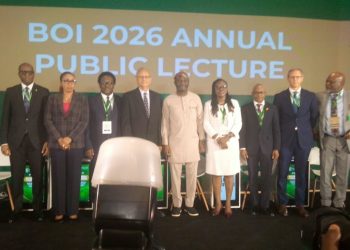
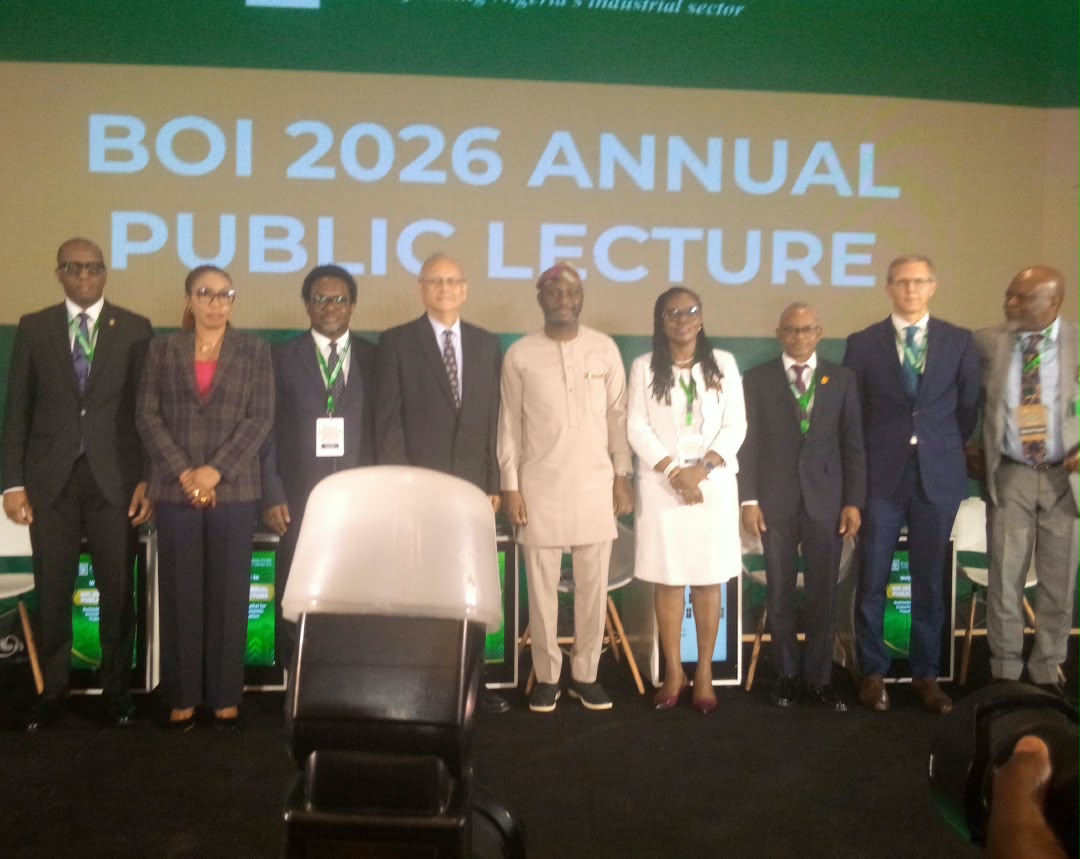
Speaking during a panel session at the BOI 2026 Annual Public Lecture in Abuja, on Tuesday September 29, 2026, with the theme: ‘Rethinking Capital for Inclusive Economic Transformation’, MAN okayed the rates at which BOI grants its members loan, even as it urged BOI to bring more members onto the single-digit interest rate loan bracket, and de-risk investment in the sector.
Director, MAN Abuja Liaison Office, Adeyemi Folorunsho, representing the Director-General, Segun Ajayi-Kadir, said: “The current management of BOI has been doing exactly what we want. What we are getting from BOI is fair enough. BOI loans have a good tenure,” he enthused.
Aligning with Folorunsho, Group Managing Director and Chief Executive Officer of Flour Mills of Nigeria, Omoboyede Olusanya, in representation, and MD/CEO InfraCredit, Chinua Azubike, represented by Daniel, a Senior staff member, respectively, commended BOI on their rising profile of supporting businesses, noting that cost of financing is key to improving productivity, inclusiveness, and economic transformation.
On her part, Executive Director, Policy Innovation Centre and a Senior Fellow at the NESG, Dr Osasuyi Dirisu, commended BOI but urged it to do more for the rural and underserved women.
The MD/CEO of BOI, Dr Olusi, in his opening remark, speaking to the theme of the lecture, stated that Nigeria needed capital that can support long-term industrial growth, reach underserved businesses, and attract private investment into the productive sector, noting that BOI has the mandate to spearhead Nigeria’s sustainable and inclusive industrial development.
“This requires us to think carefully about how capital is mobilized, structured and deployed, and the development outcomes it ultimately delivers.
“These issues are central to BOI’s mandate to spearhead Nigeria’s sustainable and inclusive industrial development. In 2025, the bank disbursed N465 billion, supported over 12,000 businesses and impact 1.68 million jobs.
“The scale of the opportunity ahead is significant. We need to mobilise more long-term capital, extend financing to businesses and sectors that remain underserved, use development finance to unlock greater private investment, and ensure that financing translates into measurable economic impact.”
The Keynote speaker, Dr Asad Alam, Adjunct Professor at Georgetown University, Washington, D.C, argued that there is more to capital than just accumulation and investment, noting that efficiency of capital is essential to drive impact and growth.
He stated that as countries grow, total capital productivity becomes more important, highlighting that human capital contribution remains modest but huge potential gives existing gaps with high income countries. He said that greater equity can support potential growth investments in technology and climate action with the potential to spur productivity and structural transformation.
The guest lecturer maintained that for Nigeria to maximize the impact of capital, it must make policies that would foster trade and market openness, innovation, competition, and sustainability.
He said that strong institutions is essential to ensure the enthronement of rule of law, effective State, service delivery, private enterprise, and regulations, adding that inclusiveness must give birth to equitable distribution of public good and job creation.