

…say focus should be on energy justice
By Sam Otuonye
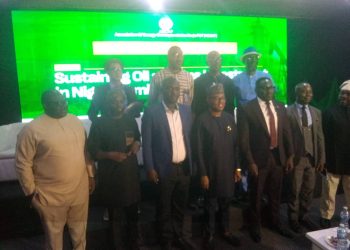
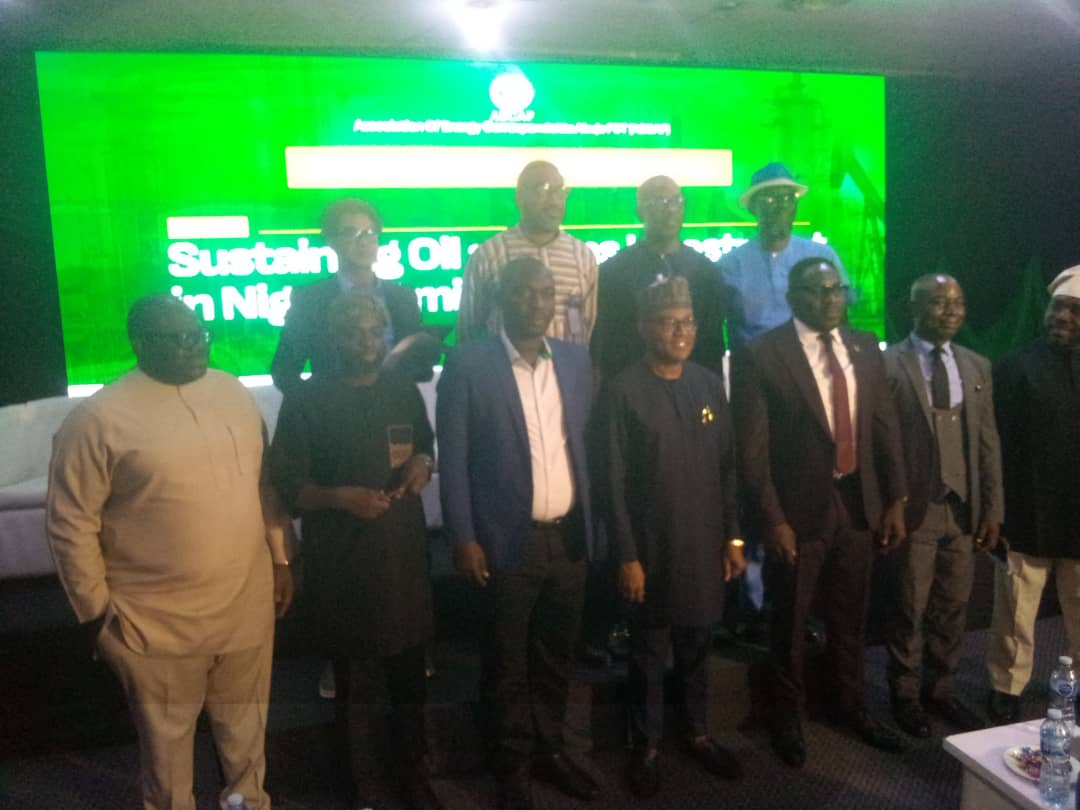
As energy experts gathered in Abuja on Thursday, September 24, 2026, to participate in the 2026 Annual Conference of Association of Energy Correspondents Abuja FCT (AECAF), one of the major consensus was that fossil fuel would not disappear at the emergence of energy transiting to gas, solar, electric, water, and wind.
They argued that no level of transition could extinct crude oil exploration, exploitation, and production, at least, not in the near future, highlighting that the focus of the entire emerging energy ecosystem should bother on the World achieving energy justice, such that every aspect of the mix enjoys global support and advancement.
“Crude oil is not going anywhere. You can’t compare electric, water energy, to what fossil fuel is doing,” opined Dr Billy Gillis-Harry, President, Petroleum Products Retail Owners Association (PETROAN).
Aligning, Executive Director, Green Growth Africa, Dr Adedoyin Adeleke, stated that energy transition is not an event but a process, noting that the couch of ‘Energy Transition’ is not entirely appropriate, rather, ‘Just Energy’, where the energy mix is encouraged and protected.

“Energy transition is not an event but a process. Just Energy should be the name, not Energy Transition, where justice is enshrined in the energy administration, allowing the mix to develop sustainably and differently,” Adeleke postulated.
Gillis-Harry also noted that the Nigeria oil and gas industry was not transparent, a situation, he claimed has kept petrol price high.
“Oil and gas industry is not transparent. That is why we are paying much per litre of petrol,” Harry declared.
Further more, Nigerian Upstream Petroleum Regulatory Commission (NUPRC) used the forum to urge energy journalists to look beyond announcements and hold the industry accountable for turning approved investments into actual production, as officials reported that the country’s crude output has stayed above its OPEC quota for four straight months.
Oritsemeyiwa Eyesan, Commission Chief, represented by Joseph Ogunsola, Director Surface Development, said the Commission has approved Field Development Plans worth more than $57 billion since 2024, with 22 offshore projects planned between 2026 and 2030 carrying an estimated $30 billion to $50 billion in further investment. But she stressed that approvals alone mean little without execution.
“The priority now is execution. Approvals and investment commitments are important, but their real value is realised when projects move and new volumes come onstream”.
She put Nigeria’s proved and probable reserves at 37.01 billion barrels of oil and condensate and 215.19 trillion cubic feet of gas as of January 1, 2026, and framed regulatory predictability, decarbonisation planning and gas commercialisation as the levers the Commission is using to keep Nigerian assets competitive against global capital.
Also, speaking on the AECAF Conference theme: “Sustaining Oil and Gas Investment in Nigeria Amid Energy Transition,” Minister of State for Petroleum Resources (Gas), Ekperikpe Ekpo, said the government’s priority is proving to investors that policy will be consistently implemented, not just legislated.
He pointed to the Petroleum Industry Act (PIA) 2021 as a foundation, but cautioned that “legislation alone is not sufficient” without follow-through on project delivery.Represented by his Senior Technical Adviser, Abel Nsa, Ekpo described gas infrastructure projects such as the AKK and OB3 pipelines as central to shifting Nigeria’s gas sector from an export-first model toward greater domestic use in power, manufacturing, fertiliser and transport.
He also called on energy correspondents to help build investor confidence by reporting “with accuracy, professionalism and a strong appreciation of the opportunities and challenges facing the sector.”
Also, the Midstream and Downstream Gas Infrastructure Fund (MDGIF) disclosed that it leveraged ₦671 billion in public funds to attract ₦1.6 trillion in private investment for Nigeria’s midstream and downstream gas infrastructure, supporting 31 projects and 205 infrastructure assets nationwide.
The fund said the projects, when fully operational, are expected to supply about 475 million standard cubic feet (scf) of gas daily to the domestic market.
MDGIF Executive Director, Oluwole Adama, represented by the Director of Strategy, Research and Deal Origination, Engr. Elvis Duruji, Adama said the achievement reflects MDGIF’s core mandate of deploying public funds to reduce investment risks and attract private capital into the sector.
Delivering a keynote address titled, “Derisking Domestic Gas Infrastructure – The Missing Link to Private Investment, explained that MDGIF was created as a catalytic institution rather than a passive funding agency, with the responsibility of making commercially difficult but strategically important gas projects financially viable.
He said that the Fund is a public fund, “and we see platforms like this as an opportunity to come and give account.”
According to him, the fund has already mobilised private investment worth about 2.4 times its own contribution, demonstrating the effectiveness of its risk-sharing model.“
As we speak, MDGIF has used its own fund to mobilize 2.4X of the private counterparties. We’ve been able to use the fund we have to reduce investment barriers, attracting more private investors to partner with MDGIF, and this is the success story,” he stated.
Adama said the projects in the fund’s portfolio could increase Nigeria’s domestic gas supply by about 25 per cent if fully completed, based on the country’s current domestic production of about 1.9 billion scf per day.“
As of today, if all the projects, about 30 partnership projects and 205 ongoing infrastructure assets, are completed, they will deliver about 475 million scf of gas per day into the domestic market,” he said.
He identified high financing costs, inadequate infrastructure, regulatory uncertainty, and technical and commercial risks as the major obstacles discouraging investment in the country’s midstream gas sector.
On gas flare commercialisation, Adama disclosed that MDGIF had partnered four flare-out awardees, whose projects are expected to monetise 444 million scf of gas daily that would otherwise be flared, while eliminating about 2,845 metric tonnes of emissions every day.
He further revealed that the fund has partnered 30 unincorporated joint ventures and one incorporated equipment leasing company, covering 20 Compressed Natural Gas (CNG) mother stations, more than 80 CNG daughter stations, as well as 75 additional daughter stations through the leasing company.
Among MDGIF’s flagship interventions, Adama highlighted the 5 million scf mini-LNG plant being developed by Topline Limited in Delta State, describing it as Nigeria’s first indigenous mini-LNG project.
He said the project had spent three years searching for financing before MDGIF’s equity investment unlocked an InfraCredit guarantee, paving the way for its completion.
“That particular project had gone around looking for funds for three years but couldn’t secure any. After partnering with MDGIF, the facility is now expected to be commissioned within the next two to three months,” he added.
Other projects supported by the fund include CNG infrastructure across 20 universities, Ibile Oil and Gas in Lagos and Rolling Energy in Abuja.
Duruji said MDGIF’s long-term objective is to absorb part of the early risks associated with gas projects, making them bankable and more attractive to lenders and private investors.
“The missing link is vulnerability. MDGIF’s catalytic role is to price and absorb part of the early risk, turning uncertainty into bankability, bankability into private investment, and investment into operating gas infrastructure,” he said.
Earlier, in his welcome address, AECAF chairman, John Ofikhenua traced two decades of shocks to Nigerian oil and gas investment, from the U.S. shale boom to COVID-19 and the more recent divestment pressure tied to net-zero commitments.
He argued that global crises, including the Russia-Ukraine war and the U.S.-Israel-Iran conflict affecting the Strait of Hormuz, have driven renewed interest in Nigerian crude and gas even as transition rhetoric persists.
Ofikhenua said the conversation among major economies has increasingly moved from “energy transition” to “energy mix,” and pointed to strong investor demand for the Dangote Petroleum Refinery and Petrochemicals IPO and NUPRC’s licensing rounds as evidence that sentiment toward Nigerian hydrocarbons is turning.