

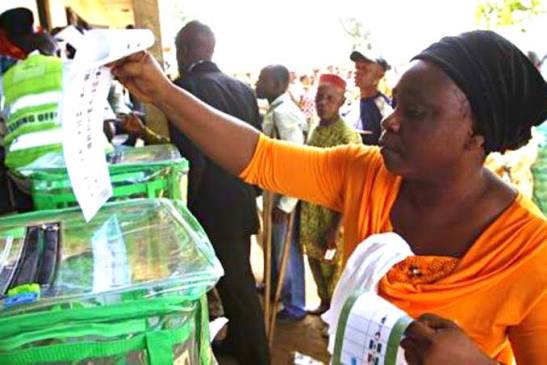
The Independent National Electoral Commission (INEC) has described the legislative bye-elections conducted across Gombe, Kano, Bauchi and Delta states as crucial operational benchmarks in its preparations for the 2027 general elections.
INEC Chairman, Prof. Joash Amupitan, SAN, stated this on Saturday while personally monitoring the elections from the Commission’s National Situation Room at its headquarters in Abuja.

The Commission conducted four legislative bye-elections across the four states, covering the Gombe/Kwami/Funakaye Federal Constituency in Gombe State, Dawakin Kudu State Constituency in Kano State, Sakwa and Disina State Constituencies in Bauchi State, and Udu State Constituency in Delta State.
Amupitan said the elections provided the Commission with an opportunity to assess its operational systems and identify areas requiring improvement ahead of the nationwide polls.
He stressed that no election should be regarded as insignificant, noting that every electoral exercise provides lessons that could strengthen preparations for subsequent elections.

“These four bye-elections provide indispensable operational lessons for the Commission as we systematically chart our roadmap toward the 2027 General Election,” Amupitan said.
The INEC chairman said the Commission must avoid treating bye-elections as routine exercises because they provide opportunities to test its logistics, technology and administrative preparedness.
“We must resist the temptation to view any exercise as merely an ordinary bye-election. Every election is a critical component of our broader preparations for the 2027 General Election, allowing us to continuously audit our logistics framework, stress-test our technological deployment, and evaluate administrative field readiness,” he said.
Amupitan was accompanied in the Situation Room by National Commissioners and senior management officials as operational reports from the various states were received and assessed.
He said the Commission remained focused on maintaining electoral integrity while using the exercises to identify and address operational challenges.
According to him, some bottlenecks encountered before the commencement of polling were identified and resolved through the Commission’s monitoring and intervention mechanisms.
“Our primary mandate in the Situation Room is monitoring and proactive crisis resolution,” the INEC chairman said.
“Whatever administrative or field challenges arose before the day of the elections, the Commission was able to nip them in the bud effectively. We remain committed to refining our processes so that every subsequent exercise reflects higher standards of efficiency and public confidence.”
The chairman said the lessons from the bye-elections would contribute to the Commission’s broader preparations for the 2027 general elections.
He added that continuous assessment of logistics, technological deployment and field operations was necessary to strengthen the Commission’s capacity to conduct elections effectively across the country.
Amupitan also expressed appreciation to officials and technical personnel in the National Situation Room for their role in monitoring the multi-state elections.
He particularly commended the technical team for enabling the Commission to receive and assess reports from the different locations and monitor the electoral exercises without interruption.
The INEC chairman’s assessment comes as the Commission continues preparations for the 2027 general elections, with the bye-elections serving as practical exercises for evaluating its systems and operational readiness ahead of the larger nationwide electoral process.