


By Sam Otuonye
Former Prime Minister of Cote d’Ivoire, His Excellency Patrick Achi has bemoaned African retarded development, regretting that an estimated 89 percent of sub-Saharan Africa Children were learning in poverty, as annual food imports run into billions of dollars amid vast agricultural potentials.
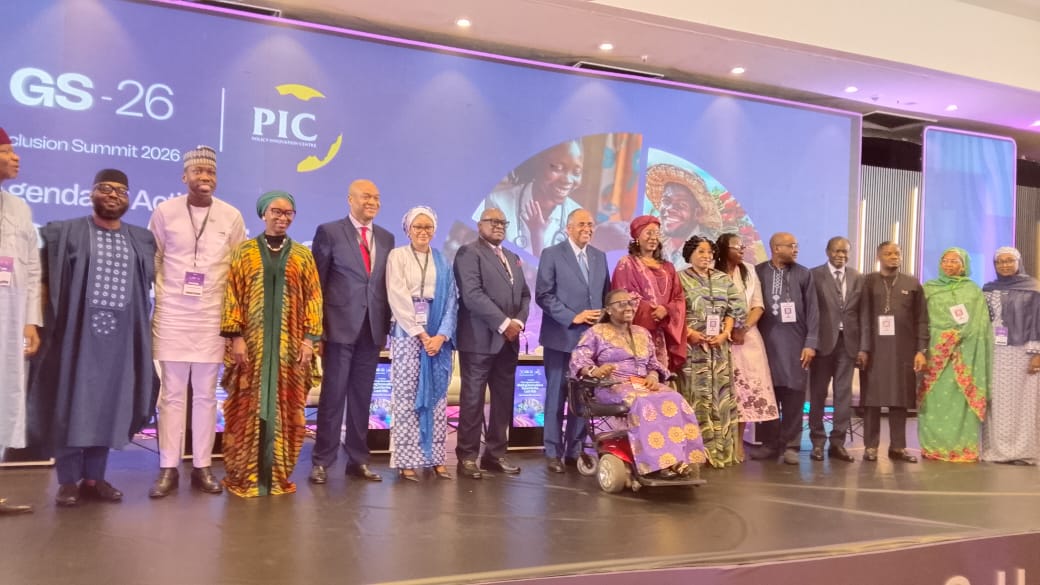
Achi, the current President of Cote d’Ivoire’s National Assembly and Keynote speaker, at the 2026 Gender and Inclusive Summit organized by Policy Innovation Centre (PIC), in Abuja, on Tuesday, September 8, 2026, with the theme; ‘From Agenda to Actions: Making Innovations Count for the Last Mile’,
painted a gloomy picture of Africa’s development, stating that despite agricultural potentials Africa is still importing more than 100 billion dollars worth of food annually.

He said: “An estimated 89% of children in
sub-Saharan Africa were in learning poverty. Unable to read and understand a simple text by around age 10, in the latest of our crisis estimates.
“Despite its agricultural potential, imports billion dollars worth of food annually, 60% of the urban land is in Africa, and Africa is a proud house of agriculture and can feed the whole world. Yet, we are importing more than 100 billion worth of food every year. That is, perhaps, the clearest picture of our social economy.”
Also speaking, the Executive Director of the Policy Innovation Centre (PIC), Osasuyi Dirisu, who described the ‘last mile’ as people at the lowest rung of the ladder of development – the poor and the vulnerable, stated that until development in terms of access to healthcare, education, finance, etc., reaches the lowest in a society it cannot be said to be developed.
She noted that PIC is focused on programmes and policies that impact the last mile, even as she revealed the launching of Nigerian Youth Dream Charter, a first-of -its-kind compendium for Nigerian youths.
Dirisu said: “Last Mile is sometimes a location, but it’s sometimes a condition. So, the last mile is someone’s condition
in terms of access to resources, access to financing, access to opportunities like education, literacy, healthcare resources. But really, what we are focused on is ensuring that whatever innovation we are doing in policy development, in program development, is reaching that last
mile, adding, “We keep using advocacy approaches to ensure that we are driving the change that should happen at the last mile.”
The Chairman of PIC, Mr Udeme Ufot, stated that making innovations count goes beyond novelty but impact, stressing that innovation must translate into better services, greater economic opportunity, improved wellbeing and stronger systems, supported by the right policies, financing, institutions, partnerships and accountability mechanisms to move from promising ideas to solutions that work at scale.
He described the Last Mile as women and girls in underserved communities, young people, persons with disabilities, rural populations and other groups whose realities are often not adequately reflected in the design and delivery of policies and programmes, noting that it is a geographical distance between policy and lived experience; between innovation and access; and between commitment and meaningful change.
The two-day event brought together policy makers, civil society organisations, academics, Human Rights Advocates, politicians, and development partners, to include; British High Commission, represented by Ms. Cynthia Rowe, Nabila Aguele of Malala Fund, Governor of Zanfara State, Dauda Lawal, First Lady of Kwara State, H.E. Prof. Folake Abudrazaq, former First Lady of Ekiti State, H.E. Mrs Fayemi, among others. They all took turns, in their special remarks, to commend PIC on their resilience in advocating for the ‘last mile’.