


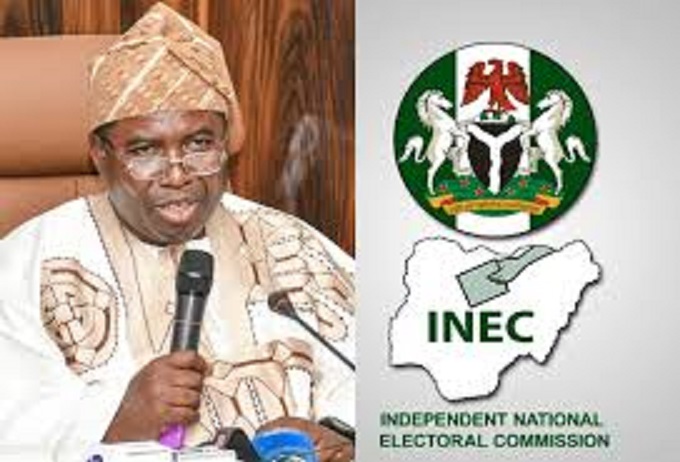
The Independent National Electoral Commission (INEC) has dismissed allegations by the Nigeria Democratic Congress (NDC) that the commission removed the party’s validly nominated candidates for some State House of Assembly constituencies in Anambra and Benue states, replaced them with unauthorised names.
The party had in statement signed by it’s National Chairman, Cleopas Zuwoghe, accused the commission of substituting validly nominated candidates with “imposters”.

It accused INEC of systematically replacing candidates nominated by the party with names unknown to its leadership, particularly in constituencies in Anambra State, the home state of its presidential candidate, Peter Obi.
The party alleged that INEC officials used the candidate-uploading process to impose candidates on it, claiming that the commission went behind the party to obtain Form EC9 from individuals whose names were subsequently published as NDC candidates.
But, INEC, in a statement issued on Tuesday by the Chairman, Information and Voter Education Committee, Alhaji Mohammed Kudu Haruna, described the allegation as unfounded, insisting that candidates nominations remains the exclusive responsibility of political parties, stressing that the commission has no legal authority to select, insert or substitute candidates for any political party.

“Candidate nomination is, by law, the exclusive responsibility of political parties. INEC has no legal authority to select, insert, or substitute a candidate for any party,” he said.
He explained that monitoring party primaries was an oversight responsibility and did not confer any authority on its officials to impose candidates on political parties.
According to INEC, the 22 registered political parties had designated two technically trained officers to manage their candidate nomination processes, ahead of the 2027 general elections.
The commission stressed that the officers were trained by INEC before being granted access to the candidates nomination portal.
It further explained that access codes to the portal were issued directly to the national chairmen of the respective political parties.
“The portal access codes were issued directly and in person to each party’s National Chairman, and not by proxy,” the statement said.
INEC said candidate lists were subsequently generated from submissions made by the political parties and jointly signed by their national chairmen and national secretaries through the Form EC9 series, covering Forms EC9A to EC9G.
The commission consequently rejected claims that its officials independently uploaded or altered candidate information submitted by the NDC.
“Therefore, any claim that the Commission independently uploaded or altered candidate information is unfounded and untrue,” INEC stated.
The commission further said it was in possession of documentary evidence contradicting the NDC’s allegations.
“As a matter of fact, the Commission has in its possession, Form EC9E where these candidates were listed and submitted to the Commission duly signed by the National Chairman and the National Secretary of the party,” it said.
The development follows an escalating dispute between the NDC and INEC over the list of candidates published for the 2027 State Houses of Assembly elections.
The NDC, in its earlier statement, had specifically alleged that 10 names published in Anambra State constituencies were not authorised by the party. It claimed that the disputed names had not emerged from its nomination process and that its genuine candidates had been prevented from being uploaded.
The party’s National Chairman, Senator Moses Cleopas Zuwoghe, had called on the INEC Chairman to immediately investigate the matter and determine how the disputed names came to be published as NDC candidates.
The party had also alleged that similar discrepancies existed in Benue, Imo and other states, describing the development as part of a wider pattern aimed at frustrating opposition parties.
It had vowed to pursue the matter in court and seek the restoration of what it described as its authentic candidates.
INEC, however, maintained that its candidate nomination process was designed to preserve the authority of political parties while ensuring accountability and transparency in the electoral process.
The commission said the documentation in its possession showed that the disputed candidates were formally submitted by the NDC’s authorised leadership.
The latest response from INEC therefore places the burden of explaining the disputed submissions squarely on the political party, particularly given the commission’s insistence that the relevant Form EC9E was duly signed by the NDC National Chairman and National Secretary.
INEC reaffirmed its commitment to providing a level playing field for all political parties and other stakeholders ahead of the 2027 elections.
“The Commission remains committed to transparency, accountability and providing a level playing field for all stakeholders in the electoral process,” Haruna said.