

The 2027 presidential election is beginning to acquire the shape of a contest rather than a coronation. Nigerian voters are angry. That much is clear from two new opinion polls that have unsettled President Bola Tinubu’s strategists and electrified Abuja’s political class.
After months in which the ruling party appeared confident that divisions among the opposition would hand it an easy victory in the 2027 presidential election, the numbers now suggest something more complicated: a public souring on Tinubu’s stewardship of the economy and security, and a growing appetite for change.
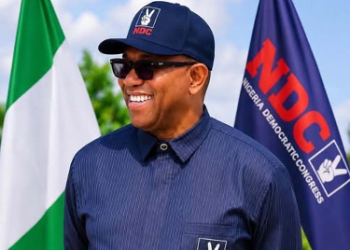
That is good news for Peter Obi and Rabiu Kwankwaso of the National Democratic Congress (NDC). The less comforting news is that opinion polls do not cast ballots. Nigerians do. And if Obi-Kwankwaso ticket hopes to turn public discontent into political power, it must confront the country’s most stubborn political reality – turnout. Nigerians who dislike the direction of the country may finally have a credible vehicle for expressing it.

Recent surveys suggest Tinubu has become an increasingly formidable political liability. The recently released Harmattan Intelligence survey paints a bleak picture for the incumbent. Three quarters of respondents strongly disapproved of Tinubu’s performance; seven in ten said their personal economic circumstances had worsened since he took office in 2023. Inflation, insecurity and the rising cost of living dominate public concerns. Another poll by SBM Intelligence found that nearly 80% of Nigerians believe the country is headed in the wrong direction.
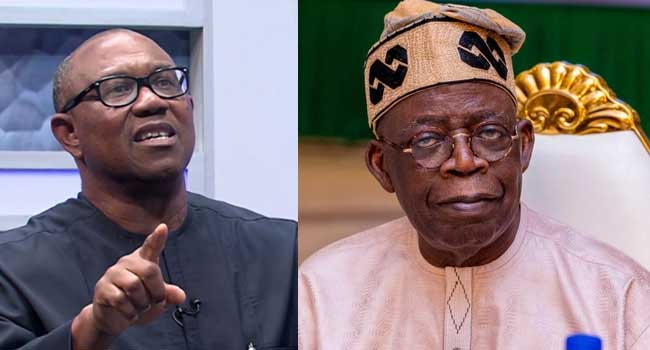
An SBM Intelligence survey of 829 people across the six geopolitical zones gave Obi a net favorability score of +58.3, while Tinubu recorded -58.5, the weakest showing among the three leading candidates surveyed. Obi led in five of the six zones, including the Southwest, Tinubu’s political stronghold. Nearly four-fifths of respondents said Nigeria was heading in the wrong direction.
These are not the grumblings of a fickle electorate; they are the indictments of a population that feels abandoned. Those numbers should alarm the ruling All Progressives Congress. They should not, however, be mistaken for a prediction of victory. The decisive fact of Nigeria’s last presidential election was not that Tinubu was overwhelmingly popular. It was that most Nigerians did not vote. Turnout in 2023 fell to about 27%, the lowest in the country’s democratic era. Tinubu won with 8.79m votes, against 6.98m for Atiku Abubakar and 6.10m for Obi; Kwankwaso added 1.50m.

The joint ticket of Obi and Kwankwaso appears heading for a landslide victory in 2027. Harmattan’s poll gives the Obi Kwankwaso (OK) ticket a combined favorability of 80%, with 55% “very favorable” and 25% “somewhat favorable.” Obi, who electrified young voters in 2023, remains the most popular opposition candidate; Kwankwaso, whose Kano base delivered 1.5 million votes last time, brings organizational muscle and northern reach. Tinubu’s strategists have spent months trying to keep these two men apart. The polls suggest their efforts have failed.
Yet Nigeria’s elections are not won in opinion surveys. They are won or lost in turnout. And turnout is where the opposition’s hopes collide with Nigeria’s political reality. The opposition’s combined 2023 vote (14.5 million) easily surpassed Tinubu’s 8.7 million. The OK ticket may be popular, but popularity is not participation. Without a dramatic increase in turnout, the polls will remain little more than a luxurious political desire.
The Harmattan survey offers a glimmer of hope: 65% of respondents say they are “certain to vote.” Abuja’s political insiders scoff at this, noting that Nigerians routinely overstate their likelihood of voting. They also point to the Independent National Electoral Commission (INEC), whose performance in 2023 did little to inspire confidence. The assumption that INEC will act as a neutral referee in 2027 is treated in Abuja with the same skepticism reserved for campaign promises and budget projections.
Still, the anger is real. Tinubu’s government has struggled to contain inflation, stabilize the currency or curb insecurity. The removal of fuel subsidies; economically rational but politically explosive, has deepened hardship. The president’s allies insist that reforms take time. Voters, however, appear unwilling to wait.
The OK ticket’s appeal lies not only in dissatisfaction with Tinubu but in the symbolism of unity. Obi and Kwankwaso represent constituencies that, if mobilized, could reshape Nigeria’s electoral map: urban youth, middle class professionals, and northern working class voters. Their partnership signals a break from the opposition’s habit of self sabotage. But unity is not mobilization. Nigeria’s political machinery: patronage networks, local party structures, and the informal brokers who move voters on election day, remains dominated by the ruling party.
The challenge for the opposition is therefore twofold. First, it must sustain the momentum suggested by the polls. Second, and more critically, it must convert sentiment into turnout. That means persuading millions of Nigerians who stayed home in 2023 that voting is worth the trouble. It means confronting the cynicism that has hollowed out Nigeria’s democracy. And it means ensuring that INEC’s conduct does not become a deterrent. Tinubu’s camp understands this better than anyone.
Their strategy has never been to win the battle of ideas; it has been to win the battle of turnout. Fragment the opposition, depress enthusiasm, and rely on the ruling party’s organizational advantage. The OK ticket threatens that calculus. But only if voters show up. And if they do, then Tinubu will have to defend his record in office, rather than merely exploit the opposition’s divisions.
That is why turnout is the election’s great unknown. For Obi and Kwankwaso, higher participation is not simply desirable; it is potentially transformative. Their combined 2023 vote totals demonstrate that there is a substantial constituency outside the APC. They do not demonstrate that this constituency will turn out, vote for the same ticket, overcome regional loyalties and satisfy Nigeria’s constitutional requirements for winning the presidency. Nor can the opposition assume that every new voter is its voter. Higher turnout could benefit Tinubu too. A mobilization contest is a contest in which each side must convert enthusiasm into actual ballots. The APC has considerable experience doing precisely that.
INEC has now fixed January 16, 2027 for the presidential and national assembly elections. That leaves the opposition months, not years, to turn favorable sentiment into organization.
Nigeria’s democracy is at an inflection point. The polls suggest a public ready for change. The turnout numbers from 2023 suggest a public too weary to demand it. The lesson from 2023 is therefore rather less romantic than the current polls suggest. Tinubu does not need to be adored to win. Obi does not need merely to be popular to defeat him. A candidate needs voters who actually vote, and an opposition needs a coalition capable of translating disparate grievances into a coherent national majority.
Nigeria’s next president may be chosen not by the intensity of public anger but by its conversion into attendance. The polls suggest Tinubu is vulnerable. The ballot box will determine whether Nigerians are merely angry enough to say so; or sufficiently motivated to do something about it. The OK ticket may be edging ahead in the national mood, but moods do not elect presidents. Citizens do. If Nigerians want a different future in 2027, they will have to vote for it. (huhuonline.com)