

BY SAM OTUONYE
President Bola Tinubu’s economic reforms have positioned Nigeria as Africa’s most attractive investment destination, according to Minister of Budget and Economic Planning Senator Abubakar Bagudu.
The minister responsible for the nation’s bilateral relations spoke at the Third Hamburg Sustainability Conference in Hamburg, Germany, explaining that the macroeconomic stability achieved through the reforms has made Nigeria attractive for long-term investment across infrastructure, energy, agriculture, manufacturing, digital innovation, and climate-resilient development.
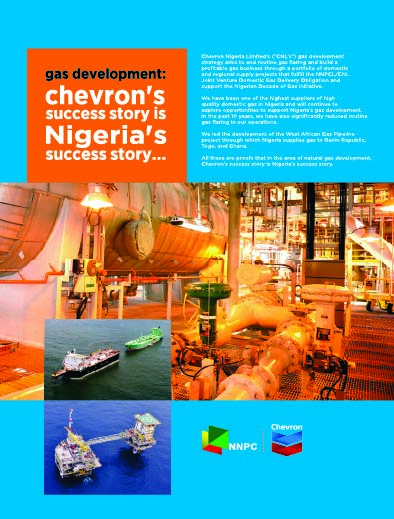
The Conference, jointly convened by the Government of the Federal Republic of Germany, the United Nations Development Programme (UNDP), the Michael Otto Foundation, and other global partners, brought together Heads of Government, Ministers, Development Finance Institutions, multilateral organisations, private-sector leaders, academia, and development experts.
Part of its objectives is to strengthen international cooperation, mobilise investment, forge practical partnerships, and advance innovative financing solutions for sustainable development, climate action, resilient economies, and the accelerated achievement of the Sustainable Development Goals (SDGs).
Senator Bagudu seized the opportunity to reiterate the Federal Government’s commitment to creating an enabling environment for sustainable investment through ongoing macroeconomic reforms to restore investor confidence, strengthen fiscal sustainability, and expand opportunities for private-sector participation.
Speaking to the conferees gathered in Hamburg on 29-30 June, he said that Nigeria is determined to leverage international partnerships to mobilise sustainable investment, strengthen economic resilience and accelerate the country’s transition towards a competitive, inclusive and climate-responsive economy.
The gathering brought together distinguished global leaders, including Mr Frank-Walter Steinmeier, President of the Federal Republic of Germany; Mr Peter Tschentscher, First Mayor of the Free and Hanseatic City of Hamburg; Ms Amina Mohammed, Deputy Secretary-General of the United Nations; Mr Alexander De Croo, Administrator of the United Nations Development Programme (UNDP); Hon. Reem Alabali Radovan, German Federal Minister for Economic Cooperation and Development; and Mr Achim Steiner, Chair of the Hamburg Sustainability Conference.
On the sidelines of the conference, Senator Bagudu met Ms Claudia Voss, Chief Executive Officer of the German-African Business Association, who introduced the senior management of ODDO BHF, a leading European financial institution with interests in reforestation projects, carbon credit financing, sustainable forestry, import financing and innovative green investment solutions in Africa.
During the discussions, representatives of ODDO BHF commended the far-reaching economic reforms being implemented by the Federal Government of Nigeria, noting that recent policy measures have significantly improved the country’s investment outlook and strengthened confidence among international investors.
The meeting explored opportunities for collaboration in sustainable forestry, climate finance, carbon market development, environmental restoration, green investments, and innovative financing instruments to support Nigeria’s transition towards a low-carbon and climate-resilient economy.
Senator Bagudu emphasised that Nigeria’s vast natural resource base, expanding carbon market opportunities and commitment to sustainable land management offer significant prospects for mutually beneficial partnerships that can generate environmental, social and economic returns.
In a separate strategic engagement, the minister met with the H2Global Foundation, during which he received an updated presentation on the “Roadmap for Harnessing Nigeria’s Hydrogen Fuel Potential”.
The discussions focused on Nigeria’s comparative advantages in renewable energy, natural gas resources and green industrialisation, as well as the country’s potential to become a competitive producer and exporter of green hydrogen for regional and global markets.
The engagement culminated in the signing of a Memorandum of Understanding (MoU) between the Federal Ministry of Budget and Economic Planning and the H2Global Foundation, establishing a framework for collaboration to develop Nigeria’s hydrogen economy.