


A new £746 million ports rehabilitation agreement between Nigeria and the United Kingdom has ignited fresh debate among policy experts over the benefits and risks of international development assistance (IDA), with analysts warning that while the deal could boost trade and infrastructure, it may also primarily serve British strategic interests.
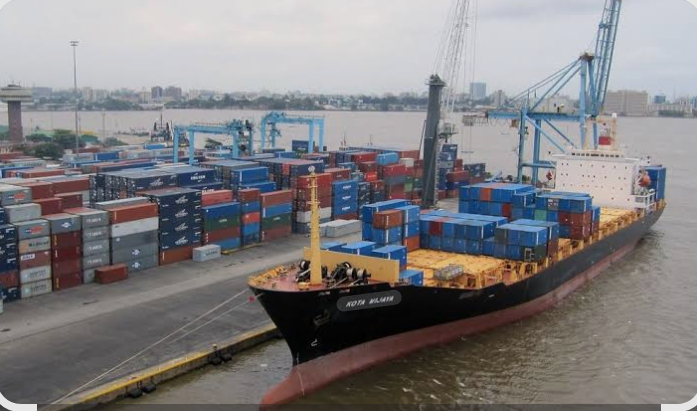
The agreement, signed in March 2026, targets the rehabilitation of the Lagos Port Complex in Apapa and Tin Can Island Port—two critical maritime gateways that handle about 90 percent of Nigeria’s trade. The project is expected to improve efficiency in cargo handling, enhance Nigeria’s blue economy, and strengthen its position in regional and global trade.
However, a policy review by Nextier SPD authored by Dr. Chukwuma Okoli and Dr. Ndu Nwokolo argues that the deal reflects a broader shift in how donor countries deploy development assistance—not merely as aid, but as a tool for advancing national economic and strategic priorities.
The authors, Dr. Chukwuma Okoli is a visiting Lead, Research and Policy at Nextier and a Political Science lecturer at Nnamdi Azikiwe University, Nigeria; while Dr. Ndu Nwokolo is a Managing Partner at Nextier and a Reader (Associate Professor) at the Institute for Peace, Security and Development Studies, Nnamdi Azikiwe University, Awka, Nigeria.
According to the report, the UK has increasingly aligned its development financing with its national security and economic goals, particularly amid rising global competition. The growing influence of countries like China and Russia in Africa has pushed Western nations to rethink their engagement strategies.

The study highlights China’s Belt and Road Initiative as a major factor shaping the UK’s approach. Since joining the initiative in 2018, Nigeria has attracted significant Chinese investments, including a $24.6 billion energy infrastructure commitment linked to the Ogidigben Gas Revolution Industrial Park.
Analysts say this expanding Chinese footprint poses a challenge to British economic interests, prompting the UK to adopt more commercially driven aid models. Under the ports deal, about £236 million has been earmarked for British suppliers, with British Steel expected to supply 120,000 tonnes of steel billets in a contract estimated at £70 million.
The report also links the UK’s evolving strategy to policy shifts in the United States under Donald Trump, whose administration has reduced international aid commitments and withdrawn support from key global institutions. These changes have compelled European countries to prioritize economic self-reliance and strengthen domestic industries through foreign partnerships.
Despite these geopolitical undercurrents, proponents of the Nigeria-UK deal argue that the project could deliver significant economic benefits. Improved port infrastructure is expected to increase government revenue, create jobs, and stimulate growth in the construction and logistics sectors.
The Tin Can Island Port Command of the Nigeria Customs Service, for instance, generated over N1.6 trillion in revenue in 2025, a figure experts say could rise further with modernized facilities. Indigenous firms such as Hitech Construction Company Nigeria and ITB Nigeria Limited are also expected to participate in project execution, potentially boosting local industry capacity.
However, critics caution that the structure of the deal may disproportionately benefit the UK while exposing Nigeria to long-term financial risks. The report underscores concerns about debt sustainability, governance challenges, and the potential for mismanagement—issues that have historically undermined the effectiveness of development assistance in many African countries.
The authors note that while economists like Jeffrey Sachs advocate for development aid as a catalyst for growth, others such as Angus Deaton argue that such assistance can entrench dependency and exacerbate governance failures.
To maximize the benefits of the ports deal, the report recommends stronger oversight, greater transparency, and deeper involvement of Nigeria’s private sector. It also calls for the inclusion of trade associations like the Nigerian Chamber of Commerce, Industry, Mines and Agriculture in project implementation, as well as capacity building for key agencies such as the Nigerian Ports Authority and the Nigeria Customs Service.
Furthermore, the authors stress the need for both governments to make contract details publicly available and ensure robust parliamentary scrutiny to guarantee value for money.
“The challenge for Nigeria is not whether to accept development assistance, but how to ensure it aligns with national development priorities,” the report concludes.
As global competition for influence in Africa intensifies, the Nigeria-UK ports deal underscores the evolving nature of international aid—where economic cooperation increasingly intersects with strategic interests, leaving recipient countries to carefully navigate both opportunity and risk.