


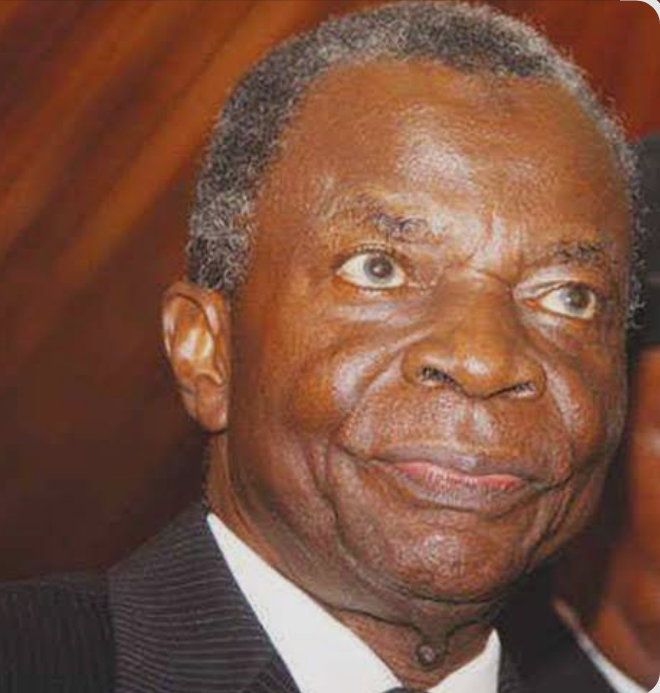
A fresh legal storm is sweeping through Nigeria’s judiciary—this time fuelled not just by words, but by the resurfacing of a long-buried report that is now reigniting questions about credibility, accountability, and the moral authority of those who shape public opinion on justice.
At the centre of the unfolding controversy is Isa Ayo Salami, a retired President of the Court of Appeal, whose recent claim that the emergence of Peter Obi as a presidential candidate in the 2023 election was a “judicial error” has triggered a fierce backlash.
But what might have remained a provocative opinion has now escalated into something far more consequential.

*A report resurfaces—and raises new qiuestions
Human rights lawyer and former National Human Rights Commission chairman, Chidi Odinkalu, has revealed that he has obtained the 2011 investigative report of a committee set up by the National Judicial Council (NJC) to probe allegations involving Salami and former Chief Justice of Nigeria (CJN) Aloysius Katsina-Alu.
According to Odinkalu, the 59-page report—chaired by former Court of Appeal President Umaru Abdullahi—contains “mouth-watering” disclosures, including claims tied to alleged call log communications between Salami and lawyers associated with the Action Congress of Nigeria (ACN).

While Odinkalu stopped short of drawing explicit conclusions, his decision to spotlight the document—and invite the public to “reach your own conclusions”—has injected new intensity into an already heated debate.
Perhaps more striking, he suggested, is not just the content of the allegations, but what he described as the absence of “indignation or credible rebuttal” at the time.
*From ‘judicial error’ to judicial reckoning
The controversy began when Salami reportedly criticised the circumstances surrounding Obi’s candidacy, linking it to what he described as declining judicial competence.
That remark struck a nerve.
For many, it reopened broader concerns about how judicial decisions influence political outcomes in Nigeria—especially in high-stakes electoral contexts where court rulings can reshape democratic trajectories.
But Odinkalu’s intervention has shifted the focus from the present to the past—turning the spotlight back on Salami himself.
*A clash that reopens institutional memory
What is now unfolding goes beyond a personal exchange.
Legal analysts say the episode has evolved into a deeper institutional reckoning—one that forces uncomfortable questions about whether individuals with contested judicial histories can credibly critique systemic failures.
Odinkalu’s pointed reference to the 2011 probe has revived discussions about Salami’s suspension over a decade ago, bringing unresolved controversies back into public consciousness.
Supporters of Salami argue that his critique reflects legitimate concern about the judiciary’s direction and should not be dismissed on the basis of past disputes.
Critics, however, insist that credibility matters—and that public criticism of the judiciary must come from voices whose records can withstand scrutiny.
*Judiciary, politics, and the fragile trust equation
At its core, the clash underscores a deeper and more enduring problem: Nigeria’s judiciary remains caught in a complex interplay of law, politics, and perception.
The resurfacing of the NJC report highlights how historical allegations—whether proven, disputed, or unresolved—continue to shape present-day narratives about integrity and competence.
Meanwhile, Salami’s remarks have amplified fears about declining standards within the courts, even as Odinkalu’s response raises questions about who gets to define those standards.
The result is a public discourse where legal arguments are inseparable from personal histories—and where trust in institutions is constantly negotiated in the court of public opinion.
*A system under scrutiny
As reactions continue to unfold, the episode serves as a stark reminder that Nigeria’s judiciary is not only judged by its decisions, but also by the credibility of those who interpret, defend, and critique it.
In a system already grappling with questions of consistency, independence, and public confidence, the re-emergence of past controversies may prove just as consequential as any current ruling.
Because in Nigeria’s legal landscape, history is never truly past—it is often the most powerful argument in the present.
(Law and Society Magazine)