

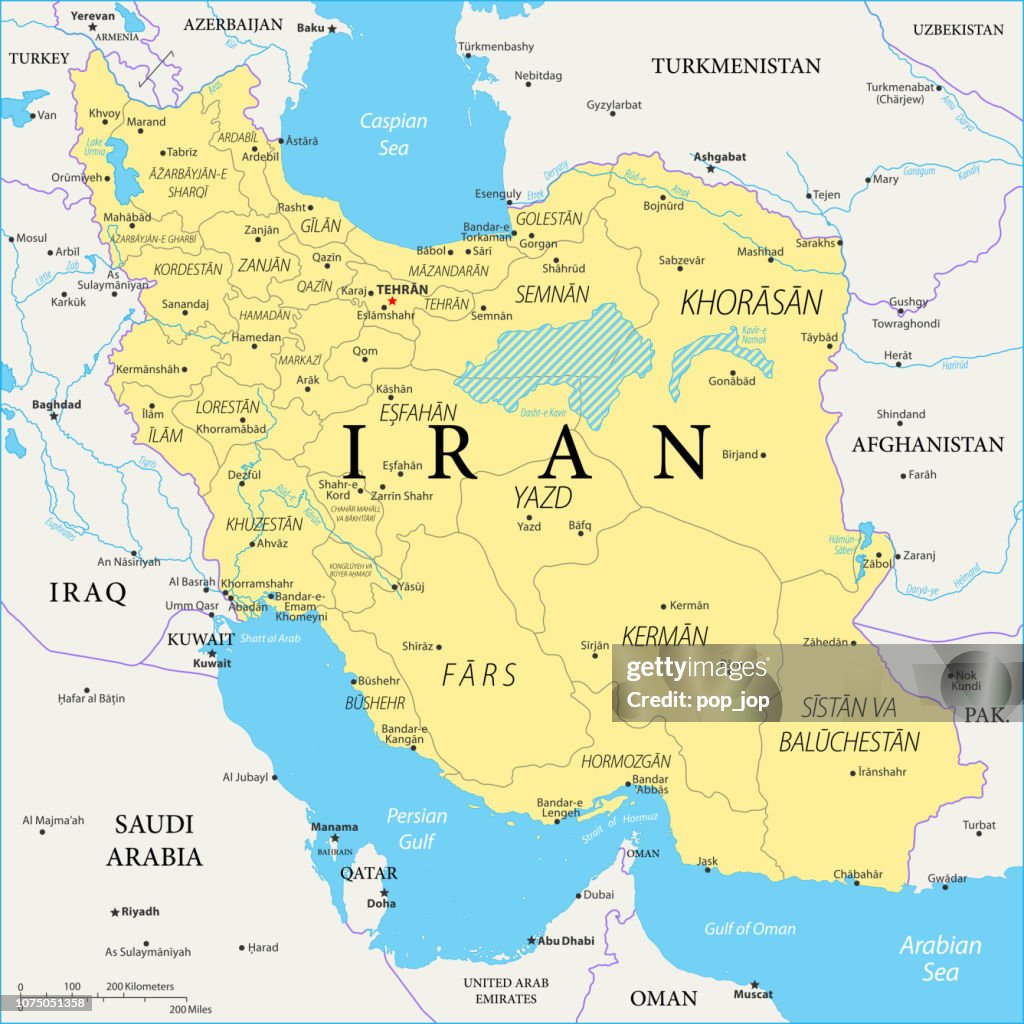
Iran has announced the formation of a three-member Transitional Council to handle the state duties, following the killing of Supreme Leader Ayatollah Ali Khamenei.
Resultantly, Ayatollah Alireza Arafi, member of a powerful constitutional watchdog, was appointed on Sunday to the temporary council, whose other two members are President Masoud Pezeshkian and Supreme Court Chief Justice Gholam-Hossein Mohseni-Ejei.
The 67-year-old cleric, who is a member of the Guardian Council that would later choose a Supreme Leader, was confirmed to the council by the Expediency Council, a powerful arbitration body.

According to Article 111 of the Iranian Constitution, the Transitional Council will govern the country until an 88-member panel called the Assembly of Experts chooses a new Supreme Leader after almost 37 years of rule by Khamenei.
His killing on Saturday by the joint United States and Israeli forces has raised crucial questions about Iran’s future.
Although the leadership council will govern in the interim, the Assembly of Experts “must, as soon as possible,” pick a new Supreme Leader, according to the Iranian constitution.
The Islamic Revolutionary Guard Corps (IRGC) and Iran’s security chief, Ali Larijani are also expected to play pivotal roles in the transitional council, but it remains to be seen where the balance of power lies.
The commander-in-chief of the IRGC was also killed in the US-Israeli attack on Saturday – the second such killing in less than a year – and the next leader of the elite military and economic force is yet to be announced.
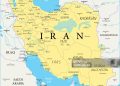
Meanwhile, more explosions have been heard across the Gulf states as Iran carries out attacks in retaliation for attacks by the United States and Israel that killed its Supreme Leader Ayatollah Ali Khamenei and other top officials.
The explosions were heard for a second day on Sunday morning in Dubai, the United Arab Emirates; Bahrain’s capital, Manama; and Qatar’s capital, Doha, raising fears of a wider conflict in a region long seen as a haven of peace and security in an otherwise turbulent Middle East.
Witnesses in Doha reported hearing several loud bangs and seeing thick black smoke rising on the clear morning horizon in the south of the city.
Shortly after, another wave of explosions reverberated through Dubai, a regional business hub. Puffs of white smoke from missile interceptions were seen in the city’s skies, while billows of dark smoke rose over its port of Jebel Ali, one of the busiest in the Middle East.
Explosions were also reported in Manama, with witnesses reporting at least four loud explosions. There was no immediate report of any damage or injuries from Sunday’s blasts.
The explosions came after a day of similar Iranian strikes on US military bases and other assets across the Gulf – except for Oman, which was mediating the nuclear talks between the US and Iran.
The oil-and-gas-rich Arab states, lying just across the Gulf from Iran, collectively host thousands of US troops.
On Saturday, Iran fired 137 missiles and 209 drones across the UAE, the country’s Ministry of Defence said, with fires and smoke reaching the Dubai landmarks of Palm Jumeirah and Burj al-Arab.
At Abu Dhabi’s airport, at least one person was killed and seven others wounded during what the facility’s authority called an “incident”. Dubai airport, the world’s busiest for international traffic, and Kuwait’s airport were also hit.
Meanwhile, Qatari officials said Iran launched 65 missiles and 12 drones towards the Gulf state on Saturday, most of which were intercepted, but 16 people were injured in the attacks.
Elsewhere in the region, the Jordanian defence systems intercepted missiles that entered the capital Amman’s airspace, as well as the country’s northern areas, according to Al Jazeera Arabic. Sirens were also heard in Kuwait, the network reported.
In northern Iraq, a drone crashed near Erbil international airport, according to local media reports, with a large plume of smoke rising. The US is reported to still have troops in Iraq’s autonomous Kurdish region as part of an international coalition against ISIL (ISIS).