

* Says he’s finally come home
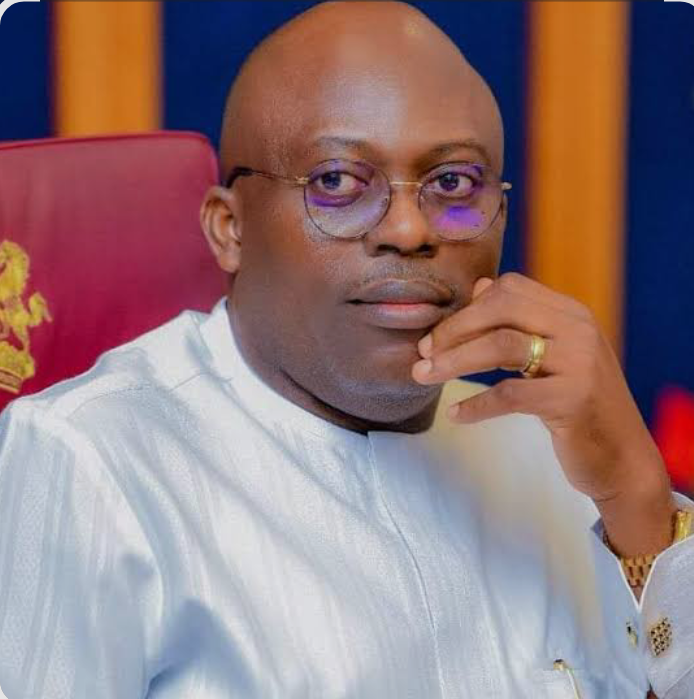
Governor of Rivers State, Sim Fubara, on Wednesday declared his formal alignment with the All Progressives Congress (APC) after a visit to the party’s National Chairman, Nentawe Yilwatda, in Abuja, describing the move as a homecoming and an expression of gratitude.
Speaking after the visit, Fubara said his decision to join the APC was neither sudden nor difficult, insisting that he had always been progressive in outlook even before his formal defection from the People’s Democratic Party (PDP) last week.
“When you say a new member of the Progressives, that is correct, but I’ve always been a progressive at heart. We now have a direction. Maybe before we didn’t have a leader or a governor as the head of the party. Now that I am a member, I will ensure that I bring everybody together for more unity and progress of the party in the state”, the Governor said.

He assured party leaders and supporters that his entry into the APC would strengthen cohesion in Rivers State, adding that there was “nothing to worry about” as the party now had clear leadership and direction.
Fubara described his defection as one of the easiest decisions of his political life, framing it as a gesture of appreciation to President Bola Tinubu and the APC-led federal government.
“I think my transition was one of the easiest things I’ve done in my life. My joining the Progressive Congress is to say thank you to Mr President and to join hands with other progressives to develop my state and Nigeria at large. It wasn’t a difficult decision; it was easy”, he stated.
Reflecting on his time in the Peoples Democratic Party (PDP), the Rivers governor questioned the depth of his attachment to the party, especially during the prolonged political crisis in the state.
“If I have to be honest, was I really a member of the PDP? I wasn’t. Whatever I suffered during the political crisis, 90 per cent of it was imposed on me by the party”, Fubara explained.
He added that he remained largely detached from internal party factions during the crisis, recalling that “during the crisis, you couldn’t associate me with any group. I was just at the balcony – I wasn’t inside the house; I wasn’t outside.”