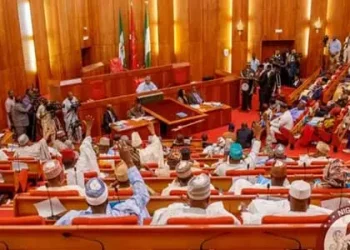


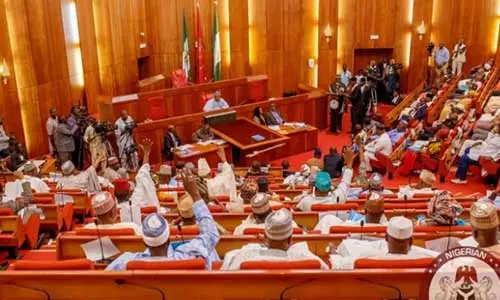
The Senate has approved $6 billion external borrowing request by President Bola Tinubu, passed the N68.3 trillion 2026 Appropriation Bill, and extended the implementation of the 2025 capital budget to June 30th 2026, signaling an aggressive push to sustain infrastructure spending and stabilize public finances.
The upper chamber, presided over by the Senate President, Godswill Akpabio, granted expedited approval for the loan request shortly after receiving a formal communication from the President.
The package includes $5 billion from Abu Dhabi Bank for budget deficit financing and debt servicing, alongside a $1 billion facility from UK Export Finance through Citibank, London, targeted at rehabilitating critical ports infrastructure.

The port projects—covering the Lagos Port Complex and the Tin Can Island Port—are expected to boost efficiency, improve safety standards, and reposition Nigeria as a regional trade hub, while supporting non-oil revenue diversification.
The approval followed the adoption of a report presented by Sen. Aliyu Wamakko, Chairman of the Senate Committee on Local and Foreign Debts, underscoring the legislature’s backing of the Executive’s borrowing strategy amid widening fiscal gaps.
Aside the loan approval, the Senate also passed the 2026 Appropriation Bill of N68.3 trillion after considering a report laid by the Appropriations Committee chaired by Sen. Solomon Olamilekan Adeola.
The passage reflects an increase over earlier proposals and reinforces the government’s expansionary fiscal stance.
Earlier in plenary, President Tinubu had requested legislative approval for N9 trillion upward review of the 2026 budget, raising it from N58.4 trillion to N67.4 trillion.
The proposal, referred to the Appropriations Committee, is aimed at regularising outstanding obligations, integrating existing debt into the fiscal framework, and aligning expenditure with macroeconomic stability goals.
Meanwhile, lawmakers moved to prevent disruption of ongoing projects by extending the capital component of the 2025 budget from March 31 to June 30, 2026.
Leading debate on the amendment bill, Senate Leader Opeyemi Bamidele warned that without the extension, many projects risk abandonment due to low execution levels, despite about 30 per cent of funds already released to Ministries, Departments, and Agencies.
Supporting the move, Deputy Senate President Barau Jibrin said the extension aligns with the administration’s infrastructure agenda and would ensure continuity of critical national projects.
The developments highlight the Federal Government’s increasing reliance on a mix of domestic and external borrowing to finance ambitious budgets, as well as the National Assembly’s willingness to fast-track fiscal measures aimed at sustaining economic growth and infrastructure development.