


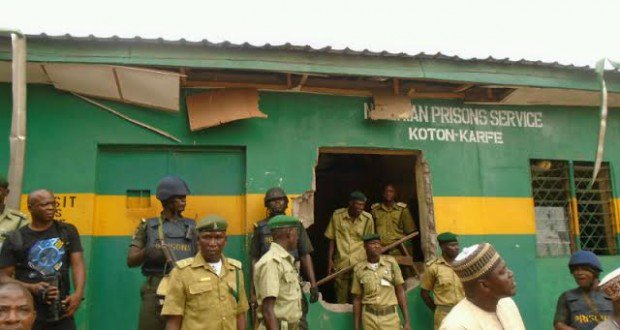
The Federal Government of Nigeria and various state governments have granted pardons or reduced sentences for no fewer than 8,300 inmates across the country between January 2022 and March 2026, in a sustained effort to address overcrowding in correctional facilities.
The figures, compiled from official records of the Nigerian Correctional Service and state government sources, highlight a growing reliance on clemency measures as part of broader criminal justice reforms.
A year-by-year breakdown shows that 707 inmates benefited from pardons or sentence reductions in 2022. The figure rose significantly to 4,678 in 2023, before declining to 1,843 in 2024.

In 2025, more than 850 inmates received similar relief, while over 240 inmates have already benefited in 2026.
However, analysts note that the actual number of beneficiaries could be higher, as the available data reflects only reported cases.
The sharp increase recorded in 2023 was largely attributed to a major nationwide intervention in November of that year, when more than 4,000 inmates were granted relief.
The initiative involved the settlement of fines imposed by courts, facilitated through a Federal Government-backed programme with support from private sector contributors.
Many of the affected inmates were unable to pay relatively minor fines, resulting in prolonged incarceration despite having completed the custodial aspects of their sentences.
Despite the wave of pardons, Nigeria’s correctional facilities continue to face severe congestion challenges.
Reports indicate that over 50,000 inmates across the country are still awaiting trial, with many facing serious charges such as armed robbery, murder, and culpable homicide.
These cases often involve lengthy investigations and protracted court processes, contributing significantly to delays within the justice system and the continued overcrowding of custodial centres.
Pardons and sentence reductions are typically granted following recommendations by advisory bodies known as Prerogative of Mercy Committees.
These committees review individual cases and advise the appropriate authorities on inmates eligible for clemency, often based on factors such as good behaviour, health conditions, or the nature of the offence.
Beyond granting pardons, the Federal Government is also pursuing structural reforms aimed at addressing the root causes of congestion in correctional facilities.
One of such initiatives involves transforming custodial centres into agricultural and production hubs through public-private partnerships.
The Minister of Interior, Olubunmi Tunji-Ojo, represented by the Permanent Secretary in the ministry, Magdalene Ajani, disclosed this at a stakeholders’ roundtable in Abuja.
According to the minister, the initiative is designed to reposition correctional facilities from mere detention centres into institutions focused on rehabilitation, skills acquisition, and productivity.
He noted that expanding agricultural and vocational programmes would equip inmates with practical skills, improve their chances of reintegration into society, and reduce the likelihood of reoffending.
“Correctional centres are no longer just places of custody; they are platforms for transformation, rehabilitation and a new lease of life,” he stated.
Stakeholders say the combination of pardons and structural reforms reflects a broader shift in Nigeria’s criminal justice approach, one that balances punishment with rehabilitation and reintegration.
However, experts warn that without faster judicial processes and stronger institutional reforms, overcrowding may persist despite ongoing interventions.
As the government continues to implement clemency measures and long-term reforms, the challenge remains to build a more efficient justice system that reduces delays, ensures fairness, and prevents unnecessary incarceration.
For thousands of inmates still awaiting trial, the pace of reform could determine how soon relief will come.