

BY SAM OTUONYE
BudgiT, a Civil Society Organisation, has raised a red flag over Nigeria’s overlapping budget system, warning that such practice was not only illegal but could lead to poor fiscal governance, unrealistic revenue projections and weak transparency, capable of threatening climate action, economic growth and public service delivery.
The Deputy Country Director of BudgiT Foundation, Vahyala Kwaga, on Friday raised serious concerns about Nigeria’s budget management system, warning that overlapping federal budgets, weak fiscal planning and limited transparency were undermining economic development and climate action.

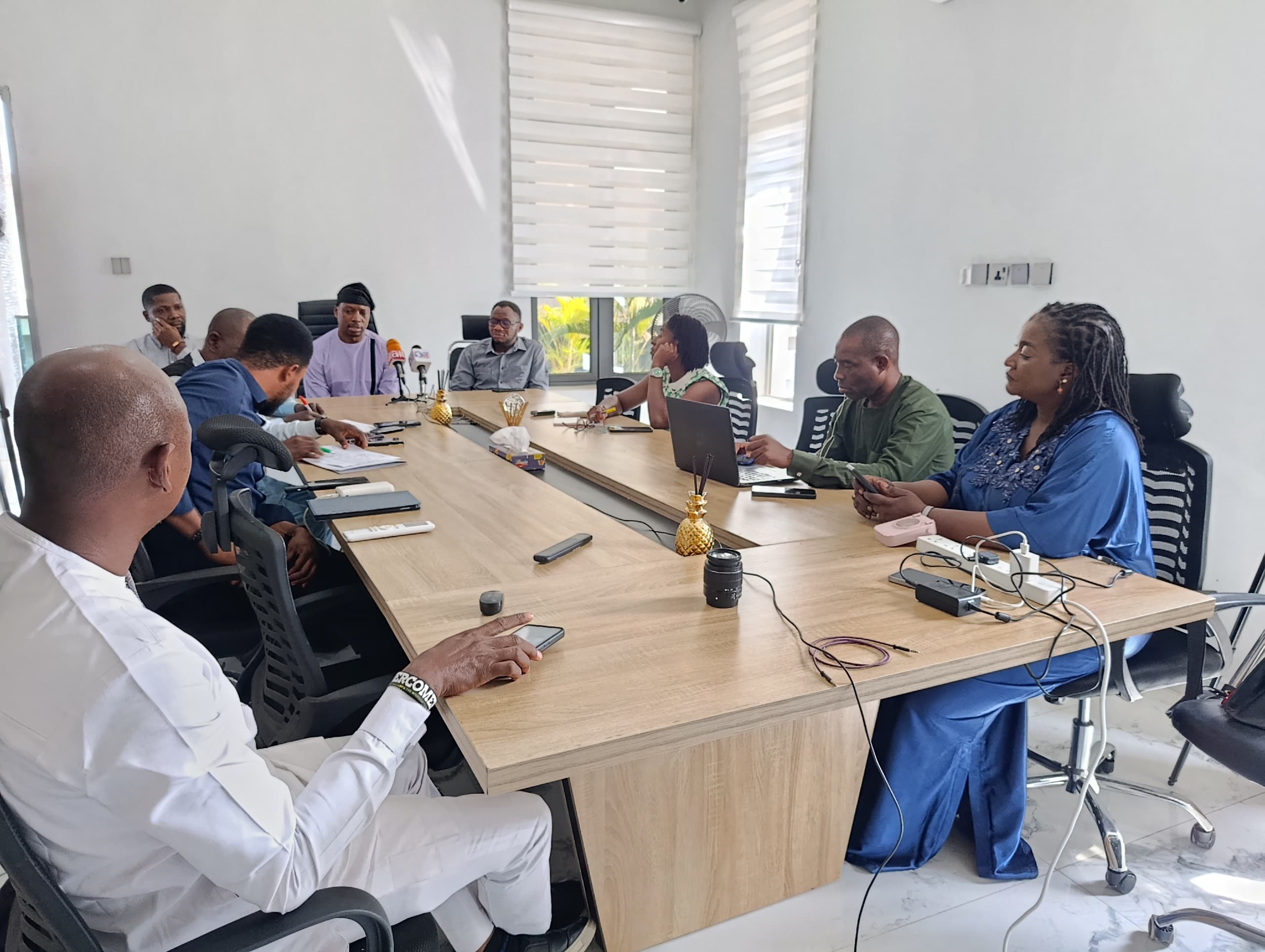
Speaking at a press conference in Abuja during the presentation of
BudgiT’s report titled, ‘Nigeria Federal Budget Trend Analysis (2023–2025): Climate, Economic growth and development priorities amid Fiscal Governance Challenges’, Kwaga called for urgent reforms to restore credibility and discipline in the country’s public financial management framework.
According to him, Nigeria’s current practice of extending and overlapping budgets contradicts the country’s legal fiscal framework and weakens accountability in public spending, stressing that overlapping budgets raise legal and accountability concerns.
Kwaga noted that the federal government recently extended the capital component of the 2025 budget to November, a practice that effectively stretches the life cycle of the budget to nearly 24 months.
He said the development contradicts Nigeria’s legally established 12-month fiscal calendar.
“Civil society is asking a very simple question — can Nigeria finally end this cycle of overlapping budgets? The 2025 capital component was meant to end in March but has now been extended to November,” he said.
Meanwhile, the Director-General of the Budget Office earlier argued that the government has legal backing to operate multiple budgets simultaneously, however, Kwaga punctured the position stating that no specific sections of relevant laws were cited by the DG to support the claim.
He argued that such practices create confusion in fiscal management and make it difficult to track government spending and project implementation.
The BudgiT report also criticised the federal government’s revenue forecasting process, describing many projections as unrealistic.
Kwaga warned that when government revenue projections are not met, many planned projects and social services suffer.
“When you project revenue that you eventually fail to generate, it means the projects tied to that revenue will not be implemented. That translates into poor healthcare, poor education, and weak water and sanitation services,” he said.
The report therefore called for more realistic fiscal projections to improve Nigeria’s credibility with investors and the international community.
BudgiT further raised concerns about the Medium-Term Expenditure Framework (MTEF), a key fiscal planning document meant to guide national budgets.
According to Kwaga, the framework was submitted to the National Assembly only two days before the appropriation bill for the fiscal year was presented, contrary to provisions of the Fiscal Responsibility Act which require the document to be approved before the budget is introduced.
“This is again a violation of existing law. Nigerians are not asking for too much when they insist that the government obeys its own laws,” he said.
The report also pointed out the growing use of supplementary budgets, which it said often emerge because of weak fiscal planning and the absence of a coherent public cash plan.
Kwaga warned that additional budgets expand government spending without corresponding revenue increases, widening Nigeria’s fiscal deficit.
“When the deficit increases, it has to be financed somehow, usually through borrowing. That increases Nigeria’s debt exposure,” he explained.
On the impact of the practice on climate and related issues, BudgiT’s analysis shows that climate-related spending accounts for only 3–5 percent of Nigeria’s federal budget, far below the investment needed to address climate challenges.
The report noted that in 2025, the Ministry of Power received about ₦252.58 billion for climate mitigation, while the Ministry of Environment received ₦47.67 billion for climate adaptation, indicating that government climate spending is heavily skewed toward mitigation rather than resilience.
It also revealed that Nigeria has struggled to attract external climate finance and has not fully utilized instruments such as green bonds at the sub-national level.
BudgiT warned that Nigeria’s rising debt obligations are limiting investments in development and climate resilience.
The report estimates that debt servicing consumed 34 percent of government revenue in 2025 and could rise to 45–53 percent in the coming years, leaving limited fiscal space for infrastructure, agriculture and climate programs and
execution gaps in budget implementation.
Another major concern highlighted in the report is the gap between budget allocations and actual implementation,
noting that despite significant allocations to sectors such as agriculture and infrastructure, execution rates remain low, with some programs recording utilization rates as low as 2 to 15 percent.
BudgiT said such inefficiencies weaken the impact of government spending and slow national development.
The organization also criticized the federal government for irregular publication of budget implementation reports.
Kwaga noted that reports which were previously released quarterly are now published only once every eight or twelve months, limiting public access to information on how public funds are spent.
“Nigerians need to know how well government is implementing the budget month-by-month and quarter-by-quarter,” he said.
He also warned that the expansion of service-wide votes and other vaguely defined budget lines makes it difficult to track public spending or identify responsible implementing agencies.
BudgiT recommended a comprehensive fiscal reset beginning with the 2026 budget cycle.
BudgiT key proposals include:
Ending the practice of extending budgets beyond the fiscal year,
Enforcing strict timelines for budget preparation and submission,
Strengthening oversight by the National Assembly using evidence-based analysis,
Publishing timely budget implementation reports,
Amending the Fiscal Responsibility Act to include penalties for violations
The group also called for the introduction of climate-responsive budgeting and improved transparency in procurement and capital project tracking.
Other civil society leaders present at the briefing, including Enebi Opaluwa, Head of Natural Resources and Climate Governance at BudgiT, and Uchenna Arisukwu, National Civil Society Adviser at the OGP National Secretariat, also stressed the need for stronger fiscal transparency and better integration of climate priorities into Nigeria’s budgeting process.
They warned that without structural reforms in public financial management, Nigeria risks continued inefficiency in public spending and missed opportunities for economic growth and climate resilience.