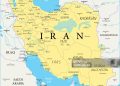



Hundreds of Nigerians attempting to travel to or from several Middle Eastern destinations have been stranded following escalating hostilities between the United States, Israel and Iran, which have triggered widespread airspace closures and mass flight cancellations.
Travellers bound for or transiting through Qatar, Israel, Iran, Iraq, Syria, Kuwait and the United Arab Emirates were among those affected as major international carriers suspended operations over security concerns.
Airlines including Air France, Air India, Turkish Airlines, Norwegian, Air Algérie, Qatar Airways, Emirates and Lufthansa announced cancellations due missile exchanges and airstrikes which intensified across the region.

On Saturday morning, outbound passengers travelling from Nigeria on Qatar Airways were prevented from flying after reports emerged that Qatari airspace had been temporarily shut.
Some passengers who had already boarded aircraft were later asked to disembark.
One affected traveller said, “I had planned so many things around this trip. Suddenly, they announced that the airport in Doha is not responding.
“I don’t even understand what that means. I’m wondering if they can reroute us through another destination without passing through Doha. This situation is really painful.”
Another passenger travelling with a family member expressed concern over academic disruptions.
“With this development, only God knows when my sister will be able to return to school. We understand this is a genuine situation, but it is really painful,” the traveller said.
Qatar Airways Group confirmed the temporary suspension of flights to and from Doha, citing the closure of Qatari airspace.
“The safety of our passengers and employees is always our highest priority, and we apologise for any inconvenience caused,” the airline said in a statement.
Air India similarly announced the suspension of flights to all Middle East destinations, stating via its X account that the decision was made in view of the developing security situation.
The aviation disruption followed a wave of US and Israeli strikes on multiple locations in Iran, including Tehran, in what US President Donald Trump described as “major combat operations.”
Iran retaliated with missile strikes targeting northern Israel and US military installations in Qatar, Kuwait, Bahrain, Jordan, Saudi Arabia and Iraq.
Syria reportedly closed parts of its southern airspace along its border with Israel for 12 hours.
Kuwait temporarily shut its skies, with its military claiming to have engaged incoming missiles.
Jordan’s Air Force was said to be conducting defensive drills to protect its airspace.
Russia’s aviation authority, Rosaviatsia, also announced the cancellation of commercial flights to Israel and Iran until further notice.
The Chairman of the International Airlines Operators Committee, Damilola Ogunyeye, described the development as unfortunate and warned of growing anxiety among travellers.
“It is an unfortunate situation. In aviation, safety comes first. We don’t take risks, especially when escalation is uncertain. We can only hope peace returns quickly,” he said.
Similarly, the President of the National Association of Nigeria Travel Agents (NANTA), Yinka Folami, confirmed that passengers were being turned back home due to airspace closures.
“There are dangers in the airspace and safety is most paramount in aviation,” Folami said.
The Federal Airports Authority of Nigeria (FAAN) also issued a statement acknowledging that the restrictions were affecting international flight operations to and from Nigeria.
According to FAAN, several scheduled flights linking Nigerian airports with Middle Eastern destinations had either been delayed or cancelled as airlines rerouted operations to avoid conflict zones.
Passengers were advised to maintain direct communication with their airlines for updates on flight status and rebooking options.
“FAAN continues to monitor the situation in collaboration with relevant aviation authorities and airline operators and will provide updates as necessary,” the authority stated.
Meanwhile, the Federal Government warned Nigerians residing in Iran and neighbouring Gulf countries to exercise caution.
In a statement issued by the spokesperson of the Ministry of Foreign Affairs, Kimiebi Ebienfa, the government said it was closely monitoring the evolving situation in the Middle East.
Nigerians in affected countries were urged to avoid strategic locations, military installations and large gatherings, and to comply strictly with local security directives.
“It is strongly recommended that Nigerians restrict non-essential movement and travel until the security situation becomes clearer and stabilises,” the ministry advised.